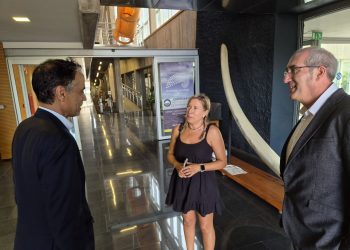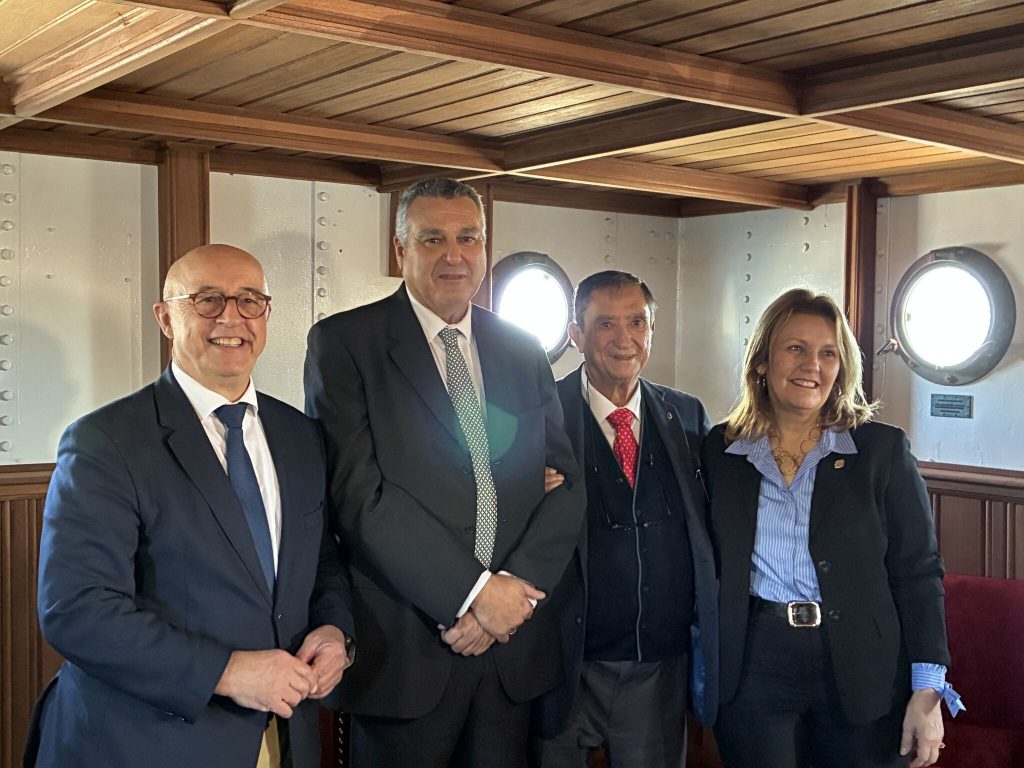
There are ships that are just steel and engines, and there are ships that hold the soul of an entire people within their hulls. Within the walls of the Nautical School, last week saw one of those moments that reconcile a city with its own history. The President of the Port Authority, Pedro Suárez, was not just talking about technical procedures; he was speaking about a milestone that has taken more than 50 years to come to fruition: the return of the Correíllo La Palma to its condition as a navigable vessel.
Suárez (PP) voiced a shared sentiment: ‘We feel immensely proud that the Correíllo has its base in the Port of Santa Cruz.’ This pride is not unfounded. That this emblematic steamship returns to sail is not only an administrative achievement; it is ensuring that future generations of Canarians will not have to learn about our history in textbooks, but rather by feeling the sway of the ship that one day united our islands when there were no bridges other than the sea.
The End of a Half-Century Voyage
Seeing the profile of the Correíllo out of service has, for decades, been like seeing an open wound. A symbol of Canary Island maritime heritage struggling against forgetfulness and rust. Obtaining the Compliance Certificate ceased to be a desire and became a real roadmap. It is the reward for an unwavering resistance led by the Fundación Canaria Correíllo La Palma and supported by all administrations, from the State with the Port Authority of Santa Cruz de Tenerife. It is a recognition of collective effort. Voices like those of Juan Pedro Morales (Correíllo Foundation) or María del Cristo Adrián (ULL) emphasize that preserving maritime heritage is, in fact, preserving Canarian identity. The Correíllo La Palma is no longer just a static museum piece; it is a living entity that is one step away from once again smelling the sea spray in motion.