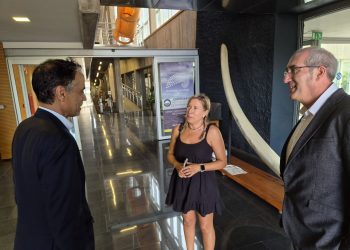
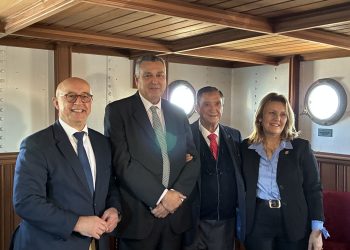
The Port of La Luz and Las Palmas recorded the arrival on Wednesday, September 9, of the Pachamama expedition sailboat, captained by Swiss explorer couple Dario and Sabine Schwörer. The vessel has completed its voyage after becoming the first sailing vessel to circumnavigate the northern Svalbard archipelago and cross the Northwest Passage. The stopover in the capital of Gran Canaria will serve as a logistical and educational platform before the expedition heads for the Antarctic continent as part of the TOPtoTOP Global Climate Expedition program.
The project, which has the institutional backing of the United Nations Environment Programme (UNEP), has covered more than 140,000 nautical miles over the past quarter-century without using fossil fuels. The technical platform used for navigation is a 15.15-meter aluminum vessel designed by Bernard Nivelt, specifically built to withstand the structural pressures of extreme latitudes and powered exclusively by wind and photovoltaic energy.
The expedition’s presence in Gran Canaria serves a dual operational and educational purpose. During its stay in port, the crew will hold technical meetings and free educational activities at schools across the island, aimed at explaining to students the direct impact of climate change on polar ecosystems and ocean health.
The mid-Atlantic crossing from the Canary Islands will allow the crew of the Pachamama to prepare its onboard systems before beginning the descent toward the South Atlantic. After completing the Arctic crossing and recording observational data on the retreat of the ice mass, the expedition aims to complete its monitoring cycle at the opposite pole, consolidating a traveling research archive linking the climate dynamics of both ends of the planet. This information was produced independently by the editorial team at Canarymaritime according to exclusively editorial criteria, without commercial compensation or ties to the entities mentioned.
The article UNEP-backed scientific expedition calls at the Canary Islands en route to Antarctica was first published on canarymaritime.com.