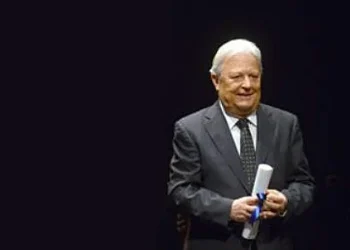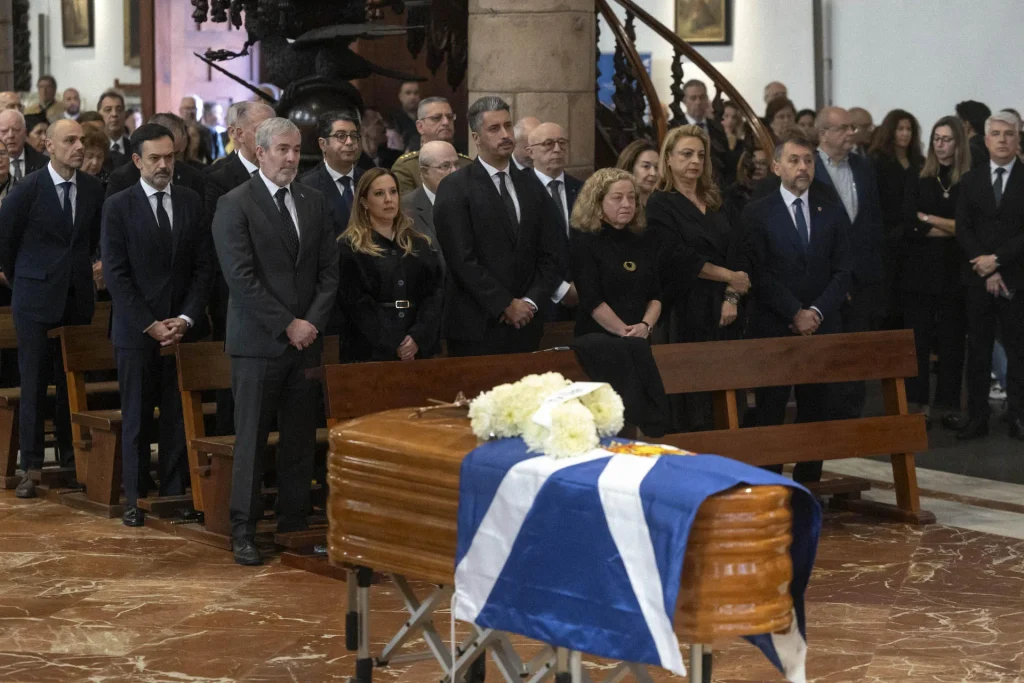
There are men who do not only hold positions, but who end up becoming indistinguishable from the landscape. This Sunday, under the sky of La Laguna, Tenerife bid farewell to one of those architects of its current reality. More than a hundred people gathered at the Church of La Concepción to say a final goodbye to Ricardo Melchior, who passed away this Saturday at the age of 78, in a ceremony that served to certify the void he leaves in the political and port heart of the archipelago.
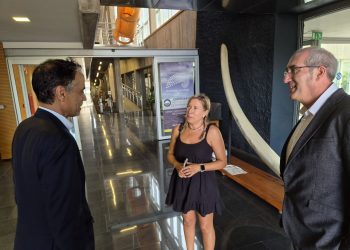
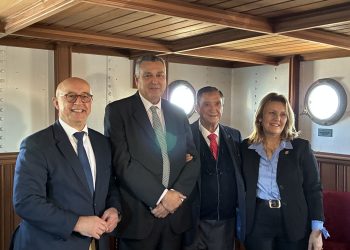
The coffin, wrapped in the flag of the island he governed for 14 years, entered the parish accompanied by the Local Police and a sea of floral wreaths. In the pews, silence united those who were his allies and those who were his rivals. The president of the Port Authority of Santa Cruz de Tenerife, Pedro Suárez, was there, along with officials and members of the port community of Tenerife.
Melchior was also the man who took the helm of the Port Authority of Santa Cruz de Tenerife between 2015 and 2018. Under his leadership, the Tenerife docks experienced years of transformation and strategic challenges that are now part of his public legacy. Therefore, the official two-day mourning decreed by the Cabildo and the flags at half-mast are not just an institutional gesture but a recognition of a figure who loved his land ‘from commitment, dialogue, and constant work,’ as a visibly affected Fernando Clavijo recalled.
The head of the Government of the Canary Islands was with Melchior’s family along with the current head of the Cabildo, Rosa Dávila; and personal friends of unwavering loyalty like Ana Oramas. Mayors, senators, and former island presidents from different political backgrounds, such as José Segura or Pedro Martín, were all aware that today marked the closing of a chapter in the history of the Tenerife Transition.
The homily by parish priest Miguel Ángel Navarro was not an empty protocol. It was a portrait. ‘Ricardo was like the Teide, present throughout the island,’ said the priest, highlighting that duality that defined Melchior: the technical precision of the industrial engineer and the cunning of the political animal. His ‘intelligence to think big’ was recalled, a vision that allowed him to advance projects that are now essential, such as the Tenerife tram, despite the fierce criticism he faced before the first unit was put into operation.
The priest remembered how Melchior frequently appeared at funerals in small towns, bidding farewell to anonymous neighbors regardless of their social status. That man who spoke of renewable energies when almost no one did was the same who shook hands with farmers and dockworkers with the same naturalness. The ceremony concluded with spontaneous applause that broke the solemnity of the Lagunera temple. It was the last thank you from an island to an engineer who not only designed bridges and roads but built a modern political identity for Tenerife. With his departure, the port business and public administration lose a guide but gain a historical reference that now rests beneath the earth of the city that witnessed his journey.