To understand why the United Kingdom has decided that Morocco’s autonomy plan for the Sahara is ‘pragmatic’, one should not look at modern politics, but to the Treaty of Fez of 1721. While in the Canaries we worried about whether the exports of malvasía reached London, King George I and Sultan Moulay Ismail were already dividing the map with enviable cartographic joy. The same as they want to do in 2026 with a logistics base in the port of Las Palmas.
The history teaches us that the Anglo-Moroccan alliance is not a modern conspiracy, it is an antique piece of furniture that has been revarnished. From the times of El Idrissi to the current underwater mining explorations in Canarian territories, sovereignty over that strip of sand has been a toy for the powers. Meanwhile, on the islands, we continue to look to the East with the suspicion that, whenever London and Rabat toast, the wine is paid for by the islanders.
In that 1721, the British, always practical and with one eye on the security of their routes to Guinea, decided that Moulay Ismail was not just a sultan of imperial cities, but the sovereign of ‘all of West Africa’. It was a low-cost recognition: it cost London nothing to give the Sahara on paper to Morocco in exchange for free trade and protection for its ships. For the Canaries, this was the first warning that, on the Atlantic board, powers prefer a gendarme on the African coast than an uncomfortable neighbor claiming fishing rights or jurisdiction.
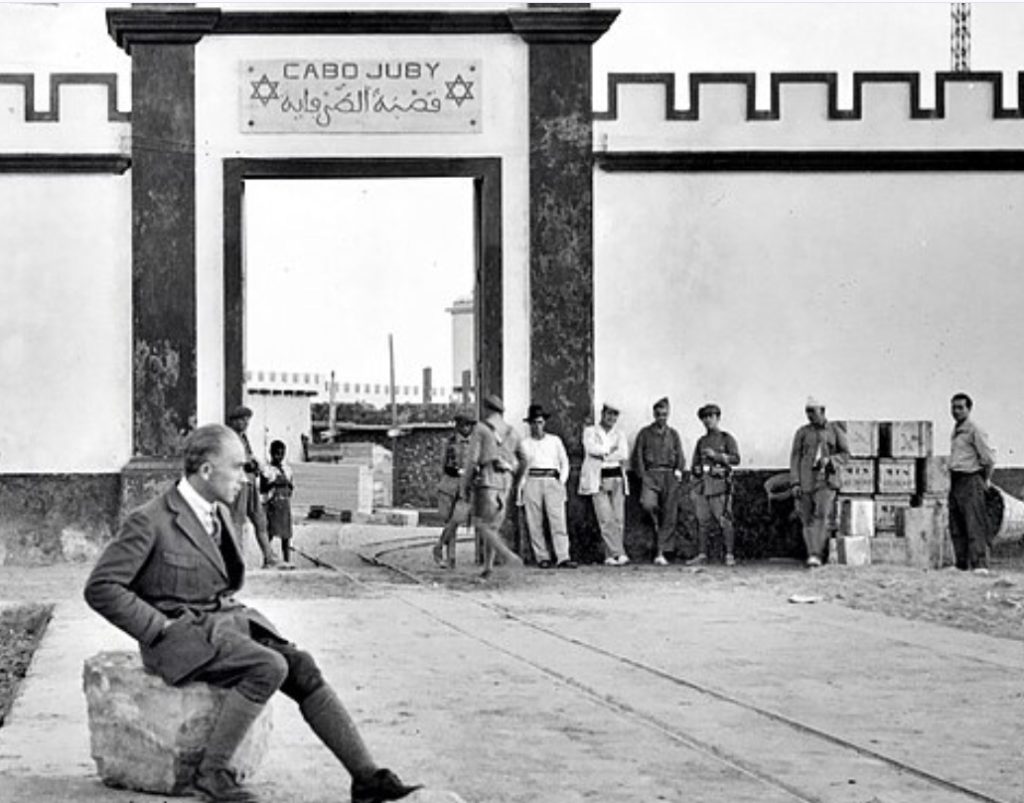
1895: The Windfall of Cabo Juby
Let’s jump to the end of the 19th century, the golden age of parlor imperialism. An adventurer named Donald MacKenzie founded a trading post in Tarfaya (Cabo Juby), right across from Fuerteventura. What did London do when the business was not as booming as expected? It sold it to the Sultan in 1895 through a treaty where, in black and white, Great Britain declared that the lands between the Oued Drâa and Cape Bojador belonged to Morocco.
It was the diplomatic coup de grâce. With that signature, the British not only protected their commercial interests with a 10% tariff but sealed the fate of Western Sahara long before Spain deigned to take its presence there seriously. The 1895 agreement explicitly stated that no one else was to claim those lands. A direct message to Madrid and, by extension, a noose around the legal security of the Canarian waters.
The Historical Amnesia
The most fascinating (and bitter) part of this story is the Secret Treaty of 1904. Great Britain, which had been swearing for two centuries that the Sahara was Moroccan, changed its mind over an afternoon tea. It handed over Morocco to France in exchange for the French allowing them free hands in Egypt. And to keep Spain from causing too much trouble, they left it with the ‘leftovers’: an area of influence in the south.
Today, in the full 2026, we see the United Kingdom returning to its 1721 roots. The British interest in supporting Morocco’s attempt to control the median of the Canaries is not a novelty; it is a return to the status quo that they themselves invented. For London, the Sahara has always been a bargaining chip, and Morocco, a solid trading partner. What about the Canaries? In London, the Canaries remain that lovely place with good weather where one can go on vacation, but whose sovereignty over the surrounding waters is a ‘technical detail’ that should not hinder the great diplomacy of the London-Rabat axis.