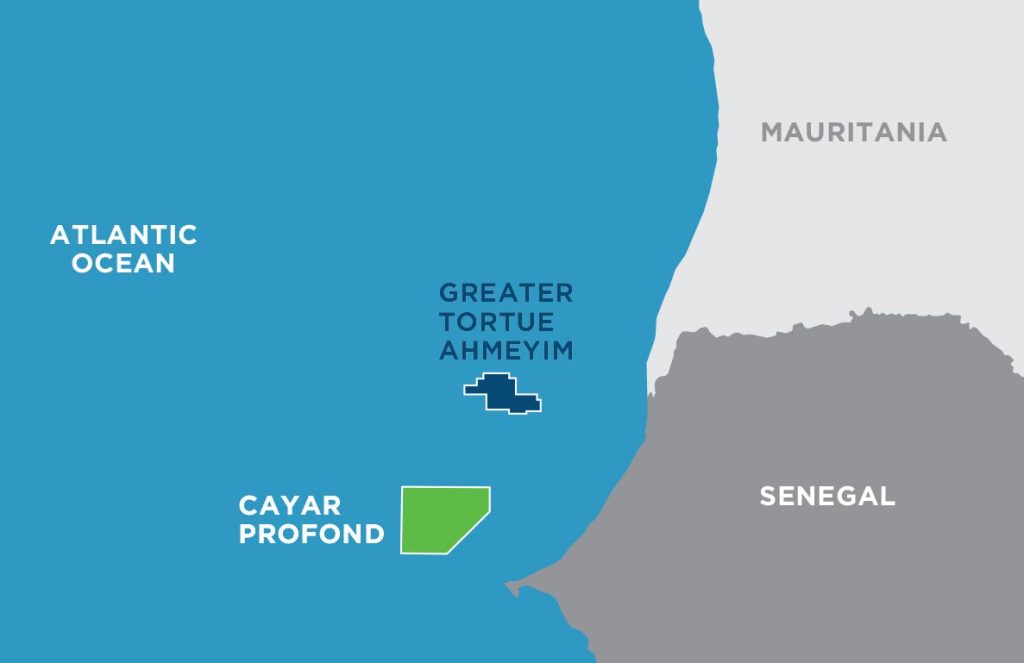
African communists. The Government of Senegal executed on Thursday the most aggressive move in its natural resources policy since the arrival of the new executive. Prime Minister Ousmane Sonko announced on Thursday the total recovery of control over the Yakaar-Téranga gas block, the country’s most promising asset. After reaching an agreement for the joint withdrawal of the American company Kosmos Energy and the state-owned Petrosen from the current license for the Cayar block, the control of the exploitation will pass exclusively to Petrosen. The operation has concluded without financial compensations from the Senegalese state, a result that Sonko describes as a ‘great historical victory.’
The nationalization of Yakaar-Téranga represents the culmination of a political battle spanning a decade against the agreements signed during the Macky Sall regime. Sonko has characterized the conditions of the previous awards —originally granted to Frank Timis— as ‘extremely opaque,’ linking them to the plundering of national assets. The new license, which will be formalized by ministerial decree, aims to ensure that the sedimentary basin serves as a motor for the domestic supply of natural gas, a pillar that Minister Birame Souleye Diop already indicated in December 2025 as the central axis of the country’s energy sovereignty.
The energy market watches cautiously the message sent from Dakar. ‘Others will follow suit,’ warned Sonko in a statement that casts suspicion on all existing hydrocarbon contracts in Senegal, including the Saint-Louis block shared with Mauritania. This policy of forced renegotiation seeks to reverse what the current government considers a surrender of national heritage to foreign interests under unfavorable conditions. For multinational companies in the sector, the precedent of a ‘withdrawal without compensation’ in such a substantial block radically alters the investment risk profile in the region.
The control of Yakaar-Téranga provides Senegal with a unprecedented maneuvering capacity in managing its resources. By displacing international partners from decision-making, the government bets on a self-sufficient exploitation model that prioritizes national energy security over the quick returns of external investors. The success of this strategy will now depend on the technical capacity of Petrosen to develop complex infrastructures in deep waters without the financial and operational support of industry giants, at a time when the scrutiny over the transparency of new agreements will be at its peak.