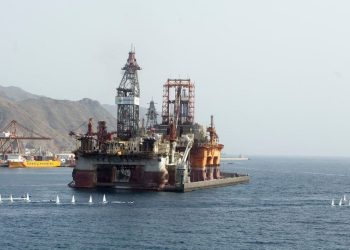
The Senegalese Ministry of Energy and Italy’s Eni signed a memorandum of understanding at Gastech 2026 during the second week of September 2026 to assess five offshore blocks: SN01M, SN02M, SN03M, SN07M and SN40M. The multinational will cover the cost of processing 2D and 3D seismic data alongside state-owned Petrosen. The details of the agreement dampen expectations for short-term logistics business at the Port of Las Palmas. The reality is that Senegal is seeking funding from the IMF to avoid going bankrupt, and this announcement may perhaps be little more than folklore for debt holders.
If Eni had signed an exploitation concession, it would need drilling rigs, supply vessels, tons of drill pipe, cement, drilling mud and spare parts immediately. Since Dakar lacks the capacity to store all of that without creating bottlenecks, the business would flow directly to shipping agents, fuel suppliers and port services in places such as Las Palmas. A memorandum of understanding (MoU) is merely bureaucratic paperwork: The agreement signed in Bangkok is a computer-based technical analysis of seismic data.
Bluff
The text signed in Bangkok is neither a license concession nor an award of drilling rights. It is a desktop study. Eni has not signed an oil contract or deployed investment capital for drilling; it will assess historical data without any guarantees of subsequent exploitation. The revival of exploration, promoted by Minister El Hadji Abdourahmane Diouf as the return of exploration to the center of state policy, is for now confined to laboratory analysis.
This legal distinction changes the commercial impact for auxiliary industries in the central Atlantic. A desktop program does not move supply vessels, require heavy-pipe storage on Tenerife’s docks or generate demand for ship repairs at the islands’ shipyards. The real revenue remains in active projects: Sangomar crude — operated by Woodside — and Grand Tortue Ahmeyim (GTA) gas, the only infrastructure currently sustaining real maritime traffic in the basin.
Tenerife retains its competitive advantage as a technical base for the offshore fleet because of its operational agility compared with bottlenecks at the port of Dakar. However, turning Eni’s memorandum into maintenance or supplies contracts at the Las Palmas basin will require waiting for Senegal to issue firm tenders. Until the geophysical analysis translates into awarded exploration wells, activity in Senegal’s offshore blocks will be nothing more than corporate bureaucracy, with no impact on the earnings of Canary Islands operators.
The article “The Fine Print of Eni’s Senegal Deal: A Bluff for Ship Repairs in the Canary Islands” was first published on canarymaritime.com.