Spain’s strategic projection and that of the Atlantic Alliance in northwestern Africa has reached a new operational milestone following the consolidation of a joint deployment focused on tactical training and the transfer of military capabilities in Mauritanian territory. Against a backdrop of deep regional instability across the Sahel and the gradual withdrawal of Western contingents from the sub-Saharan region, Mauritania is establishing itself as the preferred partner and a key pillar of containment for the geopolitical stability of the southern Atlantic flank. Within this framework, the Spanish Armed Forces, in close coordination with NATO structures, have intensified specialized training missions and the delivery of logistical and combat resources to protect Mauritania’s borders and enhance the response capabilities of its operational units.
Specialized personnel from the Spanish Army completed a new phase of theoretical and practical field training this September for commanders and troops from the Mauritanian Armed Forces. The instruction focused primarily on advanced training in the detection, identification, neutralization and disposal of explosive devices (EOD).
This discipline has become a critical operational pillar in countering the asymmetric tactics employed by terrorist organizations operating along the Sahel’s border areas. The sessions, conducted במסגרת the Cooperative Security Activities and integrated into the structure of the Operations Command (MOPS), enabled local combat engineers and tactical teams to learn European protocols for managing improvised explosive threats, strengthening the Mauritanian army’s operational autonomy in patrol and territorial-control missions.
This aspect of bilateral training led by the Spanish Armed Forces was simultaneously complemented by a high-level technical assessment and support mission carried out by delegates from NATO’s Defence Capacity Building (DCB) programme.
Since 2024, a team of NATO experts has been deployed in Nouakchott to inspect and oversee the implementation of the priorities established in the military assistance package granted to the African country. The work plan includes the structural modernization of the Mauritanian military through assistance with intelligence, cyberdefense, the restructuring of military careers, the control of small-arms depots and the specific strengthening of its elite units.
The Atlantic Alliance formally handed over a consignment of tactical and logistical equipment intended for the Special Operations Forces (SOF) of the Mauritanian Army. The transferred equipment includes state-of-the-art ballistic protection systems, tactical radio communications equipment for remote areas and complete emergency medical support modules for high-risk operational theaters. The official handover ceremony was presided over by the country’s military and defense leadership and attended by the Commander of the Special Operations Forces and Chief of the Army Staff, General El Mokhtar Menny, along with the Secretary-General of the Ministry of Defense, General Saidou Dia.
The presence of the international delegations in Nouakchott also provided an opportunity to hold a series of high-level strategic meetings. NATO’s technical team held a working meeting with Mauritania’s Defense Minister, Hanana Ould Sidi, during which the vulnerabilities of the regional environment were reviewed and a roadmap was drawn up to extend multilateral cooperation. The talks highlighted the urgent need to ensure Mauritania’s resilience in the face of migratory pressure, cross-border organized crime and the expansion of the jihadist threat toward the Atlantic basin.
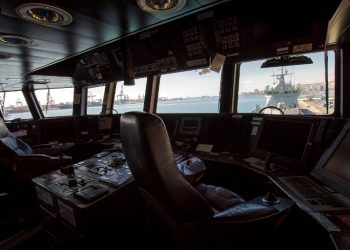
The maritime dimension of the training program was demonstrated in practice at the port of Nouakchott with the active participation of the Mauritanian Navy. Taking advantage of the operational stop by the Portuguese Navy’s ocean patrol vessel NRP Viana do Castelo, allied instructors and local naval forces conducted a joint practical exercise aboard the vessel and in territorial waters. The simulation included boarding maneuvers, the inspection of suspicious vessels, maritime security and responses to incidents at sea, testing the extent to which Mauritanian sailors had assimilated the operational tactics.
The convergence of Spanish Army training and NATO defense-strengthening programs positions Mauritania as a decisive geopolitical bulwark for the security of Europe and the Canary Islands. The consolidation of highly trained local armed forces capable of explosive ordnance disposal, special operations and maritime surveillance is key to containing the risks of instability in the Sahel region and ensuring the disruption of illicit networks before they extend into the Euro-Atlantic area.
The article ‘The Spanish Army trains Mauritania’s military in special operations’ was first published on canarymaritime.com.