A joint operation involving the Guardia Civil, the National Police and the Customs Surveillance Service — in close coordination with international anti-drug agencies — culminated in the boarding at sea of the ocean-going tugboat GT Victory and the seizure of 3,361 kilograms of cocaine. The vessel, sailing under Panama’s flag of convenience, was intercepted in Atlantic waters near the Canary Islands after operating for weeks as a ghost ship without a positioning signal on international radar systems.
Tension during the boarding and flight at sea
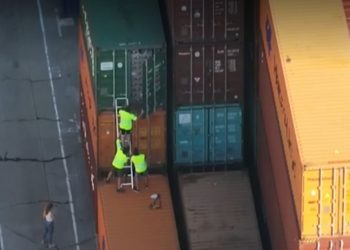
The high-seas assault took place after military and maritime intelligence alerts warned of the transport of a large-scale shipment ultimately bound for Europe or North Africa. The boarding maneuver involved moments of intense operational tension: the tugboat’s crew ignored orders to stop issued by security forces, attempted to flee and began extremely dangerous evasive maneuvers in open waters. The pursuit continued until members of the assault team managed to disable the engines and board the vessel directly. Although intelligence reports indicated that weapons were on board and that the sailors were openly resisting, the intervention ended without gunfire or injuries among the officers or suspects.
139 bales hidden in the vessel’s technical structure
A meticulous search of the structure uncovered a haul of 139 large bales distributed among the holds and technical compartments. The total volume seized makes this operation one of the largest drug seizures recorded in the Atlantic area in recent years, a key logistical corridor for transporting drugs from South America to Europe using a mother-ship operation.
Fifty days with its radar switched off and a simulated course
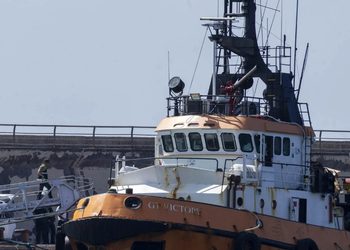
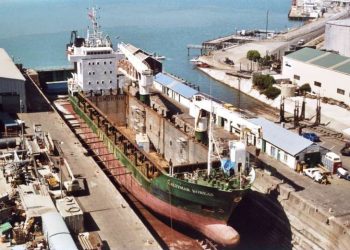
The GT Victory’s maritime tracking history reveals serious operational irregularities. It is a 26-meter-long tugboat that is 50 years old — built in the Netherlands in 1976 — whose last officially recorded port call took place on July 13 at the port of Gibraltar, from where it declared a false course toward Morocco. From that date, the vessel stopped transmitting its automatic identification system (AIS) signal for more than 50 days, even simulating false coordinates in Southeast Asian waters to evade satellite monitoring by coast guard services.
Balkan command structure and Asian crew
The operation resulted in eight crew members arrested, of Albanian and Filipino nationalities. The combination of profiles reflects the modus operandi of transatlantic organized crime: the use of technical crews from Southeast Asia to operate the vessel, combined with the presence on the bridge of members of networks from southeastern Europe, responsible for controlling the cargo and its logistics.
Transfer to port and judicial custody before the National Court
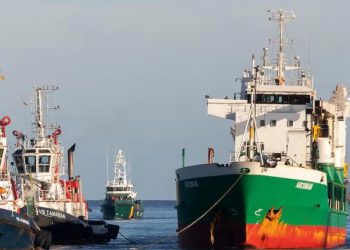
After the vessel was secured at sea, the GT Victory was escorted by maritime patrol boats and moored under police custody in the dock at the port of Santa Cruz de Tenerife, where forensic police teams are completing their inspection of the structure. Meanwhile, the eight detainees were taken to Gran Canaria to appear before the Central Investigating Court of the National Court, the judicial body with jurisdiction over proceedings involving international drug trafficking and membership in a criminal organization allegedly committed in international waters.
Investigation opened into the receiving network on land
Police proceedings remain ongoing and under judicial secrecy. Investigators are now focusing on reconstructing the ship-to-ship transfers through which the tugboat received the cocaine, as well as identifying the recipients on land who were awaiting the unloading of the shipment. Further arrests in the coming hours have not been ruled out as part of the network’s land-based branch.
The article “Ghost tugboat carrying 3.3 tons of cocaine came from Tenerife, was bound for Morocco and departed Gibraltar” was first published on canarymaritime.com.