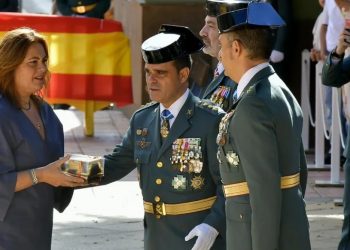
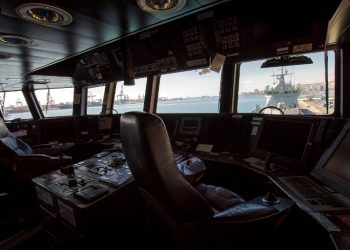
The Central Operative Unit (UCO) of the Guardia Civil has set up a specialized team of maritime analysts known as the “eyes of the Atlantic.” The unit was created as a direct offshoot of the officials in charge of the Central Anti-Drug Group, with the aim of processing and integrating the vast volume of data generated by drug-trafficking networks operating along the Atlantic route and in southern Spain. Its daily work focuses on cross-referencing information on dangerous individuals, ocean routes and the arrival of drug shipments, in constant coordination with the Regional Center for Analysis and Intelligence Against Drug Trafficking and the European platform MAOC-N.
Satellite tracking and surveillance along the Canary corridor
The intelligence operation combines the continuous analysis of radar signals and satellite imagery with monitoring sudden changes in course or speed by suspicious vessels. Oversight of these patterns has enabled officers to track the movement of high-speed craft near the Spanish coast, in the mid-Atlantic waters close to the Canary Islands, and along the river approaches of the Guadalquivir and Guadiana. The investigations have helped identify the buyers and the methods used by criminal organizations to bring drugs into mainland Spain and the rest of Europe.
Joint operations off the coast of West Africa
The exchange of strategic data with international agencies has led to major seizures off the coast of West Africa and in the mid-Atlantic, a key geographical area along the corridor linking South America with the Canary Islands and the Iberian Peninsula. At the end of last year, information provided by this team in cooperation with the US Drug Enforcement Administration (DEA) enabled French authorities to board the vessel “Joao e María,” intercepting a shipment of 1,500 kilograms of cocaine. In parallel, “Operation Expósito” concluded with the seizure of a sailboat from Brazil carrying 900 kilograms of drugs in African Atlantic waters, south of Senegal. Three people were arrested after the French Navy was asked to assist.
Transatlantic interceptions between the Caribbean and Cádiz
The analysts’ operations also extended to the Caribbean through “Operation Atlantis,” coordinated with personnel from the Regional Center for Analysis and Intelligence Against Drug Trafficking in Andalusia. The Armed Forces of the Antilles located the Brazilian-flagged fishing vessel “Ana Rosa” south of the coast of Martinique. It was carrying 1,200 kilograms of cocaine bound for the Gulf of Cádiz. The operation ended with the arrest of its five crew members before the cargo could be transferred to speedboats on the open sea for subsequent unloading on land.
Historic high-seas operation brings down a narco-submarine
The unit’s greatest operational achievement in the ocean corridor came during “Operation Nautilus,” carried out in cooperation with Portuguese authorities and the Regional Center for Analysis and Intelligence Against Drug Trafficking. The analysis work brought together the clues needed to detect in the middle of the ocean the first narco-submarine intercepted in the open sea without its crew having time to sink the cargo. The seized vessel, which cost €500,000 to build, was carrying 6,600 kilograms of cocaine valued at more than €132 million. The operation ended with the arrest of its five crew members, who had agreed to be paid up to €30,000 each to complete a three-week voyage across the Atlantic at the limits of human endurance.
The article UCO’s major intelligence operation to block cocaine trafficking near the Canary Islands was first published on canarymaritime.com.