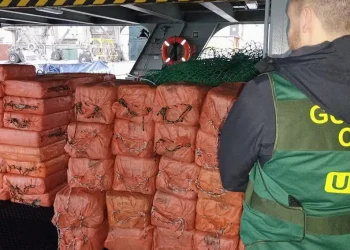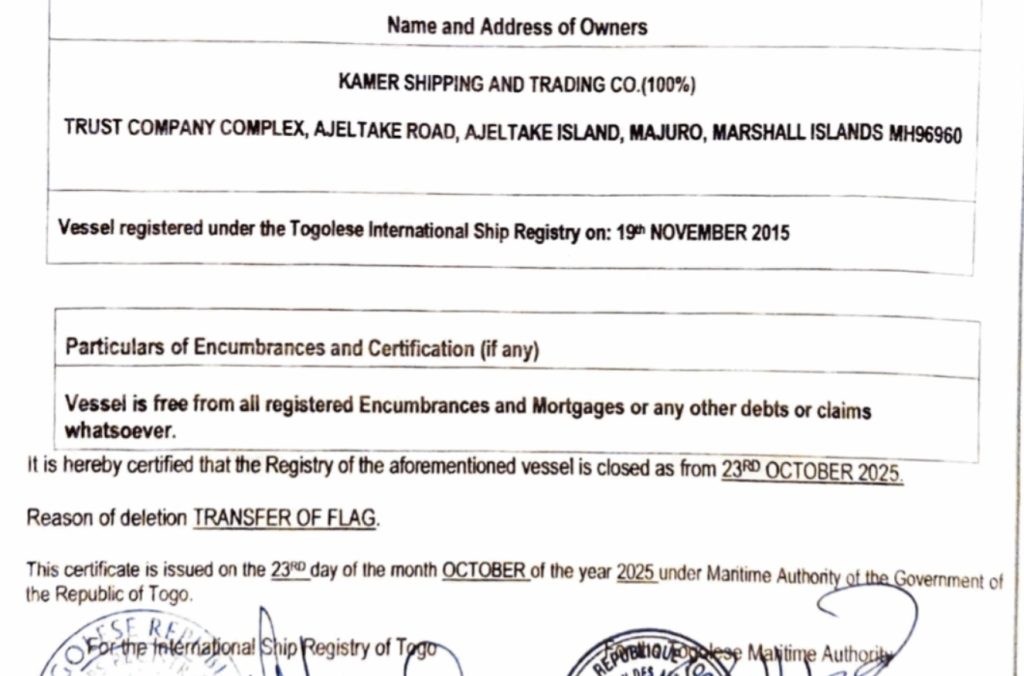
What began as a spectacular intervention by the Police and the Spanish Navy in international waters off the Canary Islands has ended up causing a judicial earthquake thousands of kilometers away. The Istanbul Public Prosecutor’s Office has taken the reins following the <strong seizure of 10 tons of cocaine aboard the vessel United S, a ship reportedly linked to a company based in Turkey.
A coordinated operation in six provinces
The investigation in Turkey did not take long to commence. After it was confirmed that among the 13 crew members arrested by Spanish authorities are four Turkish citizens, the Turkish prosecutor’s office ordered simultaneous searches at 19 different locations. The operation affected the provinces of Istanbul, Mersin, Tekirdağ, Kocaeli, Sakarya, and Hatay, culminating in the detention of 7 individuals.
Among the arrested are notable names like Çetin Gören and Engin Çavuş, who are charged with forming a criminal organization, drug trafficking, and money laundering. Additionally, Turkish authorities have issued international arrest warrants for three other suspects who are currently fugitives abroad.
The trail of money: Cryptocurrencies and locked properties
The Turkish justice system has been relentless in targeting the financial muscle of the organization. Following the trail of the vessel intercepted in the Canary Islands, the Peace Court has authorized the total seizure of assets from the main suspects and the company United Shipping Ship Agency (Kamer Shipping). This measure includes: Movable and immovable assets, shares, deposit and investment accounts in traditional banks, and holdings in the cryptocurrency market, an increasingly used avenue for laundering drug trafficking proceeds.
The judicial front in Spain
Meanwhile, the Canary connection remains active. Four of the crew members —Kubilay Yalçın, Ali Osman Amanet, Remzi Karakaya, and Atanur Ateş— remain in custody in Spain, awaiting judicial proceedings stemming from the boarding in the Atlantic. The investigation continues under a strict regime of confidentiality and diligence, while authorities from both countries exchange data to completely dismantle this international network.
Article written by Pedro Marrero. Edited and verified by Gara Vega. Information cross-verified without institutional filters. This analysis has not been funded by official advertising nor conditioned by lobby interests.