The Islamic Republic of Mauritania has consolidated its strategic position in the international maritime landscape following the recent announcement from the Mauritanian Maritime Affairs Agency (AMAM). The country has achieved formal inclusion in the so-called ‘White List’ of the International Maritime Organization (IMO), which certifies the full application of provisions of the International Convention on Standards of Training, Certification and Watchkeeping for Seafarers (STCW). This recognition is not merely administrative; it represents an external validation of the robustness of the national skills evaluation system, the transparency in the issuance of licenses, and the effectiveness of quality control mechanisms under global standards.
For a nation with an extensive Atlantic facade and a growing reliance on blue and extractive economies, this advancement marks a turning point. The achievement is a tangible result of an ambitious roadmap for institutional modernization, driven under the vision of President Mohamed Ould Cheikh El Ghazouani. The creation of the AMAM was the first step towards maritime governance that seeks not only effective sovereignty over its territorial waters but also competitive integration into international value chains. Under the implementation of Prime Minister Moctar Ould Djay’s government, this strategy has overcome bureaucratic obstacles that historically limited the sector’s potential.
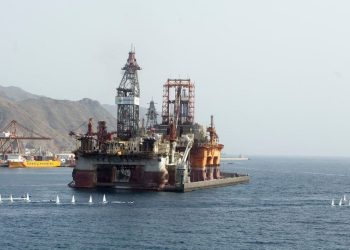
The economic significance of this recognition is immediate for Mauritanian human capital. The IMO quality seal effectively opens the doors to the international maritime labor market for professionals in the country. Mauritanian personnel will be able to integrate with full guarantees into highly complex sectors, such as deep-draft transportation, specialized maritime services, and, crucially, operations linked to the oil and gas industry. Given the intense exploration and extraction activity off the coasts of the country and its neighbors, access to work on offshore platforms is emerging as a high-value professional and economic development pathway. Furthermore, fishing in international waters and other technical niches that require rigorous certifications are no longer forbidden territories for national mariners.
In the machinery of this transformation, the Naval Academy of Mauritania plays a critical role. As the cornerstone of maritime training, the institution has had to align its training programs with the international requirements of the IMO, incorporating practical exercises that simulate the most rigorous operational environments. This synchronization between training and the needs of the international market ensures that Mauritanian talent is not merely a spectator in the global industry, but an active agent. Investment in human capital is, ultimately, the engine that guarantees this recognition does not remain merely a diploma in a ministerial archive, but transforms into a recurring source of foreign currency and social development.
The Ministry of Fisheries and Maritime and Port Infrastructure has made it clear that entry into the ‘White List’ does not represent a final goal, but rather the starting point of a deeper reform. The challenge now is sustainability. The administration is aware that IMO standards are dynamic and require constant administrative vigilance. Maintaining the integrity of the certification issuance system is an inescapable responsibility if Mauritania wishes to retain its credibility before global shipping and energy operators.
This institutional success occurs at a time when the Mid-Atlantic is being redefined. With the expansion of the energy sector and the increase of maritime logistics in the region, a country’s ability to certify and deploy qualified seafarers under the umbrella of international legality becomes a top competitive advantage. Mauritania, by aligning its regulations with IMO standards, has cleared up the uncertainty surrounding its professional titles, removing barriers that previously hindered its mariners from competing on equal terms with their European or Asian counterparts.
The commitment of the public sector is clear: national sovereignty over the sea is no longer exercised solely through border monitoring, but through excellence in training and the competitiveness of its human resources in the demanding arena of global trade.