




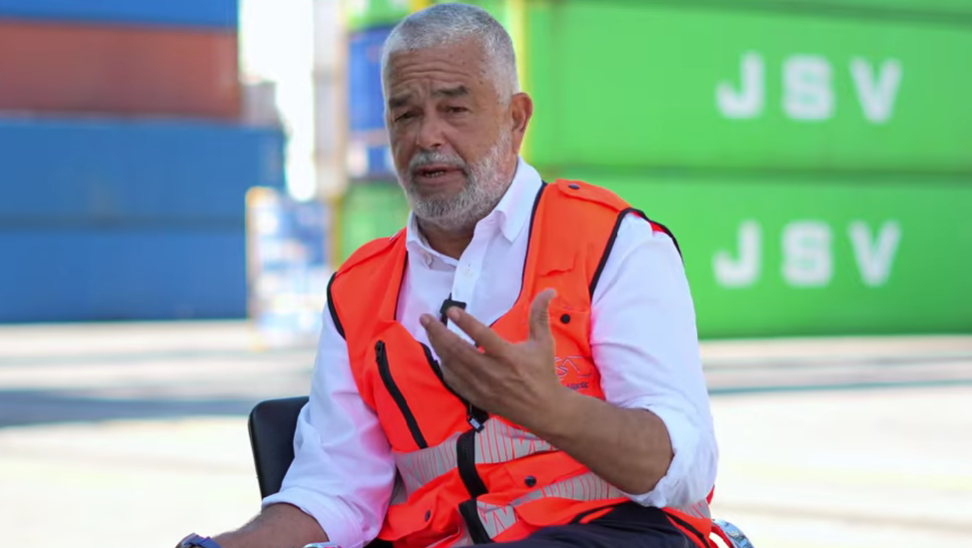
The former sole administrator of Gesport and now an executive in Las Palmas of Romeu at the port of Las Palmas, Francisco Naranjo, ignited some controversy on Tik Tok by stating that dockworkers can earn up to 120,000 euros a year. Naranjo said that dockworkers face a certain ambiguity about their traffic load. “They earn a more than decent salary, they have union power, which they have built with much sacrifice,” he stated. He emphasized that cases of “extortion” from the “90s” no longer exist.
He added that “there is a bit of urban legend” and that access to that job position relies on certain “sympathies” and that his father, as a dockworker, “never offered it to me.” “Interestingly, over the years my son is a dockworker, he worked at Gesport for five years,” he added. He claimed that “a dockworker can earn up to 130,000 euros a year.” He explained that what “makes the difference” is the number of hours with which an employee operates. “There is a law, dating back to 1988, and they do it very well,” he concluded. The founder of Gesport explained that without the dockworkers of Las Palmas, “neither Gesport, nor Opcsa nor Boluda would exist.”
“Today dockworkers have a career, truly, they do not inherit it, almost all dockworkers’ children have swept containers or cleaned them by hand,” he asserted. In the most recent episode of the podcast Empresarios Canarios, Fran Naranjo, founder of Gesport, offered an intimate and direct portrayal of what it means to venture into the heart of the Canary Islands’ port sector. With over 1,000 views since its premiere on March 5, 2026, the interview reveals the challenges of managing terminals in the ports of Las Palmas and Lanzarote, key players in the island’s economy.
Naranjo recalled his transition from management in large groups to finding himself unemployed during the 2012 crisis, with two children and two mortgages. “I had no safety net; the only thing I knew how to do was manage terminals,” he explained. Thus, Gesport was born, a company that is now part of the logistics fabric of the Canaries. From setting up his first office under an umbrella to negotiating the purchase of cranes in Antwerp without confirmed financing, Naranjo details the risks of betting personal assets in a sector characterized by high investment and constant pressure.
During the conversation, Naranjo discussed how he managed to obtain a 30-year port concession, the challenges of coordinating the operations of a terminal in Las Palmas, and the role of dockworkers in daily logistics. He also explained the complexities of convincing banks to finance multi-million investments, the purchase of strategic cranes, and the management of 60 families of employees in a 24/7 operational environment where problems never cease.
The interview also provides a look into the future of the company after its sale to the Romeu Group, with Naranjo reflecting on leadership, risk, and resilience. According to the founder of Gesport, “venturing in the port is not just a matter of numbers; it is a constant commitment to people, investment, and the trust placed in you.”







