




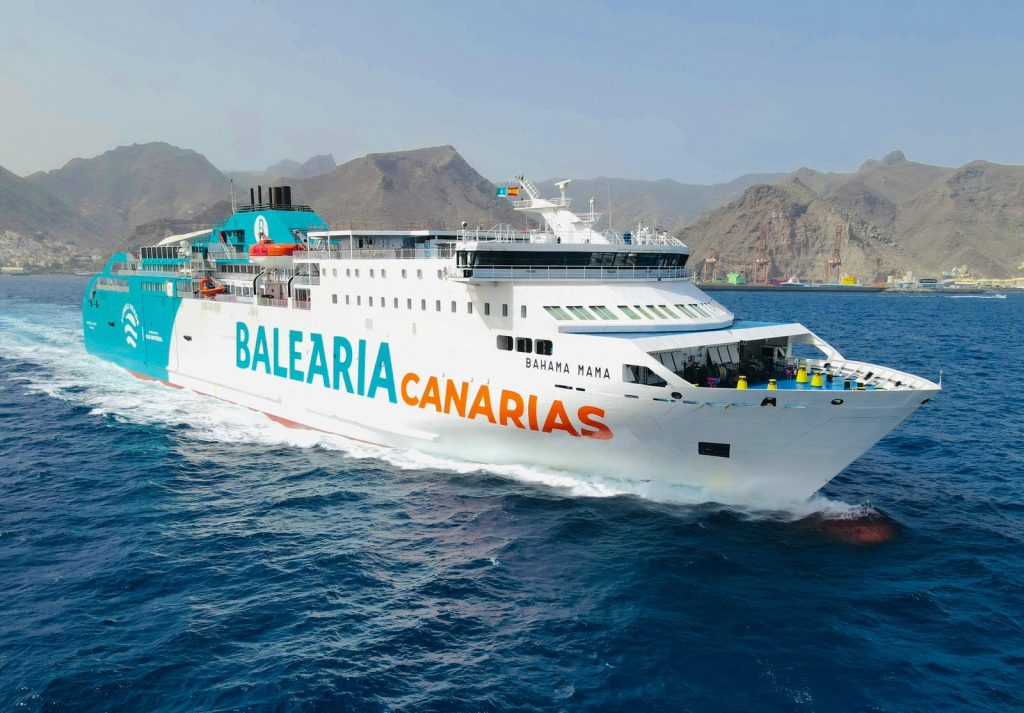
The map of maritime transport in the Canary Islands has completed its largest structural reconfiguration. The Baleària shipping company has executed effective control of the assets of Naviera Armas Trasmediterránea in the Canary Islands. The move encompasses the operation of inter-island routes within the archipelago and trunk connections with the mainland. This operation grants the Denia-based company an undeniable hegemonic position in the Atlantic and redefines the power balance in the cabotage sector.
The corporate integration unifies three brands deeply rooted in the ferry business in Spain: the centenary Compañía Trasmediterránea, founded in 1916; Naviera Armas, of Canary origin and created in 1941; and Baleària itself, established in 1998 by Adolfo Utor. The resulting group now supports a unified workforce of 4,500 employees, backed by a fleet of over 50 passenger and roll-on/roll-off cargo vessels. Estimated annual flows will exceed 8 million passengers and 11 million linear meters of cargo, consolidating a joint revenue of over 1 billion euros.
Canarian capital
The operational deployment in the islands will be channeled through the launch of the new brand Baleària Canarias. The company’s management has established a transition period in which this brand will coexist with the historical branding of Armas Trasmediterránea to protect commercial sales channels and mitigate risks in booking systems. The strategic plan includes a capital injection of 45 million euros over the next three years, a fund aimed at digitalization, technical modernization, and improving the interior comfort of the absorbed vessels.
The labor dimension of the agreement incorporates strict guarantees in light of union pressure in the Canary ports. Baleària has committed to maintaining the integrity of all integrated land and fleet staff. The shipping company seeks to mitigate opposition from social agents and facilitate administrative processes with the Port Authorities of Las Palmas and Santa Cruz de Tenerife to optimize the use of passenger spaces and cargo terminals under public concession.
The president of the group, Adolfo Utor, has linked the significance of the acquisition to the protection of the State’s transport networks: ‘The new Baleària is prepared to ensure the efficiency of the entire national maritime transport network in all its territories. We are talking about essential infrastructure for territorial cohesion with the Canary and Balearic Islands, and with the autonomous cities of Ceuta and Melilla, in addition to being a key bridge for political and commercial relations with Morocco and Algeria. We are a nationally capitalized company capable of guaranteeing sovereignty in a strategic sector for the country.’
The completion of the Canary phase represents the first milestone of a global agreement announced last August. The commercial operation was originally designed within three distinct geographic perimeters due to regulatory requirements regarding competition and the technical complexity of asset transfers. With the Atlantic market under its effective control, Baleària’s legal teams will focus on resolving the necessary administrative procedures to formalize the acquisition of lines and frequencies linked to the strategic areas of the Strait of Gibraltar and the Alboran Sea.







