




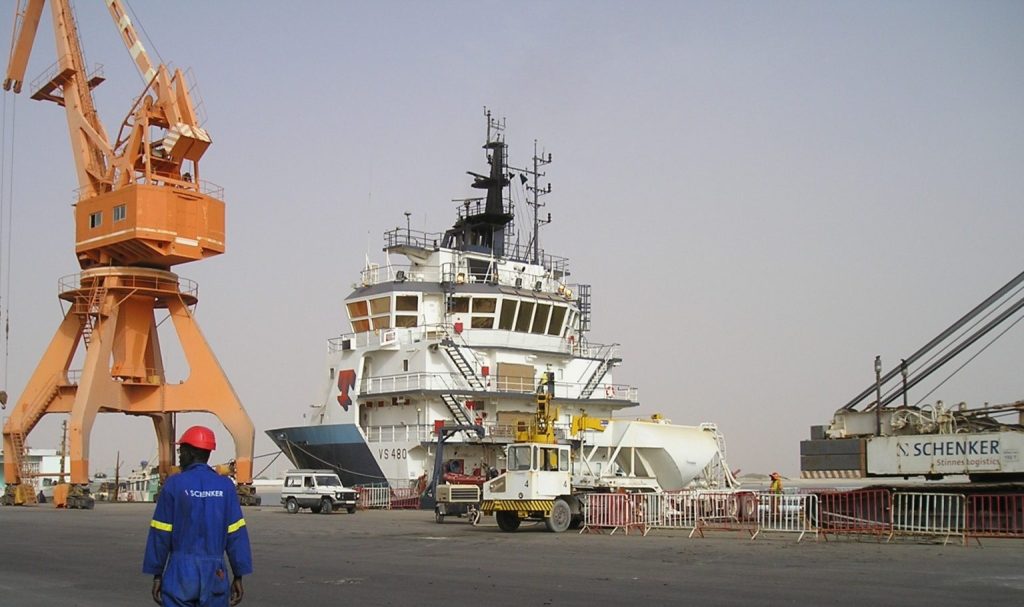
The detailed analysis of the trade exchanges between the provinces of Las Palmas and Santa Cruz de Tenerife with the Islamic Republic of Mauritania reveals a model of economic interaction that is highly asymmetric. The consolidated official records expose a scenario where the archipelago operates as a node for redistribution of advanced manufactures and petroleum derivatives, retaining a solid surplus in the balance of payments. This structural financial advantage is nuanced by an absolute reliance on the supply of a single primary food resource.
The fundamental pillar supporting the Canary Islands’ trade surplus is the energy and refining sector. Exports of fuels and mineral oils to the Mauritanian market reached 378.76 million euros, recording a null import volume. This flow responds to the strategic role of the port of La Luz and Las Palmas as a logistical supply base for bunkering and hydrocarbon provisioning for North West Africa. The second category in sales volume was paper and cardboard, contributing 146.08 million euros to island exports against marginal purchases of 0.01 million euros.
The industrial business fabric of the archipelago consolidates its position as a preferred technological supplier in the sub-Saharan region through equipment goods. Exports of machines and mechanical devices totaled 133.96 million euros, keeping Mauritanian imports at 3.07 million euros. Furthermore, the automotive and land transport sector generated foreign sales valued at 40.11 million euros, while shipments of electrical devices and materials reported another 32.18 million euros, confirming Nouakchott’s market dependence on the logistical and industrial capacity installed in the Canary Islands.
The counterpart to this export hegemony is concentrated exclusively in the marine extraction sector, reflecting the exploitation of adjacent fishing grounds. Canary Islands imports of fish, crustaceans, and mollusks from Mauritania amounted to 954.88 million euros, a figure that obliterates any other purchase category in the statistics. Against this massive import flow, island companies exported merely 0.24 million euros in the same category, establishing a negative sectoral balance of 954.64 million euros, which turns the archipelago into a net receiving and processing center for Central Atlantic fishing.
The processed food sector and light manufacturing reinforce the positive balance of the islands through the local agri-food industry. Shipments of cereal and pastry products reached 30.56 million euros, accompanied by exports of diverse food preparations valued at 13.34 million euros and dairy products at 10.17 million euros. In the realm of consumer goods and the chemical industry, sales of plastic materials and their manufactures injected 29.09 million euros, while essential oils and perfumery products contributed 12.65 million euros, consolidating a pattern where the Canary Islands exchange added value for food raw materials.







