




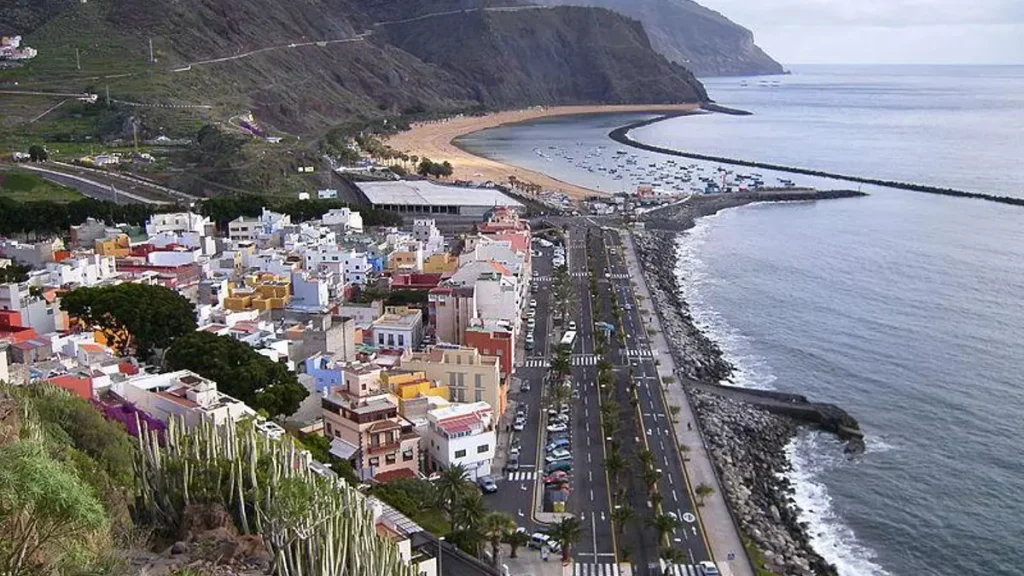
In the Supreme Court, the death certificate of one of the most ambitious claims in the history of the Canary Islands’ ports has been signed. The Bricansa Real Estate Group sought compensation of €116,750,760.42 from the Port Authority of Santa Cruz de Tenerife for the loss of a concession that never materialized. The ruling, delivered on March 23, 2026, not only closes the door to an astronomical indemnity but also unveils the peculiar chronology of a failed project.
The structure of this multimillion-dollar litigation involves not only real estate developers, but also carries with it the shadow of an ambitious construction contract that never fully crystallized on the San Andrés coastline. Among the breakdown of the emergent damage claimed by the Bricansa Real Estate Group, which amounted to over €8.7 million, a specific item of €8,000,000.00 directly linked to the costs of a Temporary Business Union (UTE) of top-tier companies stands out.
This construction alliance, comprised of giants Acciona, SATO, and FCC Construcción SA, operated under a contract whose actual costs were declared before Court of Instruction No. 5 by the UTE’s own administrator. The project, which sought to establish a marina and a yacht club on a concession originally granted in February 2002, turned into a maze of failed investments between 1997 and 2010. Ultimately, the Supreme Court ruled that these multimillion-dollar expenditures on infrastructure and project preparation are not compensable today, leaving the construction companies and the developer facing the definitive loss of their investment in a coastal front that ended up predetermined for other public uses.
The Anatomy of an Impossible Invoice
What is truly picturesque is the breakdown of the ‘invoice’ that the real estate company presented to the state. Of the €116 million claimed, most corresponded to a concept as ethereal as foreseeable lost profits, valued at the round figure of €100,000,000.
This projection of future profits was supplemented by an emergent damage of over €8 million, derived from contracts with construction companies like Acciona, SATO, and FCC dating back to a period between 1997 and 2010. It is the cost of a concrete dream confronted by an insurmountable administrative reality: an unfavorable environmental impact assessment.
The ‘Spaghetti Monster’ of Bureaucracy
Bricansa’s defense attempted to convince the justices that there was a ‘fraudulent scheme’ hatched ‘silently’ by the Administration. The central argument of the review was almost cinematic: the company claimed that only after a ‘reasonable reflection’ in November 2024 could it ‘piece together’ and discover the alleged deception. According to their thesis, the Port Authority had erased the ‘Functional Area of San Andrés’ from its new maps, integrating the concession waters into the outside of the port, which constituted a de facto extinction of their rights.
Three Months of Expiry for a Decade-Long Lawsuit
However, the Supreme Court, under the presentation of Justice Pablo Lucas Murillo de la Cueva, has applied an unyielding logic regarding deadlines. The chamber emphasizes that the company had known since October 2021 that Ports of State had filed away its disputes. The attempt to place the ‘discovery of the injustice’ in November 2024 has been labeled by the court as an ‘artificial’ effort to meet the three-month legal deadline.







