At the Port of Las Palmas, there is a joke that is no longer funny: while the price of coffee at the terminal is being discussed, the neighbor to the south is designing a logistics and tourist amusement park for 2030. But the most concerning part is not that Morocco wants to place 5 million tourists off the Canary coasts; it is concerning that those managing our docks seem to be handing over the keys to the house.
In the strategic report from Morocco’s ANP, the National Port Authority, it is noted that what Morocco proposes is a network of feeder vessels. In this scheme, Dakhla does not seek to be a customer of Las Palmas, but a competitor that will use the Canaries only when it suits them, while redirecting the main traffic to its own terminals (it already manages 45% of Boluda’s Canary terminals). The goal is clear: to reach the level of Agadir or Nouadhibou, where reefer containers already dominate the landscape, taking away from the islands the control of perishable product exports.
Partners
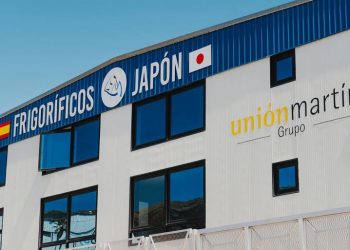
The name of the Turkish multinational Global Ports Holding (GPH) resonates as an international success in the cruise terminal of Las Palmas. However, the trail of money leads us to a local company: Somar Capital, owned by Juan Socas, president of the employers’ association Fedeport, along with Antonio Martín (Maresa). The move is masterful: after winning the cruise operations in Gran Canaria, Global Ports is set to become the star operator of the future Dakhla Atlantique port. By the end of 2025, it has already won the management of cruise operations in Casablanca.
Here is where Canarian ‘port nationalism’ dissolves into the sea. The island partners of Global Ports have been the first to endorse the ‘complementarity’ of services between Las Palmas and Dakhla. But, is there really complementarity when your partner is building a cloned port to Tangier-Med just a few miles away, with salaries of 800 euros compared to the 8,800 euros of a Canarian stevedore?
5 Million Tourists!
Morocco has stopped looking at the Canaries as a reference and now sees it as an obstacle to overcome. Its strategy for Western Sahara (where the UN remains present but Moroccan investment flows in) is a state bet: The target of 5 million tourists by 2030 is not a fantasy; it is an attack plan to capture the routes that today only pass through the Canary Islands. Wind farms and green hydrogen projects so that ships can refuel cheaper than in La Luz. Dakhla is born as a pure financial business, free from the bureaucracy and endless fees that suffocate Canarian entrepreneurs who have not yet sold to foreign capital.
The ‘Suicide’ of Public Diplomacy
The symptom of decline is evident even in the luxury restaurants of Las Palmas. There are no longer directors with permission to ‘spend on public diplomacy’ because the capital is no longer Canarian. Decisions about the future of the Port of Las Palmas are made in international offices where the Canaries are just a point on a map, and Dakhla is the next point to conquer.
A Toast to the Sahara
While Antonio Morales cries out in the desert against the ‘cornering’ of the islands, the reality on the docks is that the ‘enemy’ is already sitting at the boardroom table. If Global Ports manages both Las Palmas and Dakhla, who will it benefit when a cruise line inquires about lower fees? The answer is obvious, and it does not sound Spanish, but rather like an international dividend. The Canaries risk awakening in 2030 as a ‘maritime prison’ decorated with windmills, while part of the 5 million tourists who once ‘belonged’ to Gran Canaria will disembark from a cruise ship in a port that the partners helped to operate.
News written by Gara Vega. Edited and verified by Pedro Marrero. Cross-referenced information without institutional filters. This analysis has not been funded by official advertising nor conditioned by lobbying interests.