




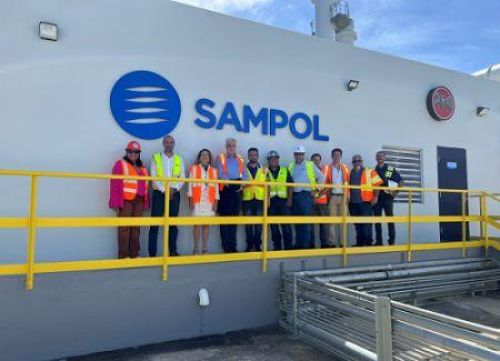
The Sampol Group, a leader in energy and digital infrastructure in the Canary Islands, has formalized its commitment to the African continent with the opening of a strategic office in Morocco. This new operational base will not only oversee current contracts in Morocco but also act as the advanced command post for an ambitious roadmap targeting emerging markets in Sub-Saharan Africa, where the hunger for watts and connectivity is redefining investment priorities.
The executive director, Carmen Sampol, has framed this move within a commitment to stable permanence, leveraging the ecosystem of sectors such as automotive, aerospace, and metallurgy that have already made northern Morocco one of the most dynamic economic hubs in the Mediterranean.
The landing in Tangier underscores a clear trend in the Spanish energy sector: the search for markets with organic growth potential amid the maturity of European scenarios. By establishing itself in the industrial heart of Morocco, Sampol not only shortens physical distances with its African clients, but also aligns with the neighboring country’s strategy to become the main energy hub between Europe and Africa.
The choice of Morocco responds to a logic of geographic proximity and logistical power. The Moroccan city, transformed into an industrial giant thanks to the Tangier Med port complex, offers a unique service platform for companies that, like Sampol, manage projects of high technical complexity.
Sampol’s offensive comes at a time of reconfiguration of the global energy map. European companies have identified Africa as the largest long-term growth market for renewable energy and electrical infrastructure. The figures are eloquent: it is estimated that nearly 600 million people in Sub-Saharan Africa still lack access to electricity. For a firm with the experience of Sampol, which employs 1,600 professionals — including 350 engineers — this infrastructure deficit represents a potential business volume that offsets the risks of international expansion.
With a previous presence in the Canary Islands, Cape Verde, and Tanzania, Sampol has the necessary know-how to operate in diverse environments, from metro systems and airports to power plants and industrial facilities. Its specialization in digital infrastructure and renewables positions it advantageously against other local players, allowing it to offer comprehensive solutions in a continent seeking to leapfrog technological stages through energy decentralization.
Founded in 1934 as a small electrical workshop, Sampol’s evolution into a multinational with over 4,000 projects executed in 26 countries is a success story of Spanish family engineering. The Tangier headquarters is the latest milestone in a transformation that prioritizes high value-added engineering. The company anticipates that its new base will serve as logistical support for immediate projects in Moroccan territory before pursuing new tenders in the Sub-Saharan market, taking advantage of the tax and operational benefits of the Moroccan market.







