
Saturday, 17 October 2026
  • Login
  • Español
  • English
Suscribirme
Subscribe
canarymaritime.com
No Result
View All Result
  • Home
  • Atlantic Ports
    • Atlantic Africa
  • Blue Energy
  • Logistic
  • Shipbuilding Industry
    • Shipyards and Ship Repair
    • Offshore and platforms
    • Industrial innovation and naval R&D
  • Blue Economy
    • Investment and European Funds
    • Financial Sustainability
    • Private Venture Capital
  • Atlantic Geopolitics
    • West Africa
    • Port Security and Defense
    • Blue Diplomacy
    • Canary Islands as a strategic hub
    • Drug Trafficking
  • Home
  • Atlantic Ports
    • Atlantic Africa
  • Blue Energy
  • Logistic
  • Shipbuilding Industry
    • Shipyards and Ship Repair
    • Offshore and platforms
    • Industrial innovation and naval R&D
  • Blue Economy
    • Investment and European Funds
    • Financial Sustainability
    • Private Venture Capital
  • Atlantic Geopolitics
    • West Africa
    • Port Security and Defense
    • Blue Diplomacy
    • Canary Islands as a strategic hub
    • Drug Trafficking
  • Español
No Result
View All Result
canarymaritime.com
es Español en English
No Result
View All Result

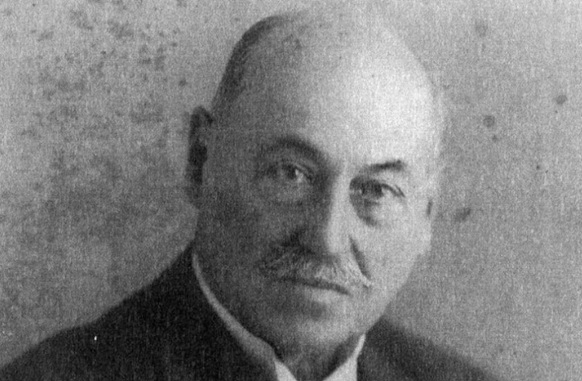
The daring Scotsman Tomás Miller, who prevented Tenerife from dominating regional trade and took to defend Las Palmas

Raquel Molina Betancor by Raquel Molina Betancor
19 June 2026
in Uncategorized
Reading Time: 3 mins read
0
46
SHARES
287
VIEWS
Compartir en WhatsappCompartir en LinkedIn
Google CONVIERTE CANARYMARITIME EN FUENTE DE NOTICIAS EN GOOGLE

No grancanarios deferred to their island as they do in 2026, and it had to be a Scotsman who put a stop to the pressures from Tenerife. The year 1851 was marked as one of the darkest stages in the collective memory of Gran Canaria. The cholera epidemic, which broke out ferociously in the capital, was not only a health tragedy but also a total collapse of the social and economic structure that decimated almost ten percent of the island’s population.

The chaos began silently in the San José neighborhood, where the first deaths were diagnosed with medical confusion, until the reality imposed itself with a mortality rate that reached forty percent of the inhabitants in the hardest-hit areas. Bodies piled up in the streets, forcing citizen volunteers to take on the urgent task of gravediggers house by house in a scenario of absolute desolation.

The response from the authorities became a trap for the islanders themselves. Out of fear of contagion, a radical blockade was imposed, cutting off the island: the Military Commander of the Navy ordered all anchored ships in the harbors to be stripped of their steers to prevent any escape. This measure, combined with the closure of ports, ruined entire families of fishermen and merchants who were trapped in an anchorage lacking maneuver, exposed to drifting and misery.
To sink Gran Canaria

The shortage became so severe that citizens resorted to smoking straw or herbs in the complete absence of tobacco, while mail with Tenerife was managed through a nightmarish protocol involving balsas of vinegar and letters that, when opened and dried, arrived almost illegible at their destination.

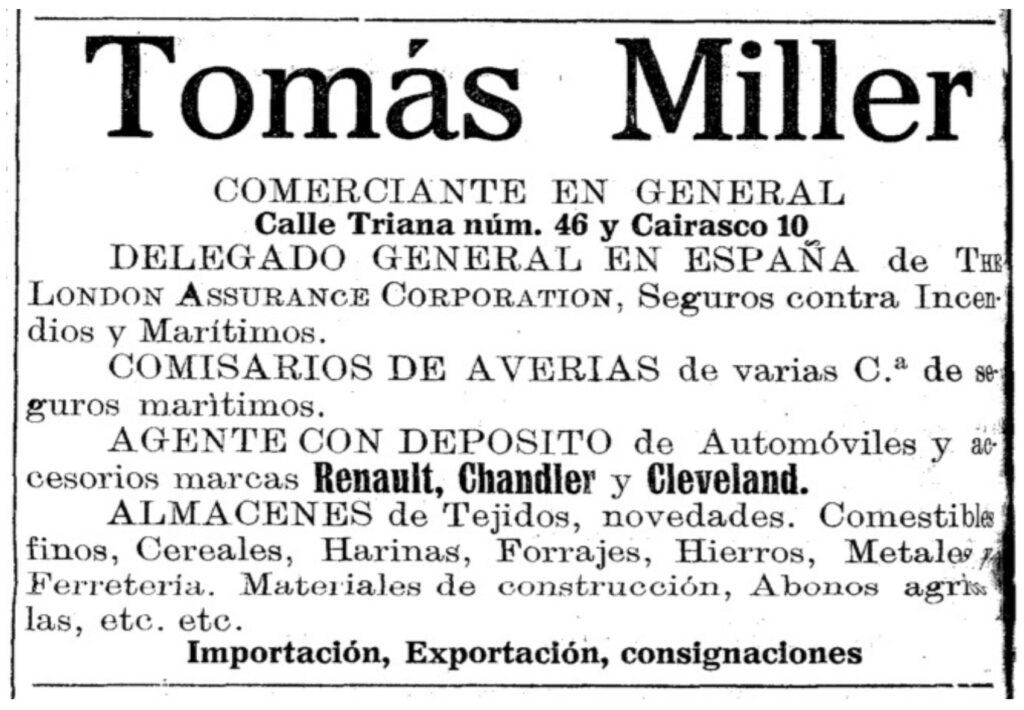
Amid the bewilderment, the figure of Tomás Miller emerged as a fundamental pillar of resistance and management. This Scottish businessman, based in Las Palmas, not only was part of the small elite that turned to the City Council for solutions when the rest of the authorities sought refuge, but he also led the creation of a provisional hospital in Tafira. His commitment, however, came at a heartbreaking human cost: Miller himself lost his wife, María de Vasconcellos, and four of his children during those grim days.

Only his four-year-old daughter Eliza managed to survive the horror of isolation in Tafira, symbolizing the fragility of a society that witnessed the prosperity of trading houses vanish before the brutality of the bacteria.

The origin of the catastrophe was debated between two theories that still fuel historical debates today: the arrival of the brig “Trueno” from Havana —whose infected sheets were said to have been washed unchecked in San José— and the recklessness of the fishing boats operating off the African Coast. Ships like “El Cuervo” and “El Telémaco” became unwilling vectors, transporting death in their holds and crews that became infected simply by rescuing other boats at sea.

The Governor of the province, from his headquarters in Tenerife, personally intervened, intercepting health boats to prevent landings, an attitude that not only fueled resentment over the centralized management of the crisis but also marked a milestone in the political tensions that characterized the insular dispute for years.

By August 1851, when the outbreak began to recede, the city embarked on a radical hygiene effort that changed its appearance. The destruction of dry-stone houses was ordered, the raising of pigs in urban areas was banned, and a thorough cleaning of sewers and stables was carried out. Commercial normality did not return until February of 1852, after months of isolation that left the coffers empty and the fields without labor. Despite everything, the resilience of those who survived allowed for reconstruction.

Tomás Miller, overcoming personal tragedy, rebuilt his life and planted the foundations of Casa Miller, a business lineage that, through generations, would define the port’s future in the Gran Canaria capital well into the XX century.

This episode, rescued from oblivion by the archives of the Captaincy and family chronicles, continues to offer curious data, such as the existence of brigs whose seafaring lives ended after public auctions due to litigation stemming from the economic ruin caused by the epidemic. The ‘Telémaco’, for instance, after surviving quarantine and disease, continued its life in the XX century as a prominent figure in the stories of Canary Island migration to Venezuela. The memory of those days, documented in official bulletins, not only narrates the cholera but also tells the chronicle of a city that, despite losing 5,599 of its members, managed to articulate a network of solidarity and survival that ultimately cemented the modern identity of its port and its people.


Google CONVIERTE CANARYMARITIME EN FUENTE DE NOTICIAS EN GOOGLE
Tags: puerto las palmasPuertos de Tenerife
Previous Post

Fundación Puerto de Las Palmas: Madrid prepares to apply a 155 and take total control

Next Post

The Patrons of the Foundation Ports of Las Palmas Expect to Approve Accounts This Monday

Raquel Molina Betancor

Raquel Molina Betancor

Raquel Molina Betancor is a veteran investigative journalist whose career has been defined by rigor, patience, and in-depth reporting on power structures, corruption, and institutional transparency. She trained in street reporting and court journalism and has collaborated with outlets such as Público, where she produced investigations and analytical pieces grounded in documentation, verified sources, and long-term judicial follow-up. A firm believer in journalism as a craft rather than a spectacle, her work focuses on exposing opaque administrative dynamics and telling uncomfortable stories with facts, context, and a healthy dose of well-aimed grit.

NewsRelated

Elena Marín da el salto a la política con Teodoro Sosa en Las Palmas
Investment and European Funds

Elena Marín Enters Politics Alongside Teodoro Sosa in Las Palmas

16 October 2026
410
El Puerto de Santa Cruz de Tenerife, pieza clave en la nueva ante el riesgo de terremotos
Defensa

Santa Cruz de Tenerife Port, a key element in the new earthquake-risk framework

16 October 2026
270
Santana se proyecta hacia la lista de Ángel Víctor Torres con el PSOE por Las Palmas
Financial Sustainability

Gustavo Santana left off PSOE’s Las Palmas lists and, for now, remains at the helm of Puertos del Estado

16 October 2026
307
Puertos Canarios abre al público sus recintos para potenciar el valor del dominio público marítimo
Financial Sustainability

Puertos Canarios clarifies scope of TSJC ruling on Puerto Rico and rules out extending concessions

16 October 2026
273
Lavinia lleva su batalla contra Hacienda ante el Tribunal Supremo
Financial Sustainability

Spain’s Supreme Court to rule on port concession extensions and their impact on Laskaridis’ business in Las Palmas

16 October 2026
310
Votorantim logra una prórroga de 15 años en el Puerto de Tenerife capital para ampliar su planta de Clinker
Financial Sustainability

Votorantim secures 15-year extension at Tenerife’s capital port to expand clinker plant

16 October 2026
274

Leave a Reply Cancel reply

Your email address will not be published. Required fields are marked *

© 2026 canarymaritime

  • Contact
  • Transparency
  • Code of ethics
  • Legal Notice
  • Privacy Policy
  • Cookie Policy (EU)
  • Intellectual Property Rights
  • Promise to Our Readers
  • Principles on the Use of AI
  • Commitment to Our Subscribers and Advertisers
  • Español
  • English
Gestionar consentimiento

Para ofrecer las mejores experiencias, utilizamos tecnologías como las cookies para almacenar y/o acceder a la información del dispositivo. El consentimiento de estas tecnologías nos permitirá procesar datos como el comportamiento de navegación o las identificaciones únicas en este sitio. No consentir o retirar el consentimiento, puede afectar negativamente a ciertas características y funciones.

Funcional Always active
El almacenamiento o acceso técnico es estrictamente necesario para el propósito legítimo de permitir el uso de un servicio específico explícitamente solicitado por el abonado o usuario, o con el único propósito de llevar a cabo la transmisión de una comunicación a través de una red de comunicaciones electrónicas.
Preferences
The technical storage or access is necessary for the legitimate purpose of storing preferences that are not requested by the subscriber or user.
Estadísticas
El almacenamiento o acceso técnico que se utiliza exclusivamente con fines estadísticos anónimos. Sin un requerimiento, el cumplimiento voluntario por parte de tu proveedor de servicios de Internet, o los registros adicionales de un tercero, la información almacenada o recuperada sólo para este propósito no se puede utilizar para identificarte. The technical storage or access that is used exclusively for anonymous statistical purposes. Without a subpoena, voluntary compliance on the part of your Internet Service Provider, or additional records from a third party, information stored or retrieved for this purpose alone cannot usually be used to identify you.
Marketing
The technical storage or access is required to create user profiles to send advertising, or to track the user on a website or across several websites for similar marketing purposes.
  • Manage options
  • Manage services
  • Manage {vendor_count} vendors
  • Read more about these purposes
Ver preferencias
  • {title}
  • {title}
  • {title}
No Result
View All Result
  • Home
  • Atlantic Ports
    • Atlantic Africa
  • Blue Energy
  • Logistic
  • Shipbuilding Industry
    • Shipyards and Ship Repair
    • Offshore and platforms
    • Industrial innovation and naval R&D
  • Blue Economy
    • Investment and European Funds
    • Financial Sustainability
    • Private Venture Capital
  • Atlantic Geopolitics
    • West Africa
    • Port Security and Defense
    • Blue Diplomacy
    • Canary Islands as a strategic hub
    • Drug Trafficking

  • Login

© 2026 canarymaritime.com


