




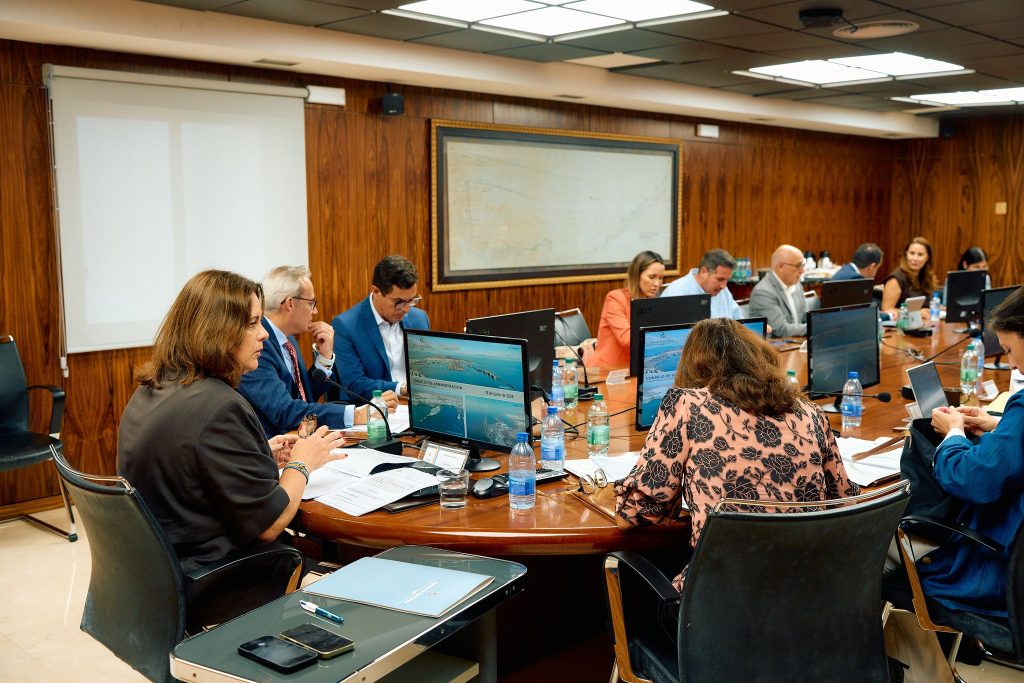
The possible application of an administrative intervention mechanism, equivalent in its coercive capacity to an exceptional measure like article 155, looms over the Fundación Puertos de Las Palmas following the repeated failure to comply with the dissolution directives issued by the state regulator. Puertos del Estado, faced with the refusal of President Beatriz Calzada to resolve contracts declared illegal and her insistence on maintaining an organizational structure under suspicion, is preparing a technical takeover that would allow for the forced liquidation of the entity and nullify Beatriz Calzada’s management capacity over this body.
The internal dynamics of the Port Authority have been disauthorized. The president Calzada confirmed to Canarias Ahora this Thursday that she seeks time by presenting counter-reports and promising ‘corrections’, but these moves are interpreted by Madrid as delaying maneuvers, as confirmed by Canarymaritime from sources in the Ministry of Transport.
Precedent of direct guardianship against opacity
This intervention would not only entail the cessation of the decision-making autonomy of the Port Authority in the foundational realm, but it would also set a precedent for direct guardianship to halt the political instrumentalization of port assets, shifting command to central auditors to sanitize a management model that, in practice, has been disauthorized by the state legal services.
Unprecedented scrutiny of the central regulator
The direction of the agency is under unprecedented scrutiny by Puertos del Estado, which is beginning to consider direct intervention due to the persistence of irregularities detected in its foundation. The implementation of an executive control mechanism, politically akin to a de facto administrative intervention, now hovers over the decisions of the board of directors of Puertos de Las Palmas, owner of the Fundación, after the refusal to dissolve a structure declared illegal by auditors.
Warnings about asset liability
The central state agency is going to harden its stance after the last council ignored warnings about irregular hiring and nepotism in the Fundación Puertos de Las Palmas. The state lawyer and the representatives of Puertos del Estado in Gran Canaria have warned that the continuity of this situation not only taints administrative procedures but also generates direct asset and legal liability for those who, aware of the illegalities, decide to maintain them. The patience of the central entity seems to have run out, shifting the focus towards the possibility of a technical intervention to enforce compliance with the law.
The 2013 regulation as a point of friction
The 2013 regulation mandating the dissolution of these foundations has been ignored under the pretext of a port land concession that expires in 2028. The state does not rule out taking direct control of the foundation to proceed with forced liquidation, thereby nullifying the decision-making capacity of the presidency over existing contracts.
A reputational risk for the logistics hub
The risk to the institution is absolute. If Puertos del Estado applies this form of exceptional control, Beatriz Calzada’s management autonomy would be reduced to a minimum regarding the foundation. This measure would represent an unprecedented reputational blow to the port, an essential logistics hub that handles millions of tons of goods annually and now sees its prestige crumble under the weight of a conflict with the national regulator. The lack of alignment with Madrid has transformed a management crisis into a battle for the administrative guardianship of the entity.
Fracture in the command hierarchy
The command hierarchy is fractured. While the island team tries to gain maneuvering room until 2028, Puertos del Estado advances in the construction of a file justifying immediate intervention. The state lawyer has been clear in her opinion: the responsibility of maintaining favoritism in hiring lies directly with the board of directors. The state seems willing to break the inertia of the foundation, applying a forced correction that limits the powers of the presidency and ensures that the port’s funds are used under strict auditing criteria.
The end of the dialogue route
The coming weeks will be crucial. Beatriz Calzada faces the difficult task of justifying to the state a structure that it considers an illegal burden. The delaying game has ended, and the regulator has stopped accepting the president’s explanations as valid. The application of this administrative ‘article 155’ on the port foundation seems increasingly imminent, which would mean the de facto cessation of political influence over an entity designed for international trade that has ended up being hijacked by a localist agenda and a web of highly controversial personnel.
State imposition against inertia
The state has the legal tools to force the closure and prevent the situation from dragging on until 2028. Institutional loyalty has been broken at the moment when the option for forward flight was chosen over the warnings from legal services. The island authority now awaits a definitive move from Madrid that could change the organizational chart and the powers of the port of Las Palmas. The intervention, ultimately, would recognize that the route of administrative dialogue has failed and that only state imposition can restore legality within the foundation.







