




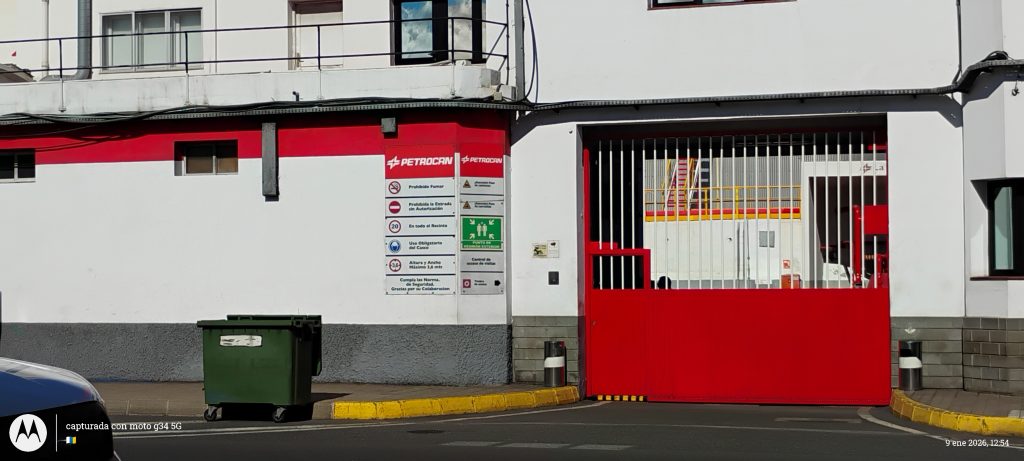
The scandal of the alleged tax fraud at the Port of La Luz has taken a political turn with unpredictable consequences. The Government of the Canary Islands, which must rely on the protection of the State’s legal services, has decided to formally appear as a private accuser in the case against Cepsa (now Moeve) and its subsidiary Petrocan. The reason: it is considered an “aggrieved party” for having lost nearly 8 million euros in special taxes between 2016 and 2021, as Canarymaritime has learned from legal sources. The prosecution, as titled by Maspalomas24H, has requested the corporate death penalty for Cepsa in the Kingdom of Spain. Also on Cepsa’s board of directors is a State lawyer on leave: Soraya Sáenz de Santamaría as an independent member, and the Canary Treasury is in the hands of the PP.
The legal contradiction of the Executive
The Canary Government’s appearance as an aggrieved party has raised eyebrows in legal circles. The situation borders on procedural surrealism: while a lawyer from the Autonomous Community acts as a prosecutor to recover the defrauded funds, other lawyers from the same Government represent the two senior officials being investigated.
These officials are the Deputy Director of Import Taxes and the Deputy Director of Inspection and Planning of the Canary Tax Agency. Both are being investigated for a presumed crime of omission of the duty to pursue crimes, as they allegedly ignored the fraud alerts that reached their offices in 2019. This duality — accusing the oil company but defending those who were supposed to oversee it — creates a conflict of interest that could weaken the position of the Canary Treasury in court.
Diesel Disguised as Fuel Oil
The investigation, led by Court of Instruction Number 2, claims that Petrocan massively imported diesel, but declared it as fuel oil to benefit from a ridiculous rate: Diesel Rate: 222 euros for every 1,000 liters, Fuel Oil Rate: 0.56 euros per metric ton. This maneuver allowed for systemic evasion of 7.8 million euros. When the product reached the tanks of the Port of La Luz, it was sold as “industrial diesel oil”, charging customers a market price while reporting a minimal amount to the Canary Treasury.
Preventive Measures and the Future of Cepsa
Given the strength of the evidence presented by the Prosecutor’s Office and the Civil Guard, the judge has already provisionally prohibited Cepsa from selling industrial diesel oil without applying the corresponding tax for diesel. The company, for its part, defends itself by claiming that it is a complaint from a competitor and that its interpretation of tax regulations is correct. However, the Government of the Canary Islands’ appearance as an accuser adds unprecedented institutional pressure. The Executive is compelled to demand the money to avoid appearing complicit in a system of “open doors” in tax inspections, but the indictment of its own officials calls into question the integrity of the internal controls of the Canary Tax Agency.
News written by Gara H. Vega. Edited and verified by José L. Jiménez. Cross-checked information without institutional filters. This analysis has not been funded by official advertising nor conditioned by lobby interests.







