
Saturday, 17 October 2026
  • Login
  • Español
  • English
Suscribirme
Subscribe
canarymaritime.com
No Result
View All Result
  • Home
  • Atlantic Ports
    • Atlantic Africa
  • Blue Energy
  • Logistic
  • Shipbuilding Industry
    • Shipyards and Ship Repair
    • Offshore and platforms
    • Industrial innovation and naval R&D
  • Blue Economy
    • Investment and European Funds
    • Financial Sustainability
    • Private Venture Capital
  • Atlantic Geopolitics
    • West Africa
    • Port Security and Defense
    • Blue Diplomacy
    • Canary Islands as a strategic hub
    • Drug Trafficking
  • Home
  • Atlantic Ports
    • Atlantic Africa
  • Blue Energy
  • Logistic
  • Shipbuilding Industry
    • Shipyards and Ship Repair
    • Offshore and platforms
    • Industrial innovation and naval R&D
  • Blue Economy
    • Investment and European Funds
    • Financial Sustainability
    • Private Venture Capital
  • Atlantic Geopolitics
    • West Africa
    • Port Security and Defense
    • Blue Diplomacy
    • Canary Islands as a strategic hub
    • Drug Trafficking
  • Español
No Result
View All Result
canarymaritime.com
es Español en English
No Result
View All Result
Home Blue Economy & Finance

Does Morocco’s Decision on Sardines Impact Las Palmas?

Gara Vega H. by Gara Vega H.
12 January 2026
in Blue Economy & Finance
Reading Time: 3 mins read
0
56
SHARES
349
VIEWS
Compartir en WhatsappCompartir en LinkedIn
Google CONVIERTE CANARYMARITIME EN FUENTE DE NOTICIAS EN GOOGLE

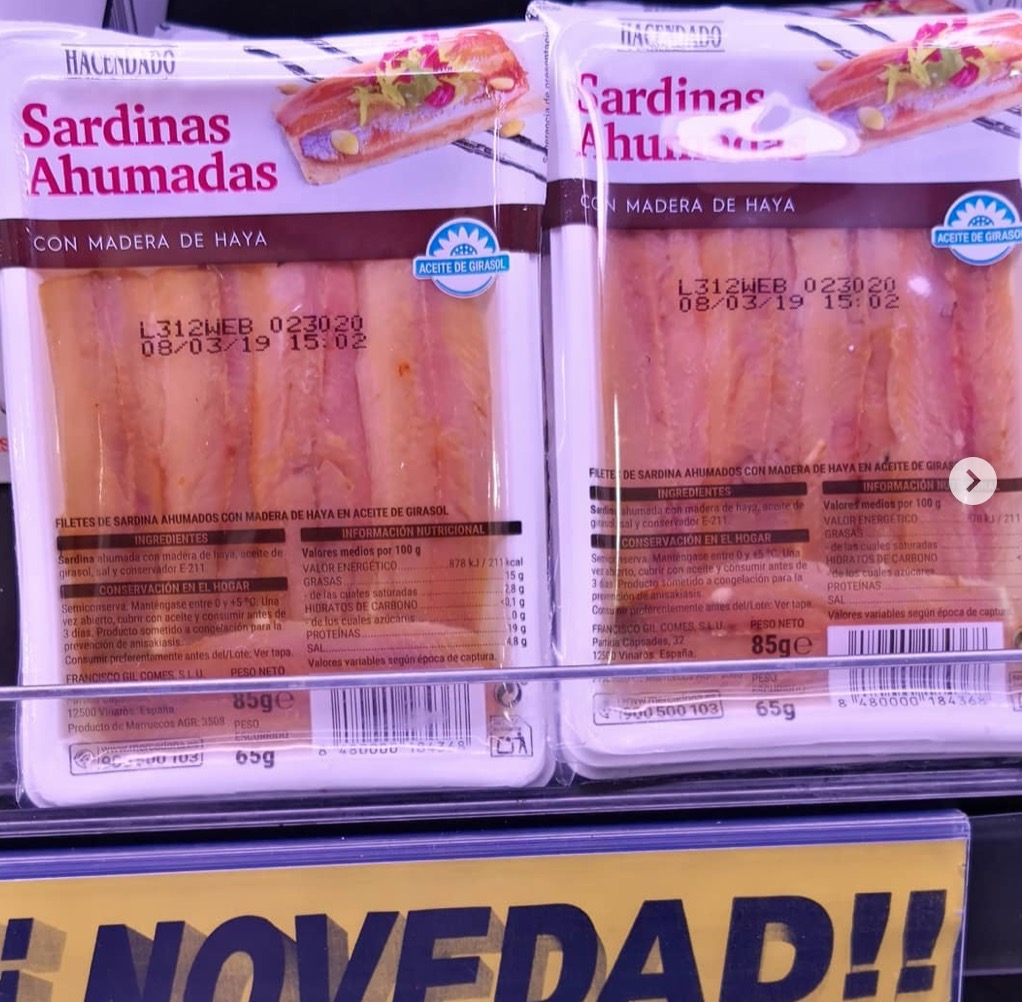
The decision by Morocco to suspend the export of frozen sardines starting February 1, 2026, is not a minor gesture nor strictly a domestic issue. It is a measure with geopolitical, industrial, and port implications that resonates directly in Las Palmas, one of the major Atlantic nodes in the fishing chain between Africa and Europe.

In the Canary Islands, where intermediaries of mainland canneries operate, the measure has been interpreted as a serious warning for the canning industry, which is highly dependent on Moroccan supply. According to sector organizations cited by the economic press, the risk is a domino effect: production halts, rising raw material costs, and pressure on employment in regions like Galicia and Andalucía.

The announcement was made by Zakya Driouich, head of the Moroccan fishing sector, with a clear objective: to protect the domestic market and curb the rising cost of a staple product in the country’s diet. Morocco, the world’s leading exporter of sardines, thus acknowledges an uncomfortable reality: supply has collapsed. Sardine landings fell by 46% in 2024, down to 525,000 tons, compared to nearly 965,000 tons in 2022.

A silent shock for the Mid-Atlantic

For Las Palmas, the impact is not measured in headlines but in port operations, auxiliary traffic, and indirect economy. The Gran Canaria port has operated for years as an advanced logistics platform for fleets, intermediaries, and operators linked to Moroccan fishing: technical stops, supply, industrial cold, consignment, commercial financing, and transit to European markets.

Sardines—especially frozen ones—do not always enter through Las Palmas as a final destination, but they do pass through its ecosystem. Less export from Morocco means less movement across the entire chain: fewer reefer containers, fewer associated services, and less added port value. It is not an immediate blow, but rather a persistent drip.

The European canning industry on alert

UNICOP, the employers’ association for the sector, has been warning for months about the advance of illegal fishing and resource depletion. Pelagic species—sardines, mackerel, horse mackerel—represent 80% of Morocco’s coastal fishing resources, a fact that explains the strategic dimension of Rabat’s decision.

Morocco changes the model: less export, more transformation

From the Canary perspective, the key is not only the suspension itself but what it anticipates. In Spain, there is cautious recognition that Morocco might be redirecting its fishing policy towards a more closed model: prioritizing domestic consumption, local transformation, and greater value capture within its borders. If this shift consolidates, Las Palmas would lose relative centrality compared to Moroccan ports that are already being bolstered with industrial investments, cold storage, shipyards, and integrated logistics. It is not a break, but a progressive erosion of the historical role of the Canary Islands as a natural intermediary between Africa and Europe.

A strategic rather than immediate impact

In strictly economic terms, the suspension of frozen sardines does not paralyze the port of Las Palmas. However, in strategic terms, it does confirm a trend: Morocco is making sovereign decisions about its resources with increasing autonomy, even at the expense of straining European supply chains. For the Canary Islands, the message is clear. The impact is not only on the sardines but also on the shifting balance of the Atlantic fishing grounds. Less European dependency on the Canary port today might be manageable; however, less structural relevance tomorrow would not be. The sardine, small and humble, thus returns to act as a geopolitical thermometer of the Mid-Atlantic.

News written by Gara H. Vega. Edited and verified by José L. Jiménez. Information cross-checked without institutional filters. This analysis has not been funded by official publicity or conditioned by lobbying interests.


Google CONVIERTE CANARYMARITIME EN FUENTE DE NOTICIAS EN GOOGLE
Tags: English
Previous Post

Hyundai, Samsung, and Hanwha Compete for the Casablanca Shipyard, Canarias in the Balance

Next Post

The Canary Government Takes Legal Action Against Cepsa in the Port of Las Palmas as ‘Aggrieved Party’

Gara Vega H.

Gara Vega H.

Canarian journalist specializing in political analysis and the economy of Southern Europe. Her work is defined by a cross-cutting approach that combines institutional rigor, social sensitivity, and a deep understanding of Atlantic dynamics between Africa, the Americas, and Europe. She holds a degree in Journalism from the Complutense University of Madrid and a master’s degree in International Communication from the University of Strasbourg. She began her career in the newsroom of Axel Springer. One always returns.

NewsRelated

Puertos Canarios abre al público sus recintos para potenciar el valor del dominio público marítimo
Financial Sustainability

Puertos Canarios clarifies scope of TSJC ruling on Puerto Rico and rules out extending concessions

16 October 2026
272
Votorantim logra una prórroga de 15 años en el Puerto de Tenerife capital para ampliar su planta de Clinker
Financial Sustainability

Votorantim secures 15-year extension at Tenerife’s capital port to expand clinker plant

16 October 2026
272
Elena Marín da el salto a la política con Teodoro Sosa en Las Palmas
Investment and European Funds

Elena Marín Enters Politics Alongside Teodoro Sosa in Las Palmas

16 October 2026
410
Lavinia lleva su batalla contra Hacienda ante el Tribunal Supremo
Financial Sustainability

Spain’s Supreme Court to rule on port concession extensions and their impact on Laskaridis’ business in Las Palmas

16 October 2026
309
Santana se proyecta hacia la lista de Ángel Víctor Torres con el PSOE por Las Palmas
Financial Sustainability

Gustavo Santana left off PSOE’s Las Palmas lists and, for now, remains at the helm of Puertos del Estado

16 October 2026
306
Enagás, Sabadell y el ICO reestructuran el negocio de los buques en Tenerife
Financial Sustainability

Bunkering: Naturgy and Enagás confirm LNG bunkering at Santa Cruz de Tenerife port from 2028

15 October 2026
286

Leave a Reply Cancel reply

Your email address will not be published. Required fields are marked *

© 2026 canarymaritime

  • Contact
  • Transparency
  • Code of ethics
  • Legal Notice
  • Privacy Policy
  • Cookie Policy (EU)
  • Intellectual Property Rights
  • Promise to Our Readers
  • Principles on the Use of AI
  • Commitment to Our Subscribers and Advertisers
  • Español
  • English
Gestionar consentimiento

Para ofrecer las mejores experiencias, utilizamos tecnologías como las cookies para almacenar y/o acceder a la información del dispositivo. El consentimiento de estas tecnologías nos permitirá procesar datos como el comportamiento de navegación o las identificaciones únicas en este sitio. No consentir o retirar el consentimiento, puede afectar negativamente a ciertas características y funciones.

Funcional Always active
El almacenamiento o acceso técnico es estrictamente necesario para el propósito legítimo de permitir el uso de un servicio específico explícitamente solicitado por el abonado o usuario, o con el único propósito de llevar a cabo la transmisión de una comunicación a través de una red de comunicaciones electrónicas.
Preferences
The technical storage or access is necessary for the legitimate purpose of storing preferences that are not requested by the subscriber or user.
Estadísticas
El almacenamiento o acceso técnico que se utiliza exclusivamente con fines estadísticos anónimos. Sin un requerimiento, el cumplimiento voluntario por parte de tu proveedor de servicios de Internet, o los registros adicionales de un tercero, la información almacenada o recuperada sólo para este propósito no se puede utilizar para identificarte. The technical storage or access that is used exclusively for anonymous statistical purposes. Without a subpoena, voluntary compliance on the part of your Internet Service Provider, or additional records from a third party, information stored or retrieved for this purpose alone cannot usually be used to identify you.
Marketing
The technical storage or access is required to create user profiles to send advertising, or to track the user on a website or across several websites for similar marketing purposes.
  • Manage options
  • Manage services
  • Manage {vendor_count} vendors
  • Read more about these purposes
Ver preferencias
  • {title}
  • {title}
  • {title}
No Result
View All Result
  • Home
  • Atlantic Ports
    • Atlantic Africa
  • Blue Energy
  • Logistic
  • Shipbuilding Industry
    • Shipyards and Ship Repair
    • Offshore and platforms
    • Industrial innovation and naval R&D
  • Blue Economy
    • Investment and European Funds
    • Financial Sustainability
    • Private Venture Capital
  • Atlantic Geopolitics
    • West Africa
    • Port Security and Defense
    • Blue Diplomacy
    • Canary Islands as a strategic hub
    • Drug Trafficking

  • Login

© 2026 canarymaritime.com



