




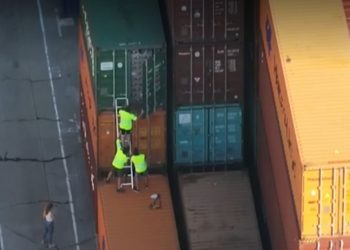
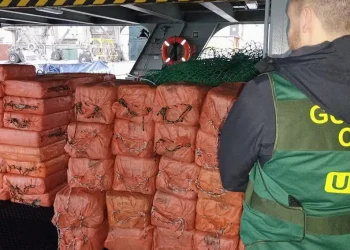
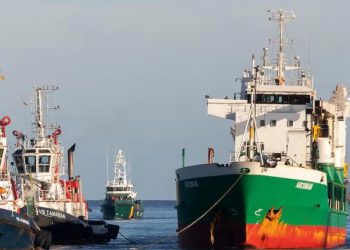
The asphalt of German docks is cold, but the money generated by its criminal subsoil burns. The Aurich Public Prosecutor’s Office and the Cologne General Customs Directorate have uncovered a pressure cooker connecting the North Sea with southern Spain and the international waters of West Africa. The scene of the first act is Wilhelmshaven, a port that operates under the fog of northern Germany and became the epicenter of a historic discovery on February 9: eight tons of high-purity cocaine camouflaged in a container declaring to transport bags of cocoa. Five hundred million euros in the black market floating on a base of legal trade. The merchandise originated from West Africa and its final destination was Spain, the major sink for the white powder in Europe. However, the details remained under wraps for months for purely tactical reasons. It was necessary to wait for the buyers to take action. The connection of African ghost ships The thread connecting this plot does not stop at the customs offices of Hamburg or Cologne; it is directly tied to the stern of the Arconia, a freighter that embodies the new highways of large-scale drug trafficking. The dates and routes are no coincidence for maritime intelligence analysts. While the contaminated cocoa awaited execution in Germany, special forces of the Civil Guard raided the Arconia on May 1 in international waters off West Africa, seizing a huge volume of 30 tons of cocaine hidden behind a metal door. The Arconia, which until February operated under the flag of convenience of the Comoros Islands before switching to the flag of Sierra Leone, departed from Freetown on April 22 with an official destination of the Libyan port of Benghazi. This African route is precisely the same logistical belly from where the intercepted cocoa container in Wilhelmshaven originated. Almería as the operational base of the network The operational link between the Arconia’s haul and the German seizure materializes on Spanish soil, specifically in the province of Almería. On May 14, agents from the National Police and Customs Surveillance simulated a controlled delivery of the cocoa container to capture the leadership of the organization on Iberian soil. Two men fell into the trap. One of them, a key figure in the network, is the manager of a local import company already closely linked to a previous suspicious shipment intercepted by Spanish customs. The criminal structure used the façade of legal agricultural importation to cover up the million-dollar shipments that the Arconia and other mother ships fed from the ports of West Africa. War weapons and crew under arrest The judicial blow in Spain has already kept 23 people behind bars directly linked to the security and transport of these major drug shipments. On board the Arconia, the police found not only 1,279 packages of drugs but also six men armed to the teeth hired exclusively to ensure that the 30 tons reached distribution channels, alongside 17 Filipino sailors completing the crew. All of them now face serious charges of drug trafficking, illegal possession of war weapons, and belonging to an organized criminal organization in Spanish courts. Capos in the shadows and global logistics The shadow of this floating empire extends towards a boss in criminal finances who remains at large, a mastermind already carrying a previous conviction for an independent drug trafficking case valued at another 550 million euros. The seizure of the cocoa in Wilhelmshaven and the military boarding of the Arconia demonstrate that criminal organizations are no longer playing at retail with hidden compartments. They utilize the infrastructure of global trade, charter international flagged ships, hire private armies to guard the goods at sea, and corrupt supply chains from the Gulf of Guinea to the ports of the North Sea to flood the industrial estates of the Iberian Peninsula with cocaine.



© 2026 canarymaritime