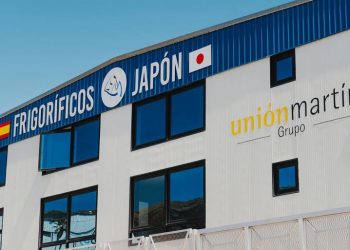
This is a story about modernity. It is this: a network of cold port terminals where desire turns into an invoice and absence into merchandise. To J.B., a man who probably understood the solitude of the limited liability company manager, chance delivered a victim. In the docks of Las Palmas, where frozen fish is the only real currency, J.B.’s story remains as the residue of a scam where the only thing captured was the naivety of a company that believed octopus could be born from an email.
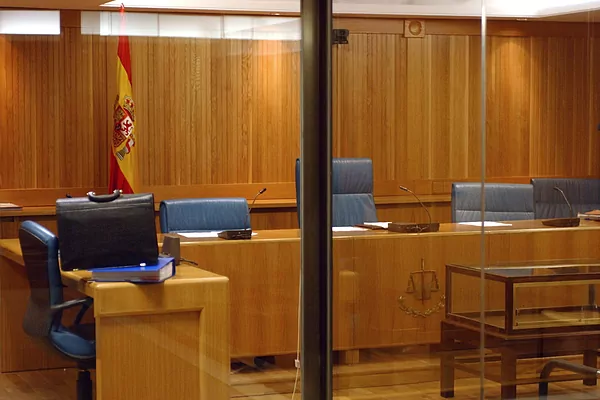
At noon on the day of the trial, under the muffled hum of the fluorescents in the courthouse, the magistrate listened to the account of the canoes with metaphysical weariness. He felt the pressure of the robe on his shoulders like the weight of a civilization crumbling under technical jargon. While the lawyers detailed the concept of ‘Mauritanian octopus,’ the judge experienced a slight internal rupture, a seismic identity crisis: he, who had built his mental map of the world on the certainty of Galician octopus and olive oil, discovered that even tradition was an interchangeable label in the global market. The idea of a cephalopod from Mauritania seemed as artificial and desolate to him as the Las Arenas shopping center on a Sunday; just another piece of that grand simulacrum where nothing is as it seems and where, in the end, the only truth is a sentence that arrives late to a world that no longer yearns for justice, but for bank refunds.
The company A.A.F., in that desperate and algorithmic search for profitability characteristic of late capitalism, scoured the web until it found TPS. They were not seeking a human connection, they were looking for Mauritanian octopus. J.B., with the desolating lucidity of someone who has nothing to lose, decided to embody that role. He sold them not only the animal but the illusion of a logistical structure that existed only on remote servers and in his own capacity for fabrication.
The backdrop of the scam cooked itself between the aridity of Mauritania and the functional asphalt of Las Palmas and Brussels. J.B. enacted the choreography of empty success: hospitality at international fairs where he moved like a familiar specter in foreign booths, visits to Mauritanian facilities devoid of life, and the perfect excuse of ‘biological stoppage’ to justify the silence of the freezers. There is something profoundly Houellebecqian in that journey of buyers to the African country, seeking a tangible product and finding only ‘castles in the air’ and a hungry bank account. The representative, imbued with that commercial optimism that precedes depression, believed in the strategic alliance while J.B. was merely counting the days for the 90,127.5 euros to land in his account.
In the end, the 10,750 kilos of octopus were never captured because there was never any intention to cast the net. The sentence is an inventory of disappointment: two and a half years in prison and a fine of 1,080 euros for having charged for an absolute void. J.B. attempted to defend himself by claiming that the money was to ‘prepare the facilities’ and purchase traditional canoes, a pathetic attempt to add picturesque flair to a transaction that was born dead.
News written by José L. Jiménez.. Edited and verified by Raquel Molina. Cross-referenced information without institutional filters. This analysis has not been financed by official advertising nor conditioned by lobbying interests.