




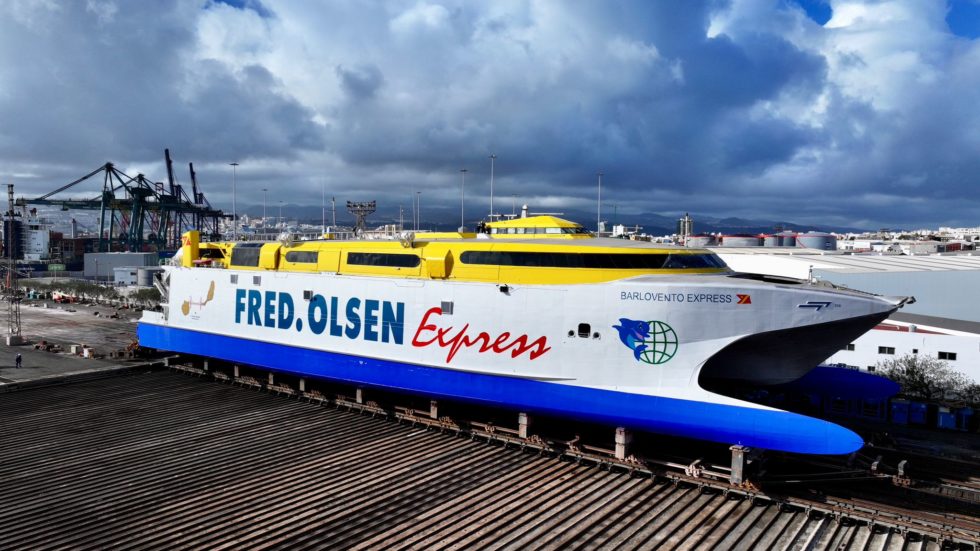
The Port of Las Palmas is approaching a turning point that threatens its operational and environmental reputation according to the lobbyists advocating for electric mobility. According to the latest report by the organization Transport & Environment (T&E), the capital of Gran Canaria is expected to rise in the port toxicity ranking to become the most polluted ferry port in Europe by 2027. This rise in the blacklist is not solely due to traffic volume, but rather a result of ‘regulatory nakedness’: while cities like Dublin —currently the leader in pollution— or Barcelona will see their impact mitigated due to new emission control zones in the Northeastern Atlantic and the Mediterranean, the lack of fleet renewal operating in the islands will leave the Canarian docks as the main source of harmful emissions on the continent.
The magnitude of the challenge is reflected in a devastating arithmetic comparison for public health. The 1,043 ferries analyzed by T&E emitted 13.4 million tons of CO2 just in 2023, a figure equivalent to the environmental impact of 6.6 million cars. The paradox is especially acute in cities like Las Palmas, where these vessels generate more sulfur oxides (SOx) than the entire local vehicle fleet. The structural problem lies in the aging assets: the European fleet has an average age of 26 years, a longevity that, in an archipelago where maritime transport is an essential and irreplaceable service, translates into the continuous burning of heavy fossil fuels just meters away from urban centers.
However, the T&E report also identifies an economic opportunity window for the shipping sector based on cost efficiency. It is estimated that 60 percent of European ferries could be electric by 2035, and most importantly for the profit margins: 52 percent of these routes would be more profitable to operate with batteries than with internal combustion engines. The competitive advantage of electrification lies in the nature of the Canarian routes (fixed and of short or medium distance), which reduces the technological barrier for the implementation of chargers of less than 5 MW, an infrastructure that would require only 57 percent of ports to transform their operational model.
For the Canarian port authorities, the transition has ceased to be a social responsibility option to become a necessity of commercial survival. With the current fleet at the end of its useful life cycle, the capital port faces a financial dilemma: lead the investment in electric infrastructure and fleet renewal or bear the reputational cost and possible penalties associated with leading the European pollution ranking in just twelve months.







