




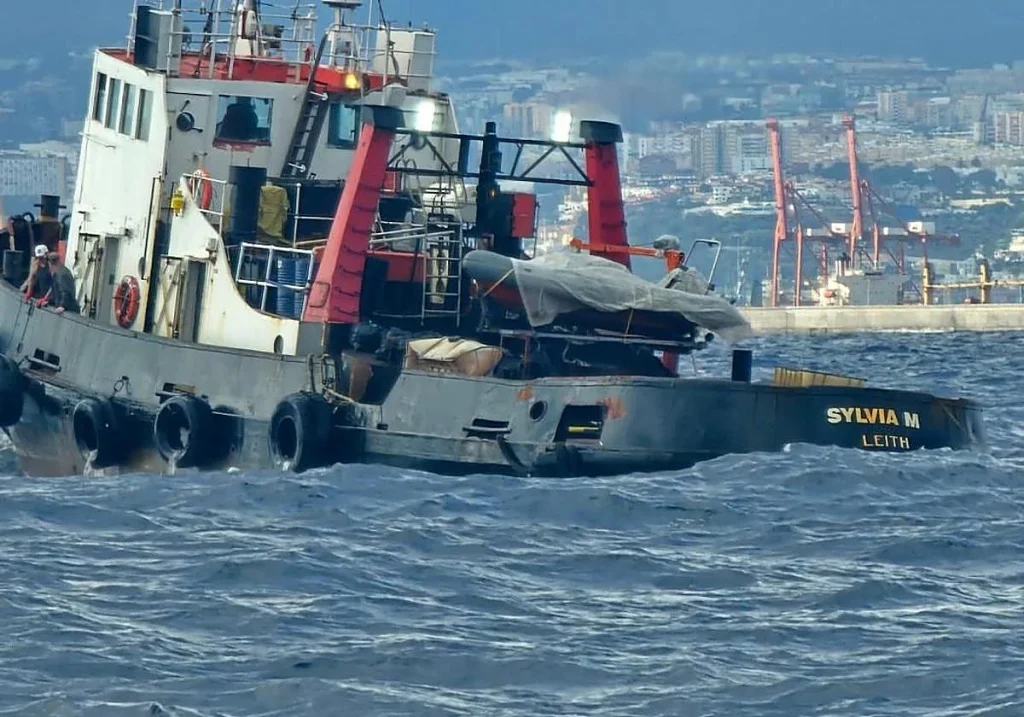
In the circles of maritime safety in the Central Atlantic, compliance with inspections from the Port State Control of Las Palmas is not a suggestion, but the foundation of global trade. However, the tugboat ‘Sylvia M’, flagged under Tanzania, has decided to test the limits of the General Directorate of Merchant Marine in the Canary Islands. After months of administrative detention in the Port of Las Palmas, the vessel embarked on an unauthorized escape last Monday, triggering a crisis of authority that will now result in a sanctioning case with fines that could reach 180,000 euros.
The history of the ‘Sylvia M’ is a chronicle of operational precariousness. Since December 3, the vessel had been under a detention order after arriving in Gran Canaria under critical conditions: lacking sufficient fuel, with a non-operational engine, and towing another ship with broken towing machinery. The intervention of the ‘Miguel de Cervantes’ from Salvamento Marítimo was necessary at that time to prevent a tragedy three miles off the coast. What followed was an opaque certification process under the Tanzanian flag, while the Maritime Captaincy of Las Palmas awaited to conduct the mandatory inspection that would validate the purported repairs.
Tension escalated on Monday at 19:15 hours, when the Sasemar control center detected the ‘Sylvia M’ crossing the harbor entrance without using pilotage services and with its tow in tow. In an act of open defiance and under severe weather, the vessel ignored orders to return, forcing a display of force that included the ‘Río Ara’ patrol boat from the Civil Guard and again, the rescue tugboat. The ‘escape’ ended at 03:30 hours on Tuesday, with the vessel returning to port—ironically, towed again due to lack of propulsion—and under police custody.
The incident of the ‘Sylvia M’ serves as a reminder of the dangers of flag-of-convenience vessels operating on the margins of international regulations. For the Maritime Captaincy, the fine of 180,000 euros is not only punitive; it is a necessary signal to the market that the Port of Las Palmas will not allow vessels without governance or verified certifications to jeopardize navigation safety in its waters. The sanctioning case will now set a precedent in the fight against maritime indiscipline in one of the world’s busiest logistics nodes.







