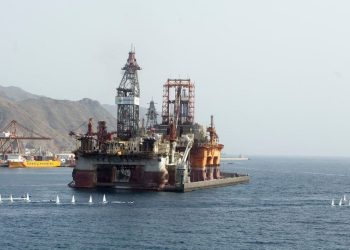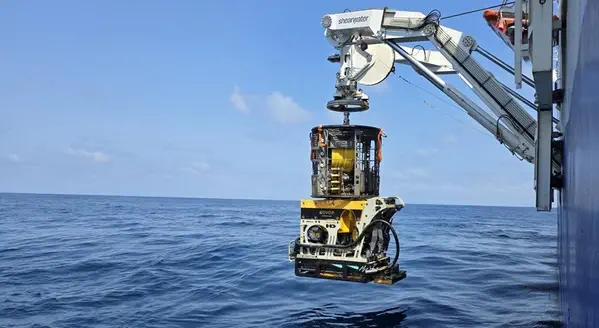
The successful completion of Shearwater GeoServices’ 3D seismic campaign for TotalEnergies in the deep waters of Nigeria after departing from the port of Las Palmas marks a turning point in the energy revitalization of the Gulf of Guinea. This high-resolution geophysical advance, executed through towed cable and underwater sonar, precedes imminent drilling campaigns and the development of new oil fields. For the international maritime industry, this milestone transcends pure geological engineering; it serves as a leading indicator of sustained demand for offshore support vessels (OSV), supply platforms (PSV), and anchor handling tug supply vessels (AHTS). In the dynamics of this exploratory revitalization, the Canary Islands solidify their role as the irreplaceable service station and three-dimensional logistics base to sustain the complex oil operations of West Africa.
The practical implications of this increase in extractive activity directly impact the port infrastructures of the archipelago. The specialized vessels operating in remote or complex environments of the sub-Saharan coast require robust and reliable supply lines that are not always found in the destination ports. The port connectivity of Las Palmas and Santa Cruz de Tenerife helps to mitigate these operational deficiencies. The Canarian docks capitalize on the needs for preventive maintenance, urgent structural repairs, and the adaptation of critical systems for fleets en route to Nigerian fields, acting as the advanced workshop of the Central Atlantic.
The constant flow of support vessels returning or heading to the Central-Eastern Atlantic operational theater demands nearby support that combines European legal security with high technical capacity. The ship repair companies located in the islands regularly handle the dry docking of platforms and specialized vessels in underwater exploration. At the same time, local firms dedicated to underwater interventions and technical inspections are essential for mandatory hull surveys and maintenance of propulsion systems before vessels enter the isolated environments of West Africa. The crews and maritime procurement managers of major international oil companies prioritize the reliability of the islands over the logistical bottlenecks of the continent.
The revitalization of energy projects in the region also forces a reconfiguration of the customs supply chain and technical provisioning. The ships linked to TotalEnergies’ exploration licenses demand a critical resupply of provisions, certified spare parts, and fuels that are effectively coordinated from the Canarian ports, taking advantage of their fiscal advantages and connectivity with Europe. The integrated maritime and customs agencies in the local logistical nodes operate as the true financial and operational bridge between global suppliers and African oil terminals. With shipping corporations preparing for new offshore service tenders, the geographical suitability of the Canary Islands and their installed logistical capacity are reaffirmed as the link that ensures the continuity of energy exploration throughout the Atlantic axis.