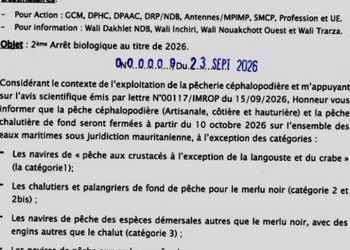
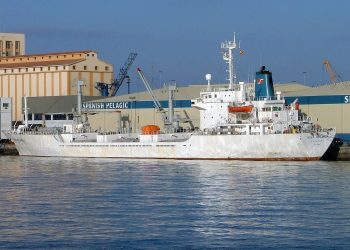
Reactivation of the octopus fishing season
The restart of the octopus fishing campaign has drastically altered the fishing logistics in Mauritania. With the opening of the season for catches of this valuable cephalopod, there has been an authentic migration of artisanal boats and fishermen from the south of the country and the capital to the northern ports of Tanit and Nuadibú. This has led to an immediate shortage in the central market of Nuakchot and pushed seafood prices to levels unaffordable for local consumption.
Retailers express widespread concern
Concern among retailers is widespread. A kilogram of thiof (white grouper) has reached 5,800 old ouguiyas, roughly 14 euros at the exchange rate, while pieces of kibaru (red porgy, sargo) depending on size range between 1,700 and 2,800 old ouguiyas, or between 4 and 7 euros per specimen.
Food sovereignty vs. an agro-export model
The underlying dilemma highlights the tension between the country’s agro-export model and food sovereignty. Octopus accounts for approximately 50% of Mauritania’s total fish-export value and is a critical source of foreign currency for the public treasury, while also creating thousands of direct and indirect jobs. However, small retail professionals are calling on the authorities to establish regulatory mechanisms to balance export returns with mandatory landing quotas to ensure domestic consumption.
Economic logic behind the shift
The dynamic follows a strict economic logic within the extractive sector. Baye Guei, a fisherman from Ndiago, explained to 360° that the capital’s fish shortage usually coincides with the rainy season, due to the financial pull of the octopus fishery. The concentration of processing plants, freezing logistics, and direct export routes at the northern docks make catching the cephalopod substantially more lucrative, prompting professionals to leave the Nuakchot fishing grounds.
Capital left underserved
This massive shift of the fleet toward industrial processing areas leaves the capital underserved. Nuakchot is an urban center that concentrates more than one quarter of Mauritania’s population. The sharp drop in landings on the Nuakchot beach, combined with a steady level of urban demand, has created an inflationary spiral in retail market stalls, where local families and traders face serious difficulties sourcing supplies.
Middle- and low-income households hit hardest
This financial pressure is squeezing middle- and low-income families who rely on fish as their main source of protein in their daily diet. Traders say prices do not fall below 1,800 old ouguiyas (about 4.30 euros) for the most basic cuts, reflecting a picture of half-empty stalls that testifies to a halt in extractive activity aimed at the domestic market.
The article ‘Octopus fever in Mauritania drives up fish prices in the Canary Islands’ was first published on canarymaritime.com.