




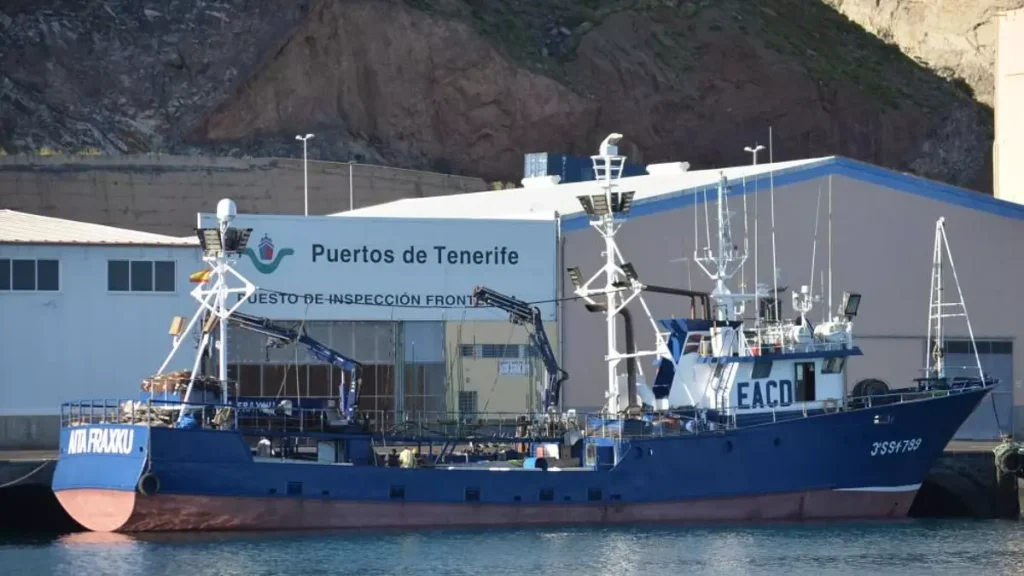
The European fishing sector has raised its tone before the European Commission. Through a firm position led by the Organization of Associated Producers of Freezing Tuna Vessels (OPAGAC) —as a member of CEPESCA integrated into the continental business association Europêche— shipowners and fishermen demand an urgent change of direction in the ongoing review of the Common Fisheries Policy (CFP). The aim is to save a declining fleet and ensure the food sovereignty of the continent.
The formal claim was staged in Brussels during the meeting of the Sectoral Social Dialogue Committee on Fisheries. At this meeting, the Directorate-General for Maritime Affairs and Fisheries (DG Mare) presented its assessment of the CFP alongside a snapshot of the community fleet. The official diagnosis confirms a continued decline of European vessels since the major reform of 2012. However, Brussels’ remedy continues to involve imposing new capacity reductions, a regulatory contradiction that the sector considers unacceptable.
The fishing organizations argue that the social and economic criteria should no longer be the ‘poor relatives’ of community legislation and should be placed exactly at the same level as environmental objectives. Fishermen remind that the management efforts applied in recent years have already yielded significant results in the recovery and consolidation of numerous fishing grounds and fish populations.
The business association deeply regrets the lack of self-criticism from DG Mare. They denounce that the executive arm of the European Union avoids taking responsibility for structural problems such as loss of competitiveness, insurmountable barriers to generational change, and the imposition of impossible compliance regulations. This bureaucratic stranglehold coincides, moreover, with a complete opening of the European market to imports from third countries. Since these foreign powers are not required to meet the strict environmental and labor standards that the EU fleet complies with, an unfair competition is generated that pushes local producers out of the market.
Decarbonization blocked by bureaucracy itself
The energy transition and the reduction of the carbon footprint were the focus of much of the discussions in the regulatory committee. OPAGAC has expressed its full alignment with the goal of moving towards cleaner and more efficient activity, but warns that decarbonization is unfeasible under the current rules of the European Union. ‘Europe cannot ask the fleet to accelerate its decarbonization while maintaining capacity criteria that hinder precisely the investments necessary to undertake that transition’, concludes Julio Morón, managing director of OPAGAC.
The technical contradiction is evident for shipowners: the installation of engines with clean technologies or viable alternative fuels requires, in most cases, additional space and structural reforms on the ships. If Brussels prioritizes decarbonization but at the same time rigidly penalizes vessel capacity and tonnage, the regulatory framework becomes the main enemy of fleet modernization. The sector warns that, if these capacity metrics are not relaxed, the European Commission will be leading the continent’s fishing towards unattainable targets.







