




The Autoridad Portuaria de Las Palmas operates in the heavyweight league, with recorded assets of €868.2 million and share capital of nearly €360 million. However, its financial strength did not shield it from slight turbulence: in 2023, according to accounts still pending board approval, revenues of €77 million represented a 2.53% decline. Despite this drop in turnover, its operational efficiency remains unquestionable, achieving an EBITDA of €40.7 million — meaning it converts more than half of its income into gross profit.
OPCSA: The Engine Gaining Ground
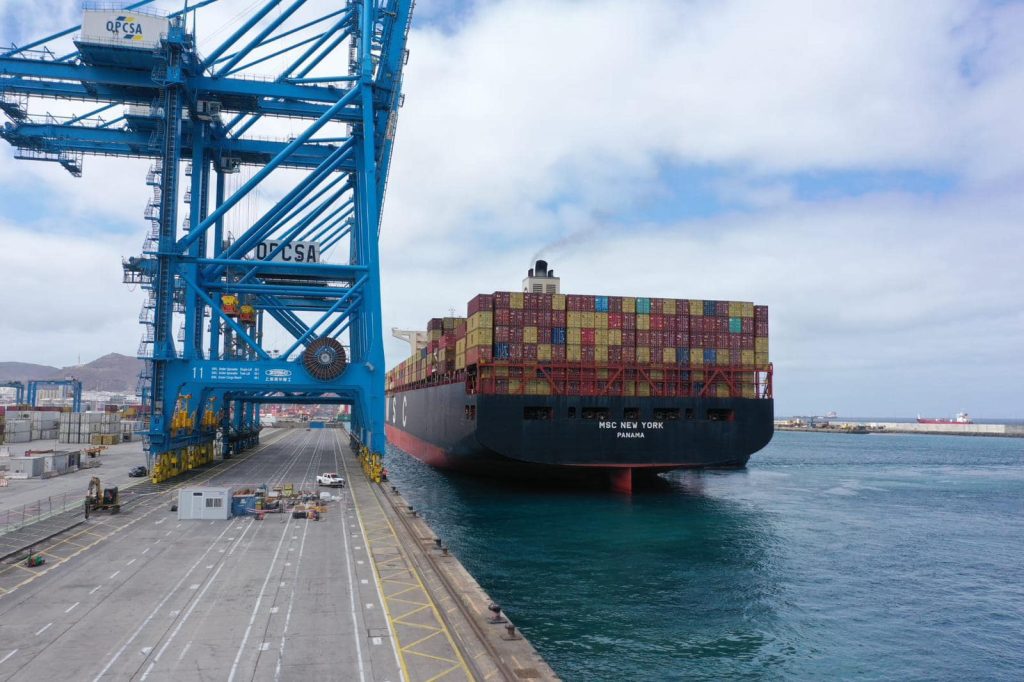
Across the Tomás Quevedo Esplanade, Operaciones Portuarias Canarias (OPCSA), the TIL Group subsidiary backed by MSC, BlackRock and the Singapore sovereign wealth fund, plays a markedly different role. With assets ten times smaller (€80.4 million), the terminal generated €49.7 million in revenue, an impressive 13.24% increase year-on-year. While the Port Authority slipped in sector rankings, OPCSA climbed 334 positions nationwide. It reflects the dynamism of the private sector offsetting the inertia of the public infrastructure manager — a symbiosis in which the cargo handler appears to have found a tailwind that the infrastructure operator has yet to fully capitalize on.
If OPCSA were not constrained by unionized labor structures dating back to Spain’s post-1978 system, its revenues would, at minimum, be double. “That nearly €50 million figure is negligible,” a financial sector source in Las Palmas told CanaryMaritime, adding: “The profitability is more about image than substance; they are there and will remain despite the labor constraints.” A dockworker in Las Palmas can earn a net monthly salary of €8,800. In Lomé, by contrast, MSC employs 1,000 workers with significantly higher industrial efficiency levels.
The Balance of Power in the Atlantic
Sector comparison provides the final key: the Port Authority remains steady in 18th place within its sector, signaling structural stability in maritime traffic. Meanwhile, TIL Group in Las Palmas has entered the national top tier of cargo handlers, reaching sixth position. The Port of Las Palmas thus emerges as a two-speed machine: a solid, static asset base guaranteeing infrastructure, and a stevedoring operation that, with fewer resources, is demonstrating far more aggressive vertical growth capacity.







