




The Frimancha Canarias plant in Las Palmas de Gran Canaria operates with the discipline of a critical infrastructure. Backed by the Catalan group Valss Company, owner of the meat division of Montesano, the company has turned logistics into its main competitive advantage in a fragmented territory dependent on maritime transport. In Brazil, which is connected by sea to Las Palmas, it acquired a 33% stake in Master Agroindustrial of Brazil. In Brazil, Master Agroindustrial has 39,000 sows, over one million pigs in breeding, and the capacity to slaughter 3,000 pigs daily. This operation employs over 2,000 workers and collaborates with 320 local farmers.
In 2024, Vall Companys and Montesano Canarias agreed to integrate the businesses of the two companies in the islands. The shareholding of Frimancha Canarias will be divided with 75% held by the Vall Companys Group and 25% for Montesano. Likewise, the company Logística Montesano will be integrated under the same conditions of the operation.
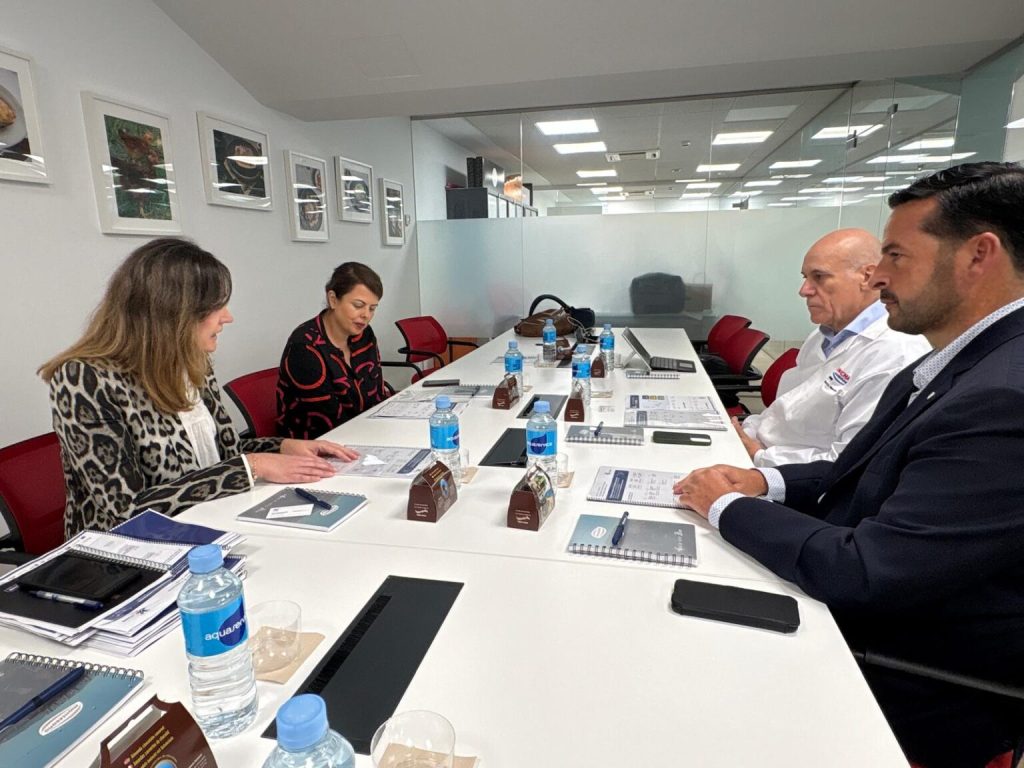
This February, it launched business figures following a visit from the Cabildo of Gran Canaria to the plant in El Sebadal. Frimancha currently generates 783 direct jobs in the archipelago and has expanded its livestock integration to achieve an annual production of 5.5 million chickens, 20,000 pigs, and 2,500 calves. Complementing this is collaboration with local suppliers, which strengthens the primary sector and traceability of the product.
In industrial terms, the company accounts for 40% of beef slaughter and cutting in the Canary Islands, 60% in pork, and 90% in poultry, figures that consolidate it as a structural reference in the island sector. The strategy combines production volume and brand positioning, supported by brands such as Montesano, Silencio de Jabugo, La Joya, Ibéricos Montesano, La Jurada, Carnícola, and Montemar.
Frimancha Canarias has reinforced its local production model ‘from farm to table’ in 2026. The institutional visit confirmed what market shares already reflect: in the islands, logistics is not an operational complement, but the axis that sustains industrial leadership.







