




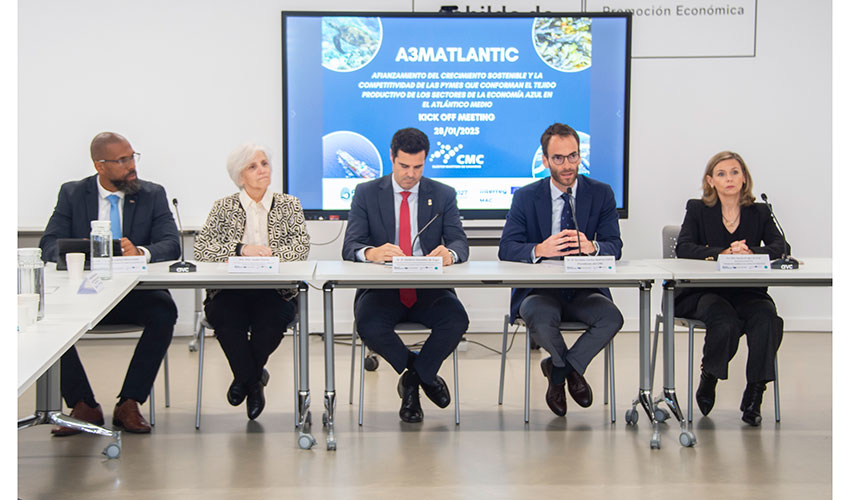
In the carpets of Brussels, where oxygen is scarce and printer ink flows with the joy of Madeira wine, there exists a bureaucratic creature that delights officials: the Alianza A3M. Under a language that seems designed by a mind that confuses reality with an instruction manual from IKEA, this project aims to save the competitiveness of SMEs in the archipelagos of Macaronesia. However, a glance at its ‘achievement indicators’ reveals a more prosaic truth: the transfer of public funds into absolute nothingness. ‘Launching a strategic positioning agenda for the blue economy, joint actions and solutions of the A3M, and strategic development plans’ is ‘coordinated’ by the Maritime Cluster of the Canary Islands and FRCT.
The star metric, RCO 84, talks about ‘pilot activities.’ The goal for the project is 6 actions. Among them is ‘2 blue professional weeks.’ One wonders if the fishermen of the Azores or the hoteliers of the Canary Islands feel more competitive after seven days of seminars on ‘staff attraction procedures.’ It is the classic European solution: if a sector is suffering, we organize a fair; if a company is sinking, we send them a tech newsletter.
But the real delight is found in the human resources section. The RCR 01 —jobs created— is a masterpiece of creative accounting that would make Wirecard auditors pale. Job creation is announced, but the fine print breaks down the reality: 11,236 hours of work spread over four years.
The calculation is of surgical precision: after dividing hours by years and years by working days of 1,720 hours, the European mountain has birthed a mouse. The result is 1.63 jobs per year. These are not jobs in the real economy; they are part-time technocrats hired to manage the very bureaucracy that justifies their existence. It is the perpetual motion of public spending: hiring someone to write the policy briefs that no one will read, in order to justify the subsidy that pays their partial salary.
While the region faces seismic challenges in tourism and logistics, the Alianza A3M offers ‘4 newsletters and technological alerts’. It is the equivalent of throwing a paper lifeline to a castaway in the middle of the Atlantic. Brussels continues to measure success by the amount of ink spilled rather than by the wealth generated. At the end of the day, when the lights in the offices of PLOCAN and Madeira go out, there will remain the paper and the indicators, but the 1.63 workers will continue to be the only proof that, once again, the European Union has managed to transform the taxpayers’ gold into the lead of statistics.
News written by Pedro Marrero. Edited and verified by Gara Vega. Cross-checked information without institutional filters. This analysis has not been financed by official advertising nor conditioned by lobby interests.







