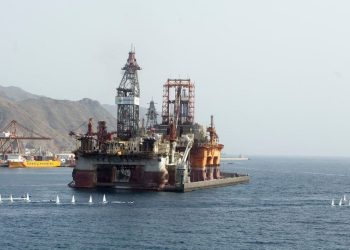
In the geopolitics of docks and ship repair, no gesture is trivial. Hidramar confirmed on LinkedIn on Thursday the recent visit to Tenerife Shipyards’ Hidramar Ultra 2000 floating dock—led by officials from the Municipal Emergency Coordination Centre (CECOPAL) and members of the Guardia Civil—goes beyond a mere protocol photo: it represents a public validation of its security systems and a firm operational positioning in the port basin of Santa Cruz de Tenerife.
The strategic infrastructure as a showcase
The setting for the meeting was not a boardroom, but the inner workings of a highly complex industrial facility. Tenerife Shipyards’ floating dock represents the operational core around which the shipyard structures its ship repair and heavy engineering offering from the Port of Santa Cruz de Tenerife. Giving those responsible for public safety and fiscal oversight a firsthand look at how these facilities operate is intended not only to demonstrate technical capacity, but also to safeguard operations against the regulatory scrutiny surrounding high-risk industrial activities.
Consignment, dry-docking, structural repair and maintenance operations involving large vessels require the constant handling of hazardous waste, the movement of heavy loads and fire- or spill-prevention protocols. In a port environment adjacent to the urban fabric, the boundary between commercial efficiency and a security crisis is extremely thin. The company has therefore opted for a strategy of preventive transparency: showing how the operation works before any eventuality requires an explanation.
Police and emergency coordination on the water
The joint presence of the Guardia Civil and CECOPAL reflects a division of responsibilities that is critical in the maritime-terrestrial environment. On the one hand, the Guardia Civil—through its Fiscal Service and Maritime Service—oversees the state’s fiscal safeguards and the protection of the port’s public domain, monitoring everything from compliance with customs and immigration regulations to protocols for protecting strategic facilities under the ISPS Code.
On the other hand, CECOPAL represents the executive arm of civil protection at the municipal level. In the event of a major incident, a rapid response depends on perfect coordination between the shipyard’s self-protection plan and local emergency resources. By touring the dock structure, technical officials and officers were able to verify on site the access points, evacuation routes, firefighting network and the types of welding and sandblasting work carried out in the area.
The ship repair battle in the Canary Islands
Tenerife is competing to establish itself as the leading service station and ship-repair hub along the tricontinental route linking Europe, Africa and the Americas. In this contest, in which the Port of Las Palmas has historically maintained a dominant position in the repair sector, the Tenerife port basin is seeking to consolidate its market share by relying on the modernization of its assets and the strength of its institutional partnerships.
The ability to offer an operational environment that local authorities consider safe and efficient is a major commercial argument when dealing with large shipping companies and hydrocarbon operators. Crews and international insurers assess not only the cost per steel hour or the speed of delivery; they also require port facilities to meet the European Union’s strictest environmental and safety standards. The company states that “Tenerife Shipyards is thus strengthening its institutional reputation through a policy of partnerships aimed at dispelling community concerns and consolidating the Port of Santa Cruz de Tenerife not merely as a port of call, but as a reliable industrial hub, subject to rigorous oversight and fully integrated into the island’s public safety framework.”
The article FSE inspect the inner workings of Tenerife Shipyards’ Hidramar Ultra 2000 floating dock was first published on canarymaritime.com.