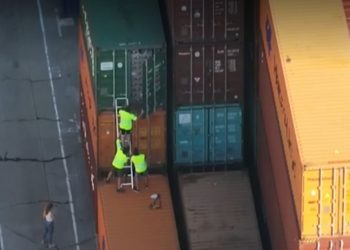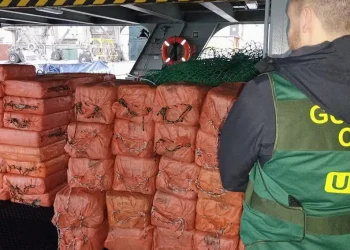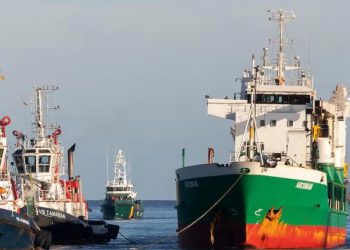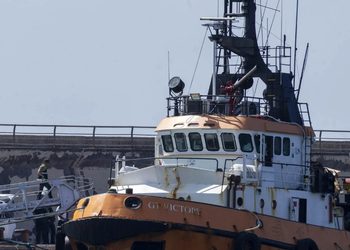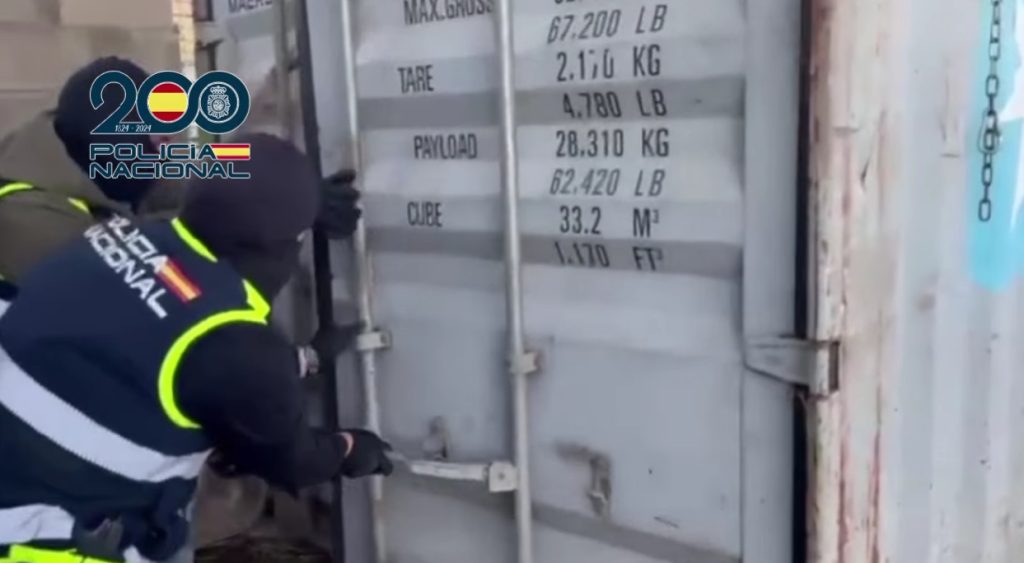
The announcement this Monday of the dismantling of the criminal network that controlled cocaine trafficking between South America, Africa, and Europe not only left a record figure of 105 arrests and the seizure of 10.4 tons of drugs, but also revealed a financial capacity that defies the logic of conventional drug trafficking. The use of hexacopters, encrypted communications, and narco-boats that exceeded 40 knots required an unprecedented intelligence effort to dismantle the organization’s nodes in Lanzarote, Gran Canaria, Tenerife, and Fuerteventura. The downfall of this network not only represents relief for the security of the Canary coasts but also marks the end of an organization that believed its financial power—capable of buying silence for 12 million euros—was immune to international justice.
The most disturbing fact from the investigation led by the National Court is the payment of 12,000,000 euros in a single payment to the family of a deceased crew member. This disbursement, made solely to ensure absolute secrecy and avoid leaks to the National Police, shows that for this organization, human life had a market price as defined as that of the goods themselves.
A logistics of 12 million for disaster
This payment of 12 million euros was not an act of goodwill but a strategic investment in damage control. The network, which allegedly introduced 57,000 kilos of cocaine in a single year, operated with military precision that required no one, even in mourning, to break the chain of command. This extreme liquidity was sustained by an operation of ‘water platforms’ in the high seas, where pilots remained resupplied by smaller vessels for over a month, using more than 100,000 liters of fuel and nautical technology valued at 2,500,000 euros. Paying 12 million to conceal an accident was, for them, an operational cost manageable against the profits of a business that moved billions.
The center for laundering and the criminal customs
The investigation detected that the flow of money not only served for compensation for death but also to maintain state-of-the-art technological infrastructure. In the Campo de Gibraltar, the largest distribution and money laundering center was dismantled, responsible for supplying encrypted terminals and satellite systems to the drug traffickers in the Canary Islands, Andalusia, and Morocco. The deployment of the National Police in two phases (Black Shadow I and II) allowed for a strike against this financing system, seizing 800,000 euros in cash and blocking bank accounts and real estate assets that served as a façade for the trafficking profits.
An international network co-financed by the EU
The magnitude of the network necessitated a coordinated response from the DEA, NCA, and Europol, under funding from the European Union through the Internal Security Funds (ISF).
News written by Pedro Marrero. Edited and verified by Gara Vega. Information cross-checked without institutional filters. This analysis has not been funded by official advertising nor conditioned by lobbying interests.