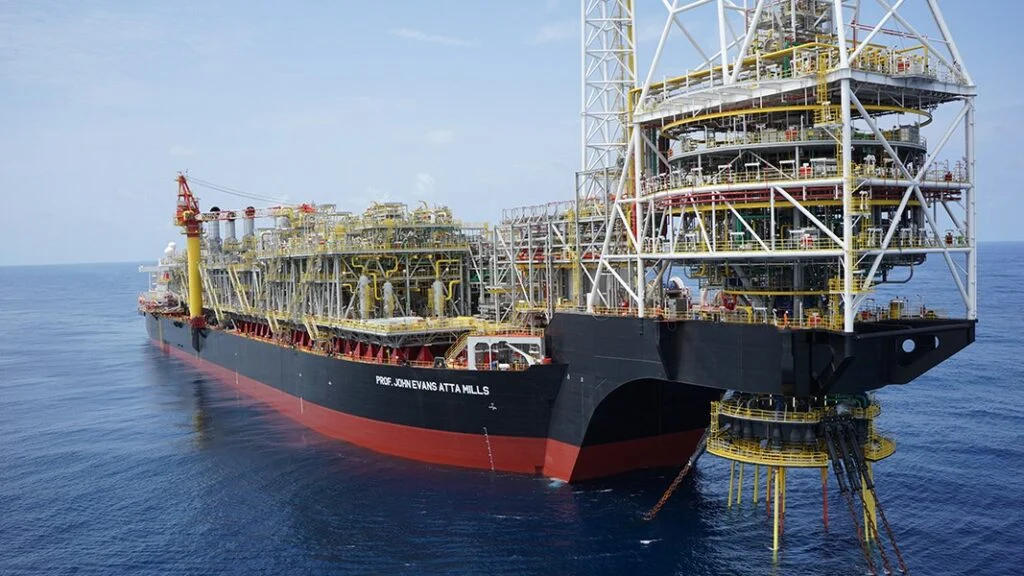
Tullow Ghana Limited (TGL) has consolidated its roadmap for the current fiscal year with a clear objective: to maximize crude oil recovery in deep African waters. The subsidiary of Tullow Oil has confirmed that during 2026 six key wells in the Jubilee field will come online. Two of them (J74-P and J75-P) are already operational, while the next three will be activated between June and July. The cycle will conclude in September with the commissioning of a water injection well, a critical component for maintaining reservoir pressure and counteracting the natural decline in extraction.
After a 2025 marked by technical challenges—particularly higher-than-expected water content affecting the stability of the risers on the eastern flank—the company has managed to turn the situation around. The implementation of gas lifting systems has helped stabilize the flow. With an operational efficiency of 97% in its FPSO (floating production, storage and offloading) platforms, Tullow has seen its net production in Ghana rise from an average of 32,500 barrels per day last year to 35,400 barrels recorded at the start of 2026.
The replacement of the flare nozzle on the FPSO TEN has reduced routine gas flaring by 50%, aligning operations with stricter environmental standards. Furthermore, the recent extension of oil agreements with the Ghanaian government until 2040 has paved the way for a much more ambitious reserve planning strategy, forecasting an increase in net reserves of over 10 million barrels of oil equivalent.
This new contractual framework also redefines resource governance. Starting in July 2036, the state corporation Ghana National Petroleum Corporation (GNPC) will increase its stake by an additional 10%, reflecting a trend towards greater local control over extractive resources. Meanwhile, Tullow is focused on completing the gas lifting system on the west side of Jubilee by 2027, an investment that promises new production peaks in a global market thirsty for stable crude oil and efficient logistics.