




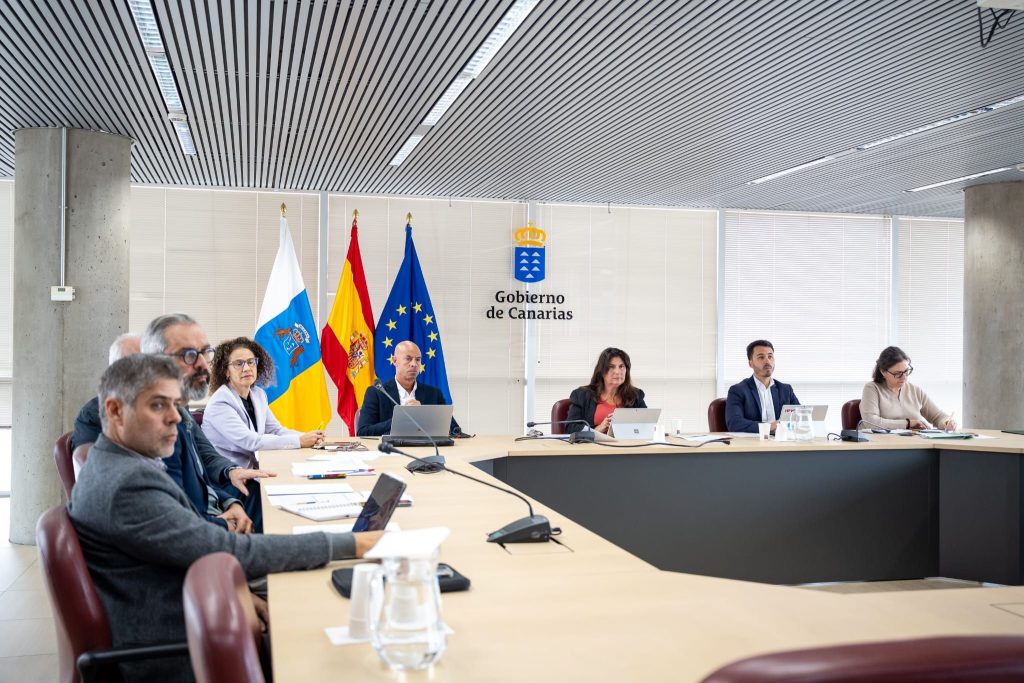
In the docks of Gran Canaria, industrial optimism is often measured by the size of the subsidy rather than by the strength of the Trade Winds. The Fifth Offshore Wind Energy Table (the name recalls that of the National Table of Herri Batasuna) has cleared up doubts: the Archipelago is not seeking to compete in the global market, but to protect an exceptional ecosystem. The proposal sent to the central government by PP and CC at the request of the Canary Maritime Cluster is not a deployment plan, it is a demand for bureaucratic sovereignty: a reserved quota of 250 MW protected under the euphemism of ‘insular singularity’. They are afraid that a Naturgy will appear and disrupt the scheme. Even the conservative stevedore said last Sunday in Canarias 7 that they were excited about this Canary quota in offshore wind.
The consensus to tender a single wind farm in this first phase betrays the fear of an open market. Under the banner of ‘economies of scale’, the blue economy lobby in Las Palmas tries to avoid the hassle of managing real competition, preferring a single award model that facilitates administrative digestion. It is, in essence, centralized planning with the smell of sea salt: a single winner is chosen to ensure that the experiment does not derail before WindEurope 2026.
However, the true engine of this Atlantic ‘hub’ is not the technology but the Interreg MAC filter program. The Blue Supply Chain project, presented as the great hope for local SMEs, is the perfect example of the greenhouse economy that prevails in the islands: a financial scaffolding where 85% of the cost is covered by FEDER funds. Without the lungs of Brussels, the much-touted Canary value chain would run out of air within months. Programs of paperwork and events.
The Canary brand is marketed as a territory ready to lead, but the accounting reality suggests that the sector is more focused on the Official Gazette than on the anemometer. While the European taxpayer remains willing to cover 85% of the ‘green transition’ bill, the business will keep turning. The problem will arise when Europe decides it has paid for enough windmills and demands that, for once, the Canary industry learns to walk without the crutches of cohesion funds.
News written by Pedro Marrero. Edited and verified by Gara Vega. Cross-checked information without institutional filters. This analysis has not been funded by official advertising nor conditioned by lobby interests.







