




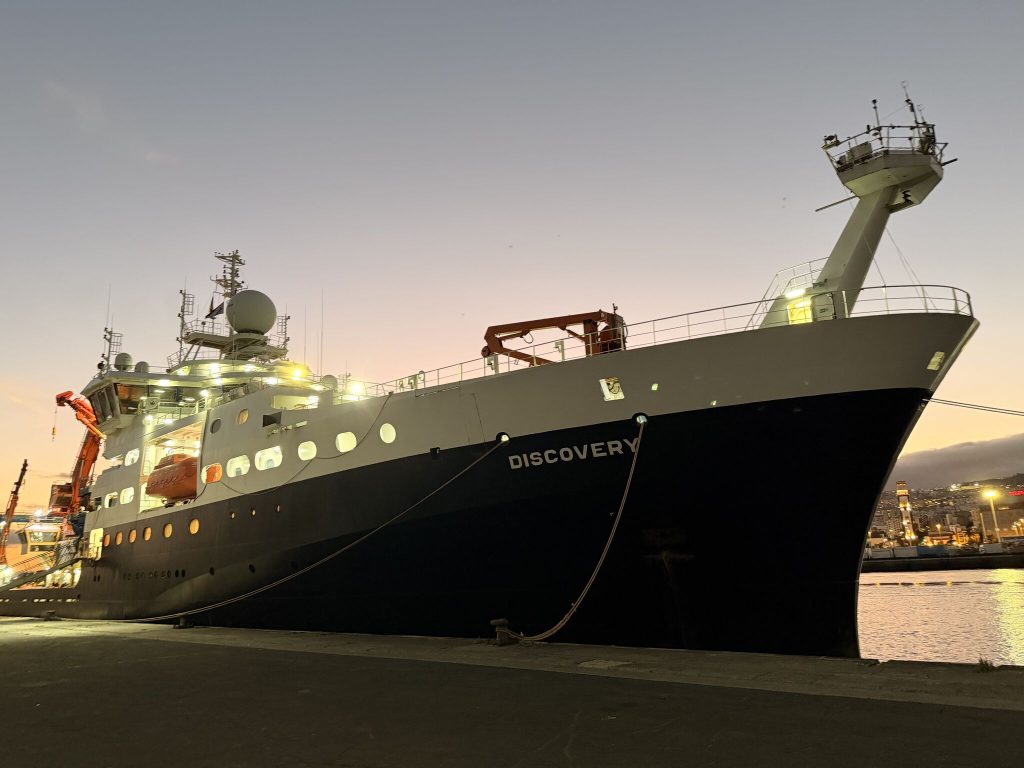
The oceanographic vessel RRS Discovery departs from the port of Santa Cruz de Tenerife, escorted by the British press: a critical expedition to measure the potential collapse of the AMOC, while the Canary subsoil remains under the shadow of tellurium. In this way, the port of the Tenerife capital has been the scene this week of a high-level scientific and media deployment that places the Canary Islands, once again, at the epicenter of global climate security. Does the Ministry of Foreign Affairs in Madrid know this? Are there technicians from the IEO present? Will they anchor in the area of Mount Tropic? Nothing has been said.
The research vessel RRS Discovery has cast off to initiate the RAPID Expedition, an international program led by the National Oceanography Centre (NOC) of the United Kingdom. The goal is almost dramatic: to monitor the Atlantic Meridional Overturning Circulation (AMOC), the thermal ‘heart’ of the planet that, according to experts, is on the brink of collapse.
The departure of the Discovery reaffirms Tenerife’s role as a logistics platform for cutting-edge science. Just as the port serves as a base for the oil rush in Africa, it now becomes the departure port for the mission aimed at preventing Europe from freezing. Amid managing currents and the shadow of tellurium, the sea of the Canary Islands remains the board where the economic and environmental future of the 21st century is played out.
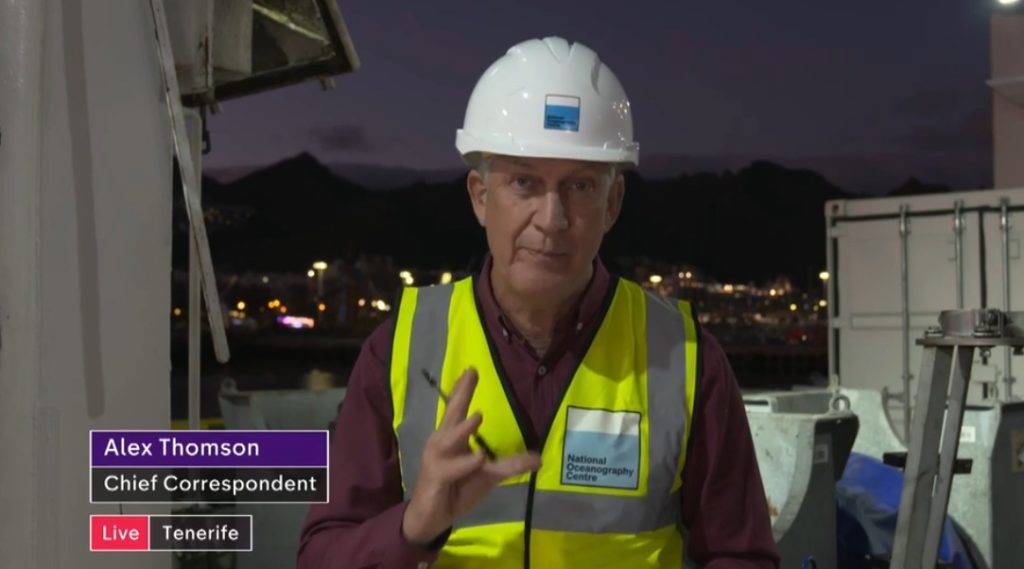
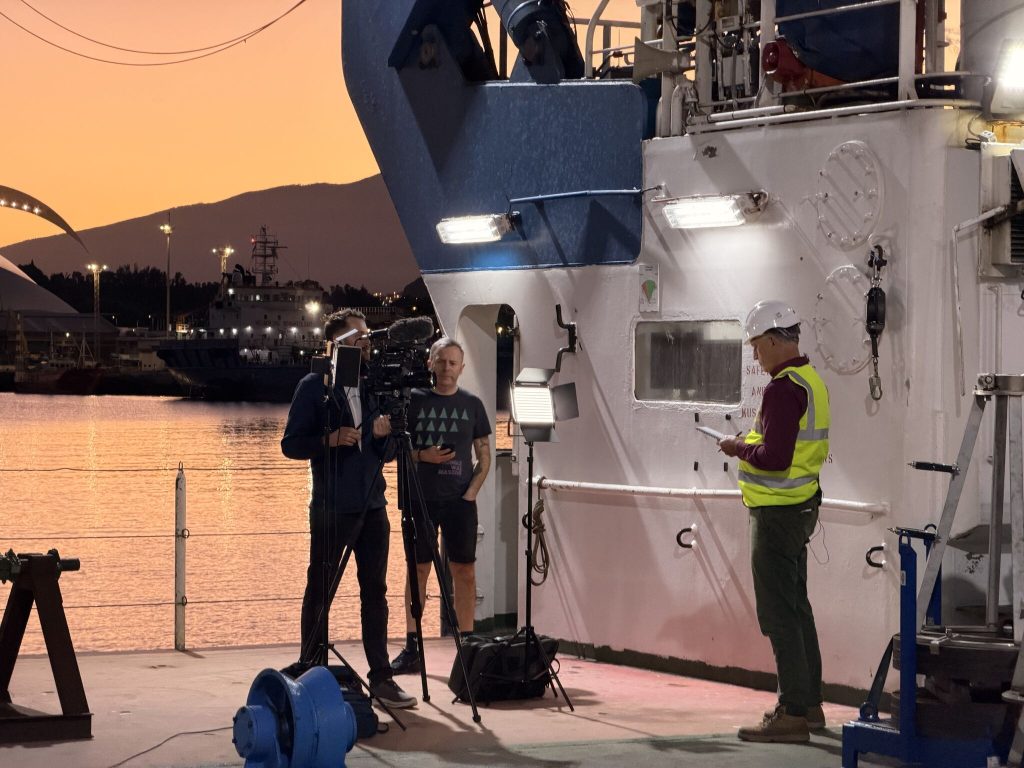
The importance of this mission has mobilized the heavyweights of British communication. On board not only are scientists from 15 countries traveling; they are accompanied by a team from ITN for Channel 4, led by chief correspondent Alex Thomson, and journalists from the prestigious magazine Science. The presence of these media aims to provide total transparency to research that directly affects Europe’s future. Thomson made the first connection before losing sight of Teide, sending a chilling message: if the AMOC stops, northwest Europe will face ‘unprecedented’ cooling of extreme intensity.
Canary Islands: Between the Thermometer and the Mine
As the Discovery heads toward open waters to study the currents that regulate the temperature of the islands and the continent, another recurring question lingers in the Canary imagination: Is it only ocean science, or is there something more beneath the seabed? Although the RAPID expedition has a strictly climatic focus to understand heat transport in the Atlantic, the study area geographically coincides with regions where tellurium and other strategic minerals from underwater mountains (such as the famous Tropic) have generated geopolitical tensions and less transparent previous expeditions.
However, London seems to want to dispel any doubts about hidden mining through this media openness. The AMOC is a key component of the Earth’s climate system and its weakening, accelerated by polar melting, poses a much more immediate threat to European survival than any mineral reserve. The Canary Islands, due to their privileged position, act here as the thermometer of the world: if the current stalls here, extreme cold will reach London and Paris in a matter of years.
An Open Letter That Accelerates the Mission
This expedition is not a routine trip. It comes weeks after dozens of scientists signed an open letter warning that the risk of collapse has been underestimated. The RRS Discovery will deploy state-of-the-art buoys and sensors to measure salinity and temperature, data that will confirm whether the Gulf Stream is shutting down.
News written by Gara Vega. Edited and verified by Pedro Marrero. Cross-referenced information without institutional filters. This analysis has not been funded by official advertising or conditioned by lobbying interests.







