




The Port Authority of Las Palmas faces a 2026 characterized by the resolution of its historical liabilities. Those credits signed decades ago to finance the major infrastructures of the dock have ceased to be long-term debt and have turned into immediate obligations. In total, the port has committed 73 million euros in balances that are set to expire imminently.
The Port of Las Palmas arrives at 2026 with its obligations covered, but with an overwhelming cash pressure. Since these are not genuine financial swap operations, the Port has been paying for a security that now expires along with the loans. With imminent maturities such as the 10 million from Caixabank on February 24, 2026, the institution presided by Beatriz Calzada faces the challenge of liquidating a financial legacy that was key to its expansion, but which today demands ironclad solvency to avoid compromising the future.
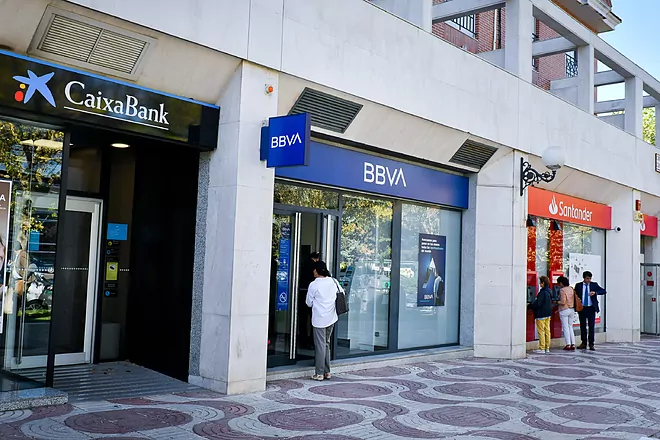
What is now maturing as short-term debt are, in fact, loans secured almost two decades ago under a complex structure of derivatives and financial swaps (swaps) that guaranteed fixed rates as long as Euribor remained under control. The Port not only has to repay the capital, but has coexisted with a series of hedging contracts with BBVA, Santander, and Caja Madrid (now Caixabank) designed to protect against volatility, but which now face their final act.
The crown jewel of this debt is the loan of 27 million euros with BBVA, which matures on March 31, 2026. Its fine print is a labyrinth of conditions: during the initial years, it paid an interest rate of 3.05%, rising to 3.40% and finally the current 3.80%. This fixed interest rate only remains if the Euribor does not exceed 4.75%; otherwise, the Port would pay the Euribor less a small margin of 0.05%. It is a long-term bet that forced the Port Authority to keep the financial derivative active, as any early cancellation of the loan would also entail liquidating the associated financial security.
The rest of the portfolio follows a similar logic of ceilings and floors. The loans maturing in December 2026 and June 2027, totaling 32 million euros between BBVA and Santander, are subject to a barrier of 4.85% or 5% of the Euribor. If the market remains below those limits, the Port of Las Palmas pays fixed rates ranging from 3.81% to 4.43%. It is a structure that once provided stability for building docks, but now forces the entity to disburse 1.75 million euros just in accrued interest at the end of the fiscal year, according to official documentation.
Article written by Raquel Molina. Edited and verified by José L. Jiménez. Cross-checked information without institutional filters. This analysis has not been funded by official advertising nor conditioned by lobby interests.







