




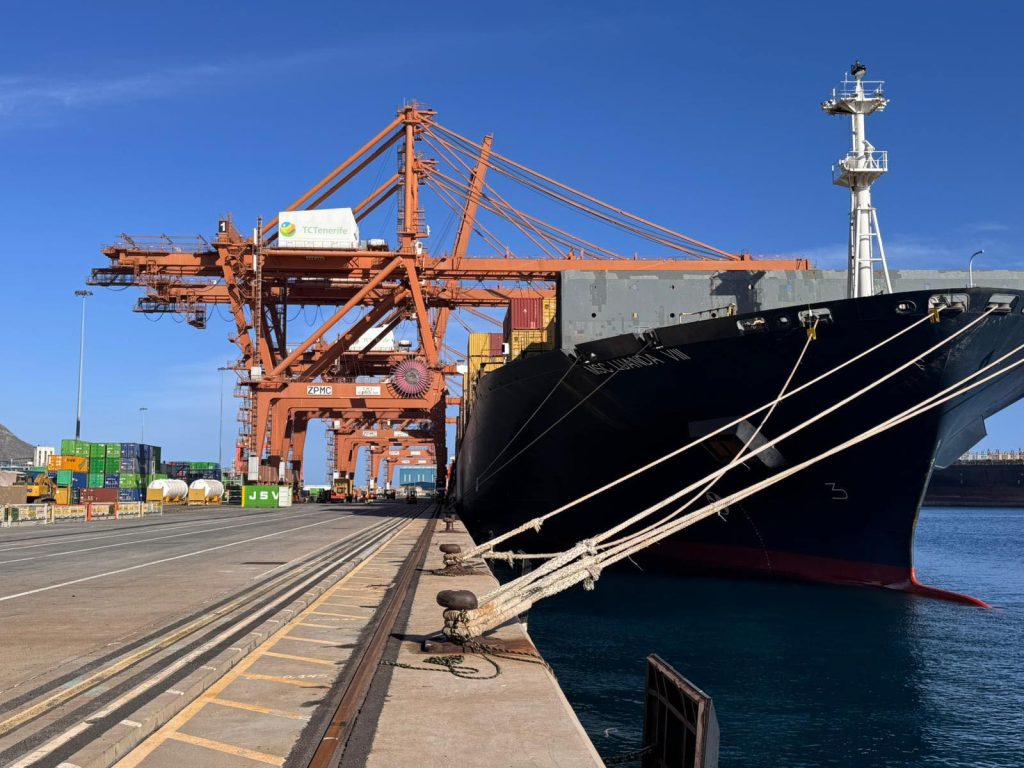
The competitiveness of the logistics nodes in the Atlantic is measured by their capacity to offer uninterrupted freight flows without penalizing the margins of international trade. The recent agreement of the Board of Directors of the Port Authority of Santa Cruz de Tenerife, adopted in its session on April 27, 2026, and published in the Official Bulletin of the Province on May 27, 2026, exposes the seams of a port model conditioned by the fixed costs of its own structure. By authorizing the extended hours of the Port Inspection Center (CIP) on Sundays and holidays, the public entity presided over by Pedro Suárez imposes a severe tariff shield that fully passes the operational costs of Sunday openings onto private operators, increasing the cost of moving goods through the Canary Islands.
In contrast to international ports that absorb the opening costs to stimulate their docks, Tenerife opts for a strategy of direct impact that discourages supply chains on weekends. The obligation to pay a surcharge of 30 euros for each document processed on holidays, combined with penalties for unforeseen cancellations, confirms that the Port Authority prioritizes the budgetary sustainability of its concessionaire over the competitiveness of the islands in maritime transport routes.
The new tariff scheme, formally justified under the principle of ensuring the economic viability of the service awarded through concession, reveals a systematic penalty against logistical flexibility. The extended hours for Sundays and holidays, set from 8:30 AM to 3:00 PM (with exceptions only on December 25, January 1, and January 6), introduces a aggressive reconfiguration of the surcharge section outlined in Clause 16 of the specific terms and conditions. The reform maintains the 75% surcharge on the base rate for physical inspections on holidays, but adds unprecedented fees that increase the simple documentary processing costs.
The most toxic element of the resolution lies in the establishment of a mandatory billing floor for each opening day on weekends. The Port Authority has set a minimum billing amount of 1,935 euros for each Sunday or holiday opening to cover expenses related to personnel, IT service guards, cleaning, electricity supply, and facility opening. If the billing obtained through ordinary tariffs does not reach this threshold of 1,935 euros, the difference will be proportionally and mandatorily prorated among all economic operators who have used the center that morning, injecting a total uncertainty factor into customs clearance costs.
The new tariff structure severely penalizes the operational flexibility of freight forwarders and consignees with a strict scale of penalties for cancellation. Cancellations of requests made less than 18 hours in advance of Sunday openings will require payment of 100% of the minimum proportional billing calculated on the floor of 1,935 euros. If the cancellation occurs within the window of 18 to 24 hours prior, operators will be required to pay the full ordinary fee with the 75% surcharge. The punitive control also extends to weekly operations, imposing a fixed charge of 100 euros for each inspection request canceled from Monday to Saturday with less than 24 hours’ notice.







