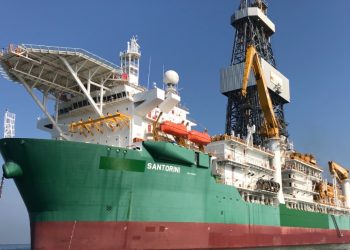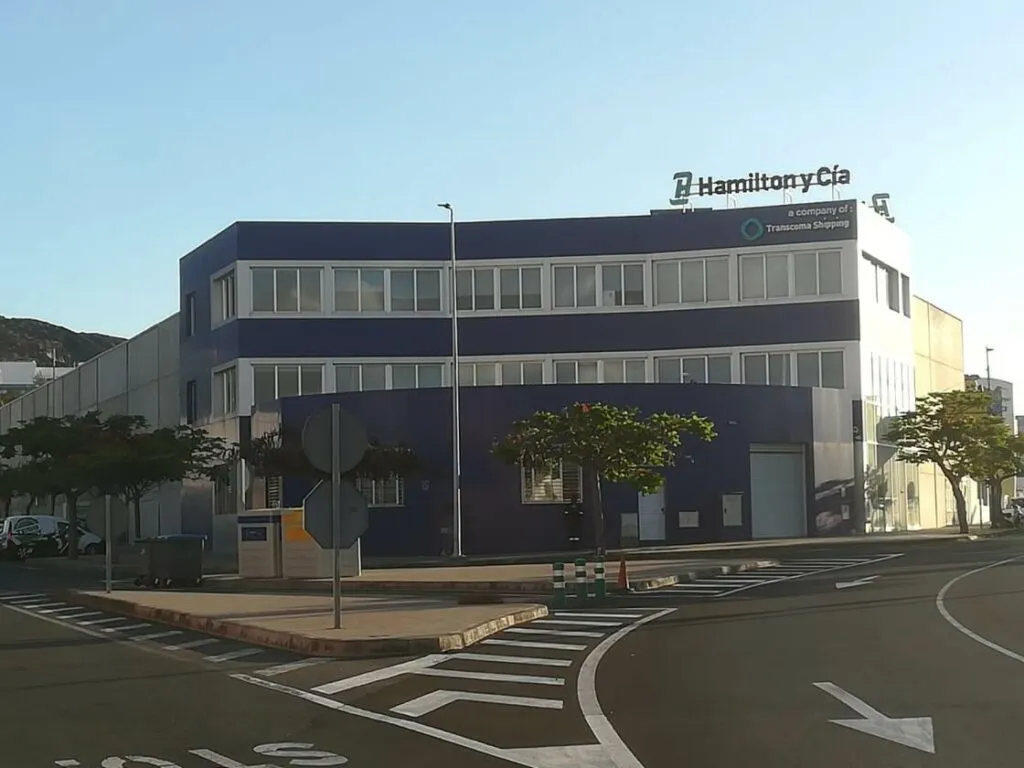
The logistics holding company Transcoma Grupo Empresarial has executed a tactical move in the Canary Islands. Through its subsidiary Hamilton y Cía., the corporation has designated the Los Mármoles dock at the Port of Arrecife as the stacking base for the next-generation vessel Noble Globetrotter I (NGT-1). The arrival of this offshore drilling colossus, owned by the American Noble Drilling, disrupts the inertia of the traditional market, which centralizes these operations at the Port of La Luz due to crew control, labor process staffing, and logistics of parts to be used.
Sources in the sector confirm that Hamilton y Cía.’s decision to select Arrecife is directly related to a situation that could attract a second vessel of similar characteristics in the coming weeks. This decentralization of the activity of storage and custody of large naval ‘artifacts’ diversifies the revenues of the Port Authority of Las Palmas outside its traditional core. By demonstrating that Los Mármoles can sustain the logistics of a state-of-the-art drillship registered under the Liberian flag without interfering with ordinary commercial activity, Transcoma opens a new business avenue for Lanzarote.
The call at Lanzarote, with a stay request of between four and six months, redefines the management of port spaces in the province. Although the vessel is not expected to undergo major structural repairs at local shipyards, its inactive stay as a support vessel awaiting new oil contracts generates an intensive demand for dock line space. By redirecting the Noble Globetrotter I to Arrecife, Transcoma frees up critical space at La Luz.
The stay of the drillship is shaping up under the modality of passive logistical stop, with the Los Mármoles port acting as a regulatory parking area until the unit is needed for a new exploration campaign in North Africa. The absence of major metallurgical work shifts the business’s center of gravity toward surface logistics services. In this scenario, the turnover of human resources consolidates as the main vector of direct revenue for the local economy, demanding close coordination between the shipping agent and the island’s transport networks.