




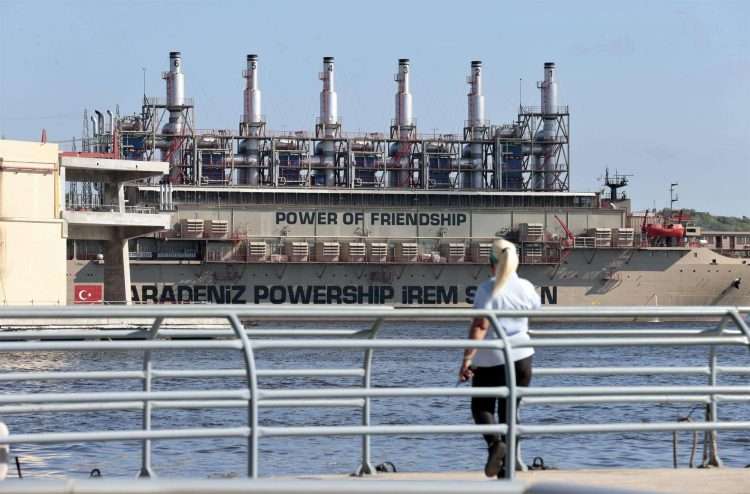
The proposal from the PP to install a floating power plant in the Port of La Luz to secure the electricity supply for Gran Canaria is not only an environmental and logistical challenge, but also a commitment of high financial intensity. After analyzing the international contractual conditions of the Turkish company Karpowership in other markets, which operates under fixed cost availability and variable generation models, the deployment of such infrastructure would entail for the regional electrical system a rental and maintenance expense of around 38 euros for each minute of connection, a figure that does not include the supply of fuel.
A cost architecture based on availability
The business model of these floating power plants —such as the one that has operated in markets like Guyana or Ecuador— is structured through an initial mobilization fee, which in international precedents has been around one million dollars (about 920,000 euros), a one-time payment that guarantees the positioning of the vessel at the designated dock. This initial expense is complemented by a constant operational cost, composed of a fixed charter fee and a variable fee for operation and maintenance, which are charged regardless of whether the plant is generating energy intensively or is on standby.
By transferring the standard sector costs (approximately 0.07 euros/kWh combining charter and maintenance for large capacity vessels) to a continuous production scenario, the fixed cost for the system would rise to about 55,000 euros daily. This figure, when broken down for budgetary control, reveals a stark reality: the public spending counter is activated relentlessly, recording an expenditure of 2,285 euros every hour, which amounts to those 38 euros per minute that the regional Government will have to manage in its contingency budgets.
The volatility of fuel: the factor that drives up costs
It is essential to emphasize that the 38 euros per minute exclusively represent the ‘toll’ for having the infrastructure available and operational. The actual cost that citizens and companies will pay on their electricity bill will be considerably higher, since the charter contract transfers to the contracting party the responsibility for supplying the heavy fuel oil or natural gas necessary for combustion. In light of the high volatility in hydrocarbon markets, the final price per kilowatt generated could double or triple the maintenance figure, depending on the crude oil price at the time of the vessel’s operation.
The People’s Party, the main proponent of this solution against the risk of blackouts, is now facing pressure to justify this constant flow of money compared to other energy alternatives. While business and social groups denounce the lack of investment in structural alternatives, the numbers reveal the harshness of ’emergency energy’: an infrastructure that, simply by being docked in the Port of La Luz, devours almost 40 euros of capital every sixty seconds, regardless of whether the island’s energy demand is met or if there are cleaner and cheaper generation sources waiting to be integrated into the regional grid.







