




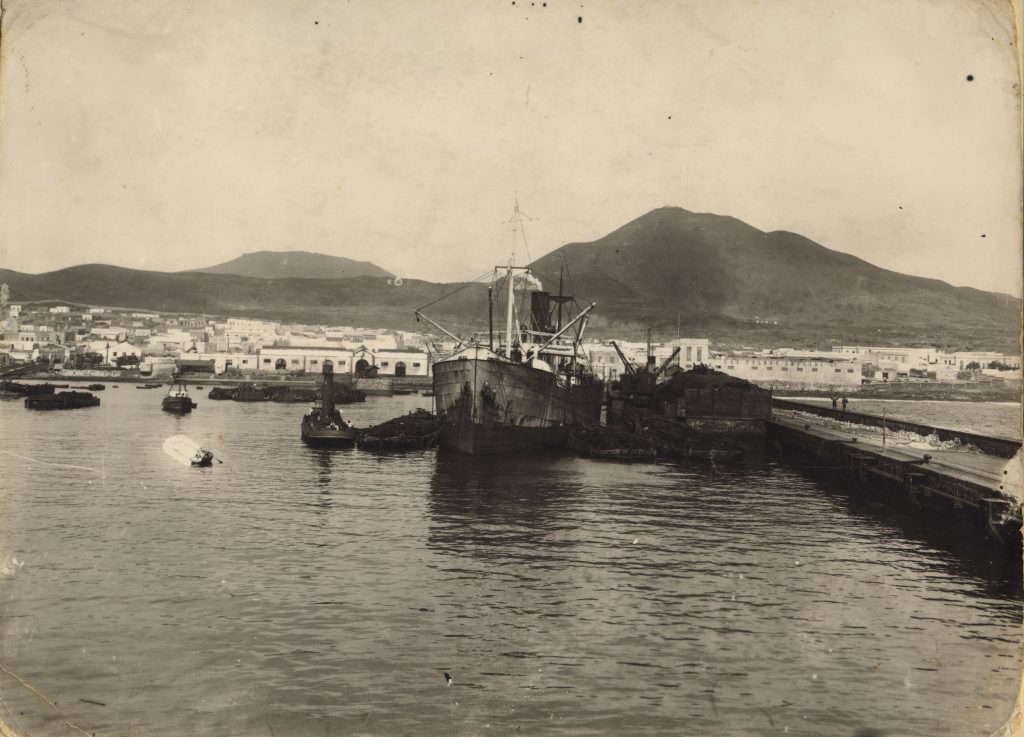
In 2026, an empire is no longer necessary to organize dependence; it suffices with well-written contracts and a stable connection to markets. The port remains, but the center of gravity lies elsewhere, always a bit further north. The local economy thrives with a nearly administrative efficiency, as if it has accepted that initiative is a non-productive luxury. No one speaks of colony; the word opportunity is preferred, which is more hygienic and leaves no moral residue. The mediator of the 21st century is exposed to be listed in transparency reports for taking 2,000 euros from the public sector to promote vertical mobility within the company.
The Port of La Luz was not a British charity; it was a thriving business managed by a generation of Canarian executives who put their surnames so that London could set the rules. These men, the executives of the bourgeoisie of Triana, were responsible for ensuring that the Spanish administration did not cause disturbances. From the late 19th century, and especially between 1874 and 1913, the Port of Las Palmas integrated into the British maritime circuit through commercial houses like Elder Dempster, Miller and Co., Blandy Brothers, Wilson Sons, or Swanston. The capital was British, strategic decisions were made in London or Liverpool, but daily management rested on a generation of local executives with extensive mercantile powers.
Andrés Macías Macías operated as a key figure in the Grand Canary Coaling Company, a fundamental piece in the supply of coal to the steamers docking at the port. Francisco Azopardo Bethencourt, who started as a clerk at the Houghton house in 1875, became one of the strongmen of Blandy Brothers. Manuel Gallardo Gutiérrez, from Cádiz, rose to management at Miller and Co. José Bonello Quintana, of Maltese origin, managed interests linked to Swanston and Co. León Bravo de Laguna represented Wilson Sons. Rosendo Ramos Franch and Emilio Ley Arata were operational pillars in the structure linked to Elder Dempster. They all had powers to buy, sell, hire staff, and sign on behalf of the foreign parent companies. They were the gear that connected Spanish legislation with British interests.
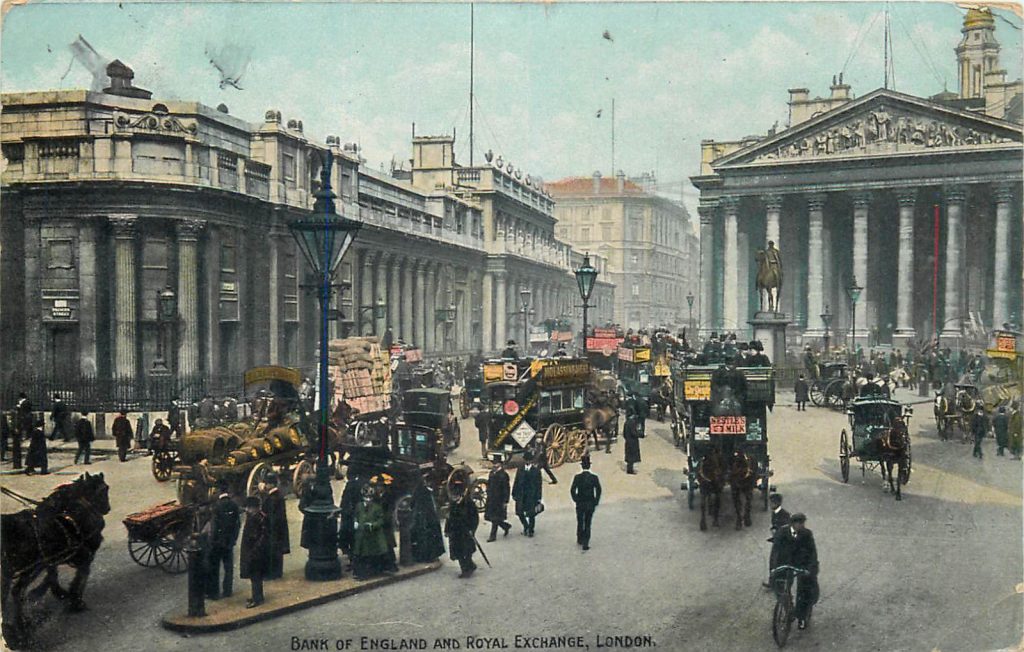
A significant example was the constitution of the Interisland Mail Steamship Company, with a share capital of 862,500 pesetas. Adjusted with an average estimate of 2.4% annually, that figure would equate to approximately 5.1 million euros today in terms of purchasing power. To formally meet Spanish administrative requirements, five shares were allocated to Tomás de Zárate y Morales, Domingo Marrero Marrero, Pedro Sarmiento Pérez, Cayetano Inglott y de Ayala, Diego Hernández Saavedra, and Emilio Ley Arata. However, 1,695 shares were registered under Rosendo Ramos Franch. The shareholding structure reflected a common scheme of the time: visible local ownership and effective control linked to British capital, in this case associated with Elder Dempster, which dominated the interisland mail traffic.
The decisive transformation was not only corporate but also technological. The maritime registry of Las Palmas from 1874 to 1913 shows the leap from wood and sail to iron and steam. In 1900, the Pail made its appearance. Matías López, weighing 95.33 tons, was built in shipyards linked to Blandy and connected to the Elder Dempster circuit. In 1908, the steamships España, weighing 125.99 tons, and Veloz, weighing 241.61 tons, both under the auspices of Miller and Co. and acquired in Scotland, came on the scene. That same year, the steamship Viera y Clavijo, weighing 510.98 tons, and the steamship León y Castillo, weighing 506.83 tons, were integrated into the network associated with Elder Dempster. Also, the steamship Esperanza, weighing 85.62 tons, was linked to Elder and Fyffes. By 1913, the scale increased significantly: the steamship La Palma reached 893.52 tons; a new version of Viera y Clavijo measured 880.22 tons; and León y Castillo approached 899.60 tons. These figures are ten times greater than the capacity of many local sailing vessels.
In contrast to this expansion, Canarian shipowners operated in another dimension. Miguel Curbelo had the Pino in 1906 and the Río de Oro in 1908. Antonio Jorge Marrero and Rafael Martínez Bravo launched the San Antonio in 1908. Juan Bordes Claveríe sponsored the Mosquito in 1913 for Ortega and Montenegro, a sailing ship of 44 tons. They competed with vessels of 40 or 70 tons against steamships nearing 900. The difference in regularity, speed, and cargo capacity consolidated the predominance of companies linked to British capital in interisland and export traffic.
The position achieved at the port also allowed for business diversification. Emilio Ley Arata founded Río y Compañía in 1908 for the exploitation of mineral waters, established Ley y Compañía in 1909, and participated in Melián y Compañía Limitada in 1910 for land transport, what is today Gobal Salcao Utinsa. Francisco Azopardo was involved in Fomento de las Aguas and in Castro y Cía, extending the business presence into strategic sectors like water supply. Control over the dock, coal, and steamers was complemented by investments in land, water, and transport.
Between 1874 and 1913, the Port of La Luz consolidated itself as a fundamental station in the British maritime system in the Atlantic. The model combined foreign capital, technical direction from the United Kingdom, and local executive management. It was not an isolated or improvised process, but the result of a progressive integration into a global commercial network where the bourgeoisie of Triana acted as an intermediary. The material modernization of the port coexisted with an economic structure heavily reliant on decisions made outside the archipelago.







