




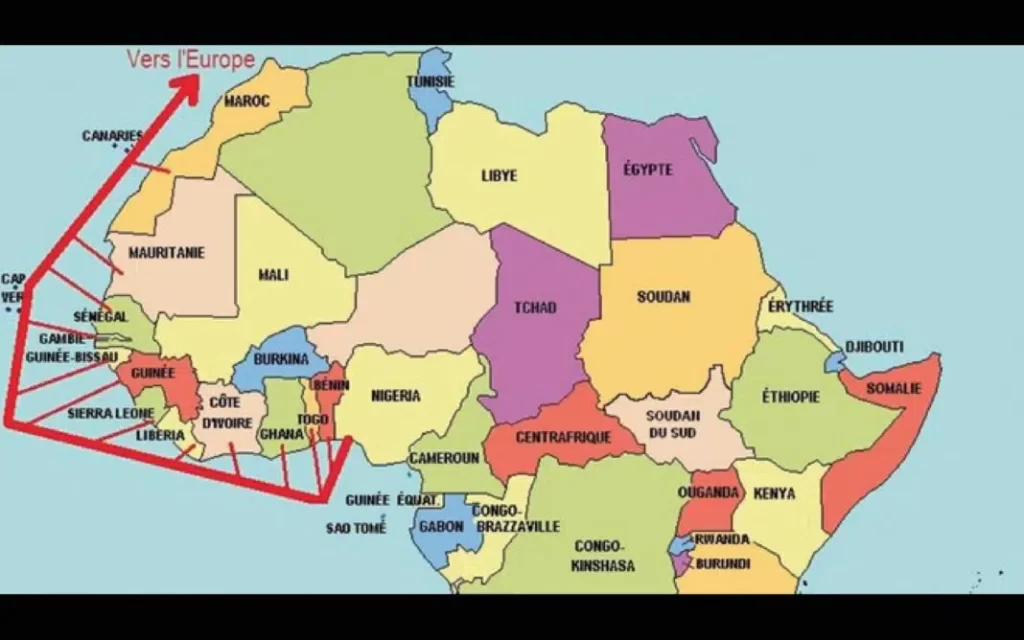
The so-called Nigeria-Morocco Gas Pipeline (NMGP) plans to establish a branch off the coast of Fuerteventura. Has anyone requested it? The project has transcended its technical dimension to become a top-tier geopolitical and economic instrument in West Africa. Originally conceived to transport Nigerian gas to Europe via Morocco and the Maghreb pipeline network, recent information confirms that the project includes a branch that would pass near the Canary Islands, positioning the archipelago as a potential connection hub between West Africa and the European Union.
The NMGP, whose main construction has an estimated budget of 25 billion dollars, crosses more than a dozen countries and remains in the phases of engineering studies, environmental impact assessments, and economic feasibility. Although it is expected to be operational before 2040, the branch to the Canary Islands represents a strategic positioning tool: the islands could offer logistics support functions, bunkering, fleet maintenance, and technical services for operations associated with the pipeline, generating additional economic activity and reinforcing the archipelago’s position as a European platform in the eastern Atlantic.
From Nigeria’s NNPC and Morocco’s Office National des Hydrocarbures et des Mines (ONHYM), it is emphasized that the NMGP is designed not only to transport gas but to consolidate a regional cooperation framework. Mauritania, for example, which began its gas production with the Grand Tortue Ahmeyim field at the end of 2024 and is preparing the BirAllah field, has managed to strategically position itself without compromising immediate gas flows. Its participation grants it diplomatic visibility, strategic autonomy, and access to decisions regarding Atlantic energy integration, making it a key player despite its relative novelty as a producer.
The Canary Islands find themselves in a delicate yet privileged position. The ports of Las Palmas and Tenerife, fully integrated into the EU and experienced in offshore services, could assume technical backup functions for maritime operations and logistics associated with the NMGP. The geographical proximity to the proposed branch would allow the islands to capture value without taking on direct gas exploitation risks, transforming them into a crucial operational node in a corridor that connects the western Atlantic with Europe.
Experts warn that the integration of the Canary Islands into the NMGP does not solely depend on physical infrastructure but on strategic decisions at the regional and European levels. Morocco and the EU seek to consolidate European presence in West Africa, and the branch to the islands acts as a tool for geopolitical anticipation: ensuring secure and regulated access to services associated with the pipeline without relying on continental African infrastructure.
From Rabat, it is claimed that the NMGP and its branch to the Canary Islands would generate a flow of indirect opportunities: engineering contracts, environmental consulting, construction of auxiliary facilities, and specialized port services. The combination of technical activity and strategic positioning transforms the archipelago into a value platform for Europe and Africa, with implications that transcend mere gas transportation and touch on sectors such as mining, industrialization, and maritime security.
Looking towards 2030–2040, the challenge for the Canary Islands will be to decide whether to remain a peripheral observer or take an active role in logistics, auxiliary services, and technical coordination of the NMGP. The window of opportunity is limited: as studies and planning progress, competition to capture logistical and strategic value intensifies, and geography, if not leveraged, can become a disadvantage.







