In the offshore logistics chessboard, proximity is no longer just an advantage: it is a capital requirement. The recent reorganization of Saga Subsea, following the 50% takeover by veteran industrialist Helge Rasmussen, marks a cycle shift in how subsea assets are managed from the Canary Islands archipelago.
For investors watching the oil and gas sector in the Canary Islands, as well as the emerging offshore wind market, the move by Saga Subsea is a handbook on how Norwegian capital is tactically ‘colonizing’ key infrastructures in the Atlantic. By combining the operational base in Las Palmas with the technical expertise of Haugesund, the company has evolved from being a mere equipment provider to becoming a full-cycle engineering partner.
The Return of the Industrial Partner
The arrival of Rasmussen, known for his successes at CSUB and HighComp, brings a ‘market discipline’ that Saga Subsea had not previously experienced. ‘With his joining, we gained an industrial partner that we have never had before’, says Tor Alme, co-founder of the company. Under the general management of Lene Bakken, the firm has spent the last 18 months cleaning up balance sheets and securing new financing.
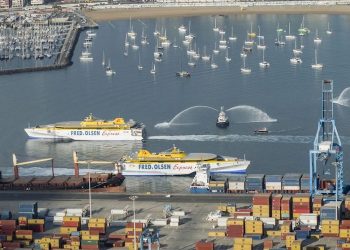
This financial solidity is not just cosmetic. In a sector where the mobilization (mob) and demobilization (demob) of vessels in the ports of Las Palmas and Tenerife can cost hundreds of thousands of dollars a day, Saga Subsea’s capacity to execute complex engineering projects ‘in-situ’ represents what the market defines as a moat or competitive trench.
Specialization vs. Scale
Unlike oil service giants seeking massive scale, Saga Subsea’s strategy under its new unified plan focuses on ‘hyper-specialization’. The firm has divided its operations into four critical pillars: Tools, Agency, Engineering, and Consulting.
The focus is on innovative solutions such as the ROCS system for interventions in splash zones, a technical niche where precision outweighs volume. This commitment to in-house development, supported by the recent ISO-9001 certification, sends a clear signal to operators on the coasts of West Africa: the Canary Islands is no longer just a gas station in the middle of the ocean, but a high-tech center.
The Human Factor and Capacity Limit
Expansion is physical and tangible. The company’s workforce has grown to the point that Alme jokes about ‘running out of parking space’. However, the challenge for 2026 will be managing this growth in a global environment of high inflation and supply chain bottlenecks. The bet of Saga Subsea on the Canary Islands is ultimately a bet on geography. In a world where geopolitical uncertainty redraws trade routes, having a stable financial base and advanced technical capacity in the Las Palmas-Tenerife axis places the company in an enviable position to dominate Atlantic subsea services. The transition of Saga Subsea suggests that consolidation in the offshore services sector will continue to be driven by industrial partners rather than pure venture capital, prioritizing operational efficiency and quality certification at strategic logistical nodes.