




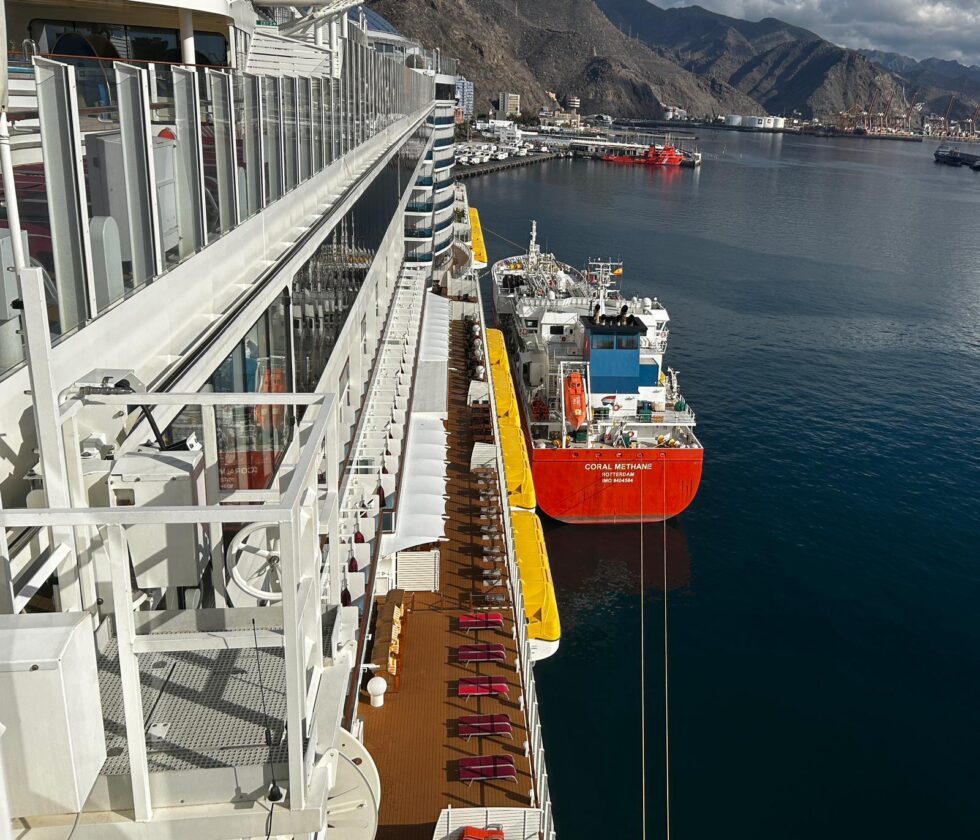
While the European Commission defends the climate integrity of its emissions trading system, the engine rooms of global logistics are arriving at an unexpected conclusion. In the technical discussions on January 20, 2026, reported by Lloyd’s List, sector analysts emphasize that the Canary ports are retaining traffic from the Cape of Good Hope not because of price, but due to legal certainty. For a shipowner, the fiscal ‘hit’ of the ETS is a predictable cost; operational uncertainty in a non-EU port, on the other hand, poses an unsustainable financial risk.
The massive diversion of ships around southern Africa, solidified after the Red Sea crisis, has turned the Canaries into the last bastion of European standards before the leap to the South Atlantic. Experts point out that while ports in Morocco or Namibia offer refueling free from carbon taxes, they lack the safety net of the European Union. ‘In Las Palmas or Tenerife, a shipowner has predictable maritime courts, immediate technical certifications, and administrative transparency that avoids extra costs from unforeseen delays, which are so common in third countries,’ the sector analysis notes.
The risk premium: the EU as a safe port
This preference has a direct economic reading on insurance policies. Marine insurers are beginning to value stops in EU-governed ports positively for ships undertaking long-distance routes. The guarantee that a naval repair will comply with Union safety regulations or that fuel supply is audited under European standards acts as a magnet for higher value fleets, who prefer to pay the emissions surcharge in exchange for securing their operational reliability.
On the other hand, the Canary Islands’ commitment to ‘green bunkering’ is completing the circle. By offering certified biofuels and methanol in 2026, the Canary ports allow shipping companies not only to call but also to enhance their compliance profile with regulators and their own investors. It is the paradox of the current market: the islands are transforming a fiscal disadvantage into a logistical quality seal. As long as carbon has a price, European security and traceability will remain the safe haven for maritime giants.
In the corridors of Brussels, this trend is viewed with cautious optimism. DG MOVE (European Commission Directorate-General for Mobility and Transport) observes how the Canaries are solidifying as a strategic autonomy node that prevents critical routes from exclusively depending on external powers. The message for 2026 is clear: the Canary port model does not compete to be the cheapest but to be the most reliable in the Atlantic corridor. For shipping companies, in a world of increasing geopolitical instability, the certainty of European law in the middle of the ocean is worth the price of their emissions.
News written by Pedro Marrero. Edited and verified by José L. Jiménez. Cross-referenced information without institutional filters. This analysis has not been funded by official advertising nor conditioned by lobby interests.







