In a move that redefines its risk profile in **West Africa**, Kosmos Energy has kicked off 2026 with a double blow of operational and financial authority. The American firm, which has suppliers in Tenerife, has confirmed the acquisition of key extensions for its offshore licenses in Ghana, along with a roadmap to gain total control over its production assets. Following the approval from the Ghanaian Government for the West Cape Three Points and Deep Water Tano agreements, the company secures the exploitation of the Jubilee and TEN fields until 2040, a timeline that guarantees dividend stability for its shareholders over the next decade.
Beyond Ghanaian borders, the **Greater Tortue Ahmeyim (GTA) project**, located at the border between Mauritania and Senegal, has crossed the threshold of maximum profitability. In December 2025, the floating LNG plant reached its nameplate capacity of three million tons per year. Kosmos anticipates that the cargo volume will nearly double in 2026, **solidifying the project as a key component for gas supply to Europe in a global market thirsty for stable energy alternatives**.
The **J-74 well: Towards 70,000 barrels per day**.
The operational update underscores Kosmos’s technical efficiency in the Jubilee field. The successful completion of the producing well J-74 is no minor metric: it is expected to contribute more than 10,000 barrels of oil per day (bopd) on its own. This addition will catapult Jubilee’s gross production towards 70,000 bpd early this year, **significantly surpassing the average of 59,000 bpd recorded in the last quarter of 2025**. With five additional wells already approved for 2026, the partnership seeks to maximize cash flow in a crude price environment that rewards operational scale.
The **transition to owned FPSO: A change in leverage**.
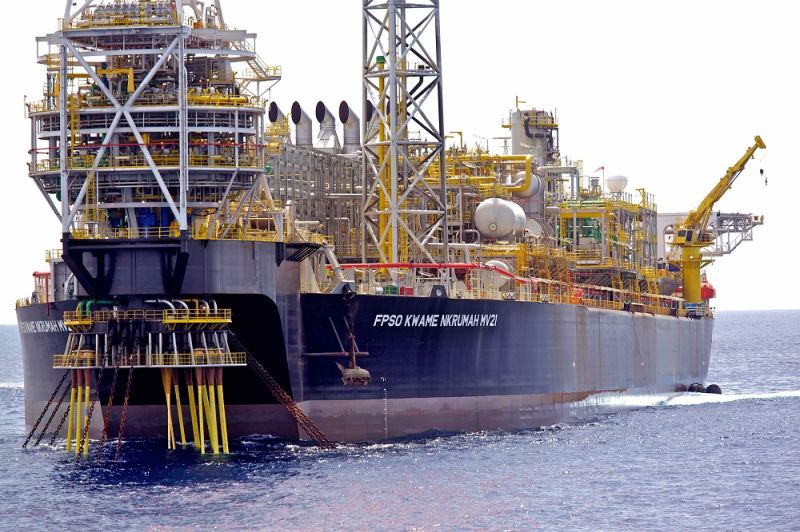
However, the most strategic move lies in the shift in ownership model. Kosmos and its partners have finalized the terms to acquire the floating production, storage, and offloading (FPSO) vessel at the end of its lease in 2027. By transitioning from a rental model to collective ownership, the **company anticipates a drastic reduction in operating costs (OPEX)**. This shift is critical: it improves the company’s financial leverage and provides direct control over critical infrastructure, eliminating dependence on third-party floating service providers.
In purely financial terms, Kosmos is executing a textbook balance sheet clean-up. The company has withdrawn 100 million dollars from its credit line in the Gulf of Mexico to repay unsecured bonds maturing this year. At the same time, **it has obtained waivers from its lenders to issue new secured financing aimed at refinancing the debt due in 2027**. This proactivity in liability management, combined with the increase in production, places Kosmos in a strong position to **navigate the energy cycle of 2026 with a much more resilient balance sheet**.