




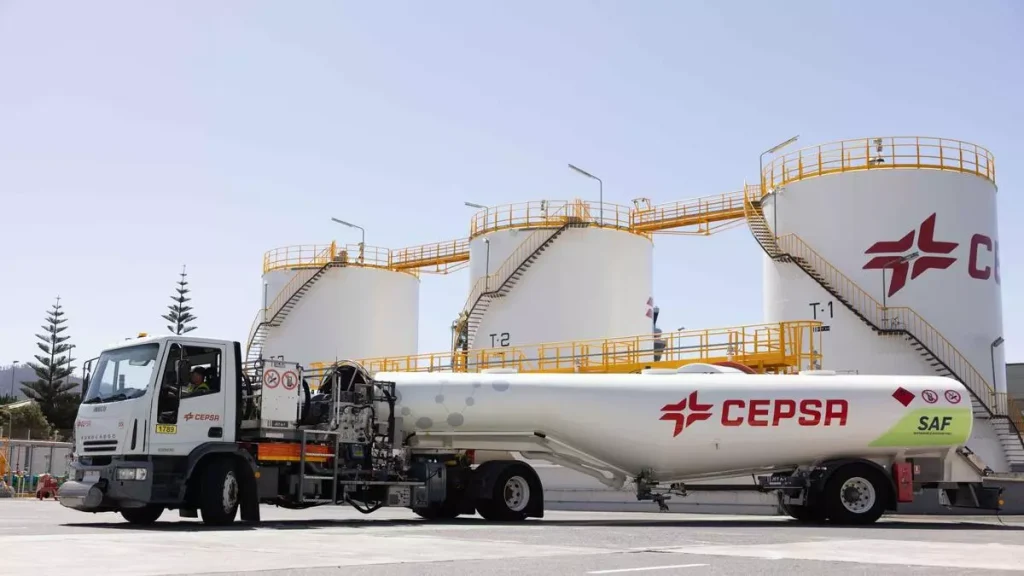
The Public Prosecutor’s Office is requesting up to 28 years in prison and over 25 million euros in fines. The largest tax scandal linked to the Canary energy market has entered its decisive phase. The Prosecutor’s Office has requested fines exceeding 13 million euros, a suspension of activities for four years, and even the dissolution of the legal entity of Cepsa, now renamed Moeve, due to a massive tax fraud committed in the Canary Islands through its subsidiary Petroleum de Canarias (Petrocan). The severity of the charges opens the possibility of revoking Petrocan’s operating license in the marine fuel business in the Archipelago, which is indeed one of the requests from the Prosecutor’s Office.
According to the Prosecutor’s document, between January 2016 and October 2021, Petrocan deliberately and systematically liquidated the regional fuel tax as if it were fuel oil, when in reality it was importing and distributing diesel. The fiscal difference is vast: diesel is taxed at 222 euros for every 1,000 liters, whereas fuel oil barely bears 56 cents per metric ton, as it is intended for very specific industrial uses such as large ships or power plants.
The impact on the Canary public finances is devastating. The Prosecutor estimates the fraud at over 7.7 million euros, broken down year by year: 781,295 euros in 2016, 404,134 in 2017, 1.4 million in 2018, over 2.3 million in 2019, almost 1.6 million in 2020, and 1.2 million in the first ten months of 2021. Amounts that, the prosecutor emphasizes, were “illegally” not collected by the regional treasury.
The accusation is not limited to the company. The prosecutor Tomás Fernández de Páiz, specialized in economic crimes, is also directing the criminal action against María Inés Martínez, then head of the Indirect Taxes Area of Cepsa, to whom he attributes the conscious decision to import diesel, sell it wholesale in the Canary Islands under the name “Industrial Diesel Oil,” and declare it to the Canary Tax Agency as fuel oil. For her, the Public Prosecutor’s Office is requesting up to 28 years in prison and more than 25 million euros in fines.
The indictment describes six crimes against the Public Treasury: one basic crime in 2017 for exceeding 120,000 euros defrauded and five aggravated crimes in the remaining years, as they exceed 600,000 euros annually. For the company, in addition to the fines, the loss of the right to obtain subsidies or public aid is requested and, in the most serious crimes, the dissolution of the company, an exceptional measure that, if successful, would mean a earthquake in the Canary energy sector.
The case also has a significant institutional dimension. The Prosecutor accuses three officials from the Canary Tax Agency of failing to pursue crimes, as they did not act despite receiving up to three complaints between 2019 and 2020 from a company in the sector with service stations in Corralejo, Puerto del Rosario, and Morro Jable. According to the Public Prosecutor’s Office, they allowed more than 28 months to pass without any material action, despite being aware of the facts and having a legal obligation to investigate them. For them, ineligibility for public employment or office for two years is requested.
The origin of the investigation reinforces the seriousness of the case: it was a local company from Fuerteventura that repeatedly alerted about the alleged fraud while the relevant regional body looked the other way until the Prosecutor’s Office took over the case in 2021. The document itself emphasizes that the complaints submitted to the regional treasury and those subsequently filed with the Public Prosecutor’s Office were “substantially similar”.
In this context, various voices from the political and economic sphere are beginning to openly raise whether Petrocan can continue to operate normally in the Canary Islands. This is not just a criminal lawsuit: the credibility of the regional tax system, fair competition in the fuel market, and the trust that large operators comply with the same rules as local companies are at stake. The request for dissolution and suspension of activities marks a turning point and places the Canary Islands before a uncomfortable yet inevitable decision: whether the largest tax fraud in the energy sector should also have structural consequences in the business landscape of the Archipelago.
This news has been made exclusively using open intelligence sources and the support of our subscribers. Because at CanaryMaritime we understand that holding power accountable requires not taking a single euro from it.







