




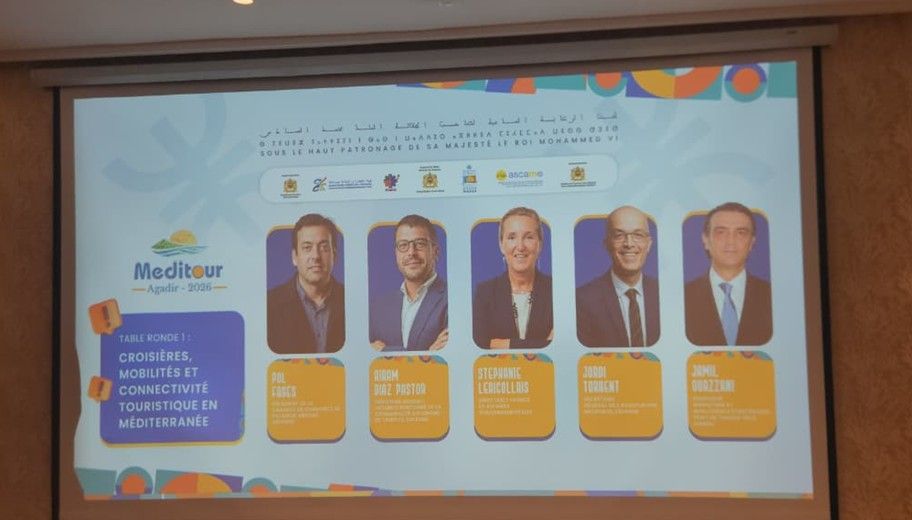
The Port of Tangier Ville has emerged as the main facilitator of maritime connectivity in the Western Mediterranean and the Atlantic following its prominent role in the Mediterranean Tourism Forum (Méditour 2026). The delegation from the North African port infrastructure solidified in the Souss Massa region its roadmap to position the city as an international reference destination, relying on a network of strategic alliances with European ports and a trilateral agreement with the Spanish port authorities of Tenerife and Málaga.
The central pillar of this strategy was formalized through a Memorandum of Understanding (MOU) signed between the Port of Tangier Ville, the Port Authority of Santa Cruz de Tenerife, and the Port Authority of Málaga. This tripartite agreement aims to create regional synergies, promote technical innovation, and, most importantly, develop much more attractive and competitive cruise and sailing routes connecting North Africa with the Andalusian coasts and the Canary archipelago.
This alliance in the Atlantic-Mediterranean axis adds to other international cooperation agreements of the Moroccan terminal, such as the active MOU with the Port System Authority (AdSP) of Sardinia. The discussions, which included participation from the Cruise Lines International Association (CLIA), MedCruise, and the Association of Mediterranean Chambers of Commerce and Industry (ASCAME), ratified that nautical and cruise tourism has become an indispensable lever for economic and territorial development. To optimize these shared routes, Tangier Ville has prioritized establishing alliances with international centers of excellence specialized in the superyacht industry. This is a high value-added sector that opens key prospects for attracting investments and creating skilled jobs in the region.
The roadmap for the Moroccan terminal directly links the success of these agreements to its ability to operate within a modern ecosystem. The guidelines emanating from the forum demand the urgent structuring of marine and blue economy clusters at a national and regional level—following the success pattern of neighboring Europeans—to federate all actors in the value chain. Additionally, along with the Moroccan Agency for Tourist Development (SMIT) and the International Higher Institute of Tourism of Tangier (ISITT), an emergency human resources plan will be activated to train specialized technical profiles that support the demanding service needs of the international fleet.







