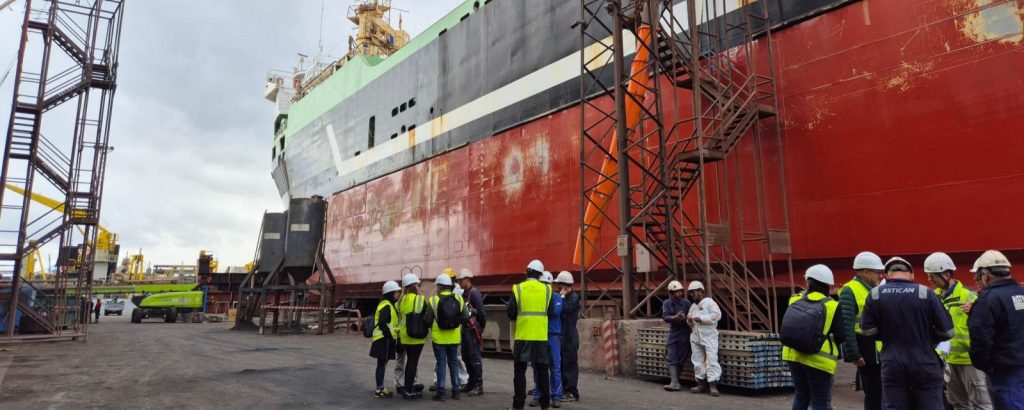
In March 2026, the intervention by the Labor and Social Security Inspection (ITSS) in the naval repair and maintenance sector of the Port of Las Palmas marks a turning point in the oversight of the cross-border economy of the Atlantic. The action, executed under the umbrella of the European Labor Authority (ELA), has not been an ordinary inspection, but a coordinated maneuver by the Specialized Unit for Transnational Labor (Eumobility), which is part of the National Anti-Fraud Office, underscoring the strategic importance of the Canary shipyards in the map of labor compliance within the European Union.
The situation in Las Palmas has enjoyed total information blackout. There has never been a verdict for the death of any worker in Las Palmas. Not a single trial, as far as can be verified by Canarymaritime with legal sources. This is possibly due to the fact that workers in naval repairs are arriving in Las Palmas enrolled as sailors, to the detriment of the local workforce. As reported by Canarymaritime, until this month of March, African companies without authorization to operate in Spain have been looking abroad for personnel for ‘dry dock’ facilities in the Port of Las Palmas through social networks. Some may even arrive as tourists and, if someone dies, it would have been a tourist death.
The core business of naval repair in Las Palmas has so far critically depended on cross-border service-providing labor, a model that displaces technical specialists who could be trained in any vocational training program in the Canaries in favor of labor from the African and Asian Atlantic basin. On this occasion, inspectors from Portugal, France, and Italy joined local teams to audit first-hand compliance with social security conditions and the rights of posted workers. This technical collaboration aims to close the legal gaps that often arise in the movement of qualified personnel where the traceability of contributions and labor safety becomes complex.

The choice of Las Palmas as the venue for this joint inspection is due to its volume of activity as a maintenance hub for fleets operating on the western African margin. The exchange of experiences between the authorities of the four countries focused on the monitoring of health and safety conditions, a critical factor in high-risk jobs such as those conducted on drilling platforms and large vessels. The ITSS seeks to harmonize surveillance criteria to ensure that companies in the sector do not use transnational movements as a means to optimize costs through social security fraud.
This regulatory offensive is part of a strategic plan for strengthened collaboration among southern European countries to safeguard workers’ rights in highly mobile sectors. The operation at the Gran Canaria port is just the first stage of a schedule that already has two other joint inspections planned in Portugal and Italy during 2026. With this move, Brussels and Madrid send a strong message to maritime corporations: the logistical competitiveness of the Port of Las Palmas cannot be sustained by the opacity of labor movements.
The presence of the Eumobility Unit at the Canary docks adds a layer of regulatory risk that companies must incorporate into their balance sheets. Transparency in the mobility of technical talent has become the new currency for operating on international routes, and the Labor Inspection appears determined to ensure that the naval sector in Las Palmas meets the social excellence standards required by the European single market.