




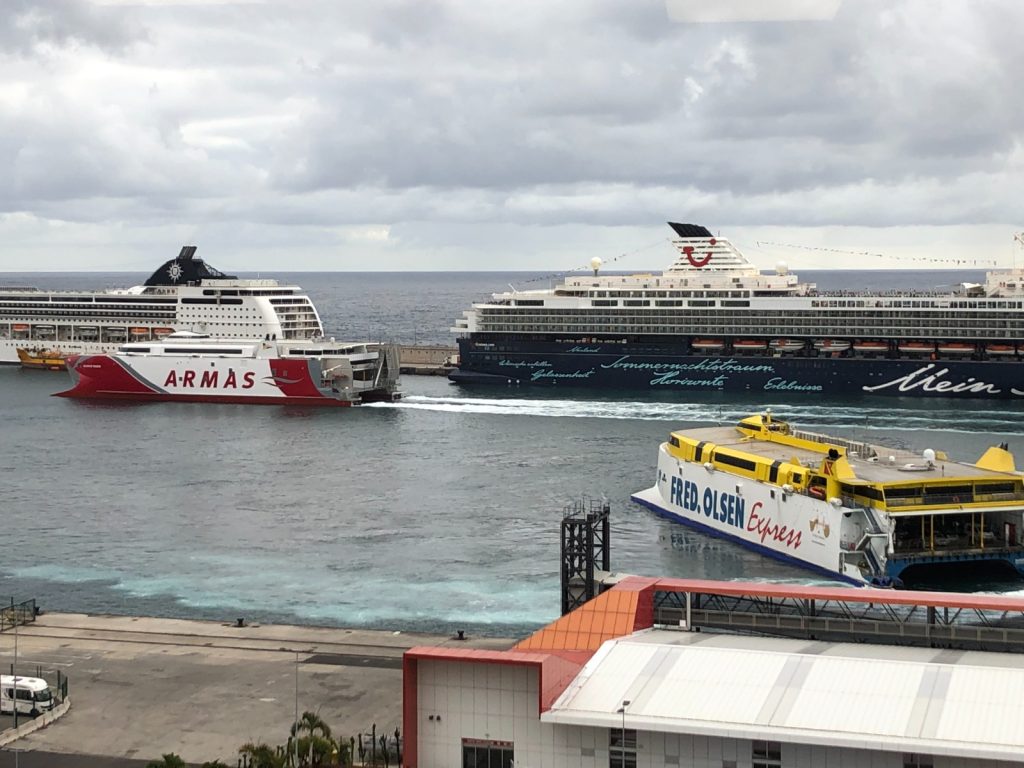
If the administrative collapse of the Next Generation funds were a perfect storm, the inter-island maritime transport sector would be sailing directly into the eye of the hurricane. In an archipelago where 98% of the goods arrive by sea, the delay in managing European aid is not just an issue of accounting balances; it is a direct threat to the connectivity and cost of living of Canarians. The administrative paralysis is leaving shipping companies without the financial oxygen necessary for the ecological transition that Brussels already requires.
The Decarbonization Hourglass
The Ministry of Ecological Transition recently announced calls for maritime decarbonization, including 3 million euros specifically for modernization and zero-emission vessels. However, official reports reveal a critical blockage in resolving these applications. Naval engineering projects require long execution times; if the administration takes an additional six months to approve the funds, companies will not meet the December 2026 deadline to justify the investment, forcing them to give up the funds or face the expense out of pocket, which is unfeasible for many operators.
This blockage coincides with the end of the Emission Trading Scheme (ETS) grace period. While the Canary Government seeks to extend exemptions in Brussels, 2026 presents itself as the year of critical review of CO2 regulations. If administrative collapse prevents shipping companies from modernizing their fleets now by taking advantage of EU funds, the islands will reach the European accounting review without ‘homework done’, which would inevitably increase freight costs and, by extension, every product consumed in the periphery of the archipelago.
Risk of Supply Shortages and Inputs
The warning from shipping companies is grim: faced with the increased costs of taxes and the lack of real aid for the transition, some companies already suggest they could be tempted to divert routes or seek inputs from Africa, severely affecting the competitiveness of the Canary market. Strategic projects for green hydrogen for ferries and the electrification of ports (Onshore Power Supply) are currently in an administrative limbo that the Executive itself qualifies as ‘critical’ for the stability of basic supplies.
The collapse of EU funds in the Canary Islands is not just a matter of slow management; it is a logistical time bomb. If deadlines cannot be extended until 2028, inter-island maritime transport will face a cost increase that the already weakened Economic and Fiscal Regime (REF), burdened by inflation, will be unable to contain. With over 22,000 pending applications in the industrial and decarbonization sector, the margin for error in the naval sector has completely disappeared.







