
Saturday, 17 October 2026
  • Login
  • Español
  • English
Suscribirme
Subscribe
canarymaritime.com
No Result
View All Result
  • Home
  • Atlantic Ports
    • Atlantic Africa
  • Blue Energy
  • Logistic
  • Shipbuilding Industry
    • Shipyards and Ship Repair
    • Offshore and platforms
    • Industrial innovation and naval R&D
  • Blue Economy
    • Investment and European Funds
    • Financial Sustainability
    • Private Venture Capital
  • Atlantic Geopolitics
    • West Africa
    • Port Security and Defense
    • Blue Diplomacy
    • Canary Islands as a strategic hub
    • Drug Trafficking
  • Home
  • Atlantic Ports
    • Atlantic Africa
  • Blue Energy
  • Logistic
  • Shipbuilding Industry
    • Shipyards and Ship Repair
    • Offshore and platforms
    • Industrial innovation and naval R&D
  • Blue Economy
    • Investment and European Funds
    • Financial Sustainability
    • Private Venture Capital
  • Atlantic Geopolitics
    • West Africa
    • Port Security and Defense
    • Blue Diplomacy
    • Canary Islands as a strategic hub
    • Drug Trafficking
  • Español
No Result
View All Result
canarymaritime.com
es Español en English
No Result
View All Result
Home Logistic and Conectivity

Canary Islands bunkering: Lloyd’s sets 0.090 mg KOH/g quality benchmark against the new SECA regulation

Pedro Marrero by Pedro Marrero
18 February 2026
in Logistic and Conectivity
Reading Time: 3 mins read
0
50
SHARES
311
VIEWS
Compartir en WhatsappCompartir en LinkedIn
Google CONVIERTE CANARYMARITIME EN FUENTE DE NOTICIAS EN GOOGLE

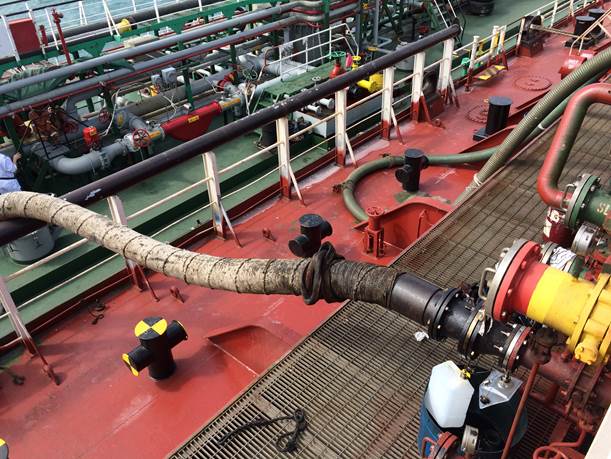
The classification society Lloyd’s Register (LR) published its latest Quality Report on Fuel from the Fuel Oil Bunkering Analysis and Advisory Service (FOBAS) on Thursday, February 12, that covers the period from July to December 2025, revealing a significant increase in the frequency and severity of incidents related to off-specification marine fuel in several of the world’s most active bunkering centers such as Las Palmas and Santa Cruz de Tenerife.

Although the Canary data is slightly higher than that of northern European ports, it remains at completely safe levels. To provide context, the critical limit established by the ISO 8217 standard is usually set at 2.5 mg KOH/g; therefore, the fuel supplied in the Canary Islands is far from posing a corrosion risk to engines.

Las Palmas de Gran Canaria and Santa Cruz de Tenerife are preparing for a drastic shift in their docks. The latest fuel quality report from Lloyd’s Register (FOBAS) confirms that the maritime sector in the Atlantic is on the verge of an unprecedented operational transformation, marked by the enforcement of the Sulphur Emission Control Area (SECA) in the Mediterranean starting in May 2025 and the tightening of European Union regulations.

The fuel quality report from Lloyd’s Register places Las Palmas in a prominent position within the Top 20 worldwide by sample volume, recording an average acidity index of 0.090 mg KOH/g during the second half of 2024. This value, while higher than hubs in northern Europe like Antwerp (0.020) or Rotterdam (0.040), remains significantly below critical safety limits, reflecting a chemical stability that minimizes corrosion risks in engines. Compared to other bunkering giants, the figure from Las Palmas slightly surpasses that of Singapore (0.060) but remains close to Zhoushan (0.070), consolidating the Canarian docks as a reliable supply point under technical control in light of the new demands of international maritime regulations.

The accumulation of off-specification events towards the end of 2025 demonstrates the ongoing volatility of the global marine fuel supply chain. While many fuels continue to meet specifications, the magnitude and severity of incidents at the end of the year leave little margin for error and reinforce the need for conservative fuel management, rigorous testing regimes, and proactive onboard management.

For the two major Canarian ports, this translates into direct pressure on bunkering operators. Data indicates an unstoppable rise in the use of biofuels to meet IMO requirements. However, the report warns of a latent technical risk: 12.77% of the residual fuels analyzed in the second half of 2024 showed deficiencies, particularly in critical parameters such as density, viscosity, and increasingly, stability of blends with biological components.

At the Port of Las Palmas, a leader in fuel supply in the Central Atlantic, monitoring water and sediment levels will be vital to avoid damage to engines of international fleets. Meanwhile, Santa Cruz de Tenerife faces the challenge of adapting its infrastructure to a demand that no longer seeks only quantity but absolute traceability of quality to avoid environmental penalties in European waters.

The message for shipowners operating in the Canary Islands is clear: the margin for error is shrinking. With the introduction of new sulphur limits and the rise of sustainable fuels, the Canarian ports are moving from being mere service stations to becoming precision laboratories where product quality will determine the islands’ competitiveness as a global logistics node.

Distillate fuels have also continued to show vulnerabilities. Repeated failures in the flash point were recorded in ports such as Civitavecchia, Lisbon, Palermo, and Lianyungang, with several samples reaching temperatures between 47 °C and 55 °C, well below the minimum established by the SOLAS Convention of 60 °C. The report links some of these cases to land-grade diesel entering the marine supply chain, reinforcing the need for strict verification of suppliers and routine flash point testing in laboratories, particularly outside the major bunkering hubs.

The FOBAS Fuel Quality Report (2nd half of 2025) is based on LR’s prior analysis of the first half. It provides updated data, new case studies, and deeper insights into the evolution of regional trends in response to tightening environmental regulations and changes in fuel formulations, including the full application of the Mediterranean Sulphur Emission Control Area.

With the expansion of the EU Emission Trading System and the introduction of FuelEU Maritime requirements, it is expected that operators will face a more complex fuel landscape. As new raw materials, biofuel blends, and alternative fuels enter the market, LR observes an increasing need for robust onboard fuel management and the systematic application of best sampling and analysis practices.


Google CONVIERTE CANARYMARITIME EN FUENTE DE NOTICIAS EN GOOGLE
Previous Post

Maritime Transport in the Canary Islands on the Brink of Collapse Due to Blockage of EU Funds

Next Post

Catalan Partner of Montesano Strengthens its Leadership in the Canary Islands: Precision Meat Logistics

Pedro Marrero

Pedro Marrero

There are people who don’t need to raise their voice to be noticed. He belongs to that rare breed of stubborn observers who understand power as a board to be studied in silence, piece by piece, until it becomes clear who is really moving the pieces. A journalist and analyst by instinct and a storyteller by conviction, his career has unfolded within the folds of power in Tenerife, never losing sight of the Canary Islands, where he learned that the great narratives begin at the margins.

NewsRelated

Puertos Canarios abre al público sus recintos para potenciar el valor del dominio público marítimo
Financial Sustainability

Puertos Canarios clarifies scope of TSJC ruling on Puerto Rico and rules out extending concessions

16 October 2026
272
El salto tecnológico de Ghana que desafía a los puertos de Canarias: Automatizar terminales
Atlantic Africa

Ghana’s Technological Leap Challenges the Canary Islands’ Ports: Automating Terminals

15 October 2026
283
Impacto en sector del congelado en Canarias: Oleada de inspecciones sobre el cartón ondulado
Financial Sustainability

Impact on the Frozen-Food Sector in the Canary Islands: Wave of Inspections Targeting Corrugated Cardboard

15 October 2026
272
Lucasiñas asume el control de Ignauro en Canarias tras la compra de la cuota de los March
Financial Sustainability

Lucasiñas takes control of Ignauro in the Canary Islands after acquiring the March family’s stake

15 October 2026
280
Maersk abre la campaña de aumento de precios en África occidental antes del Black Friday
Atlantic Africa

Maersk kicks off West Africa rate hikes ahead of Black Friday

15 October 2026
280
Reunión de alto nivel de WEC Lines en Canarias para fijar la estrategia de su nueva red marítima europea
Logistic and Conectivity

WEC Lines holds high-level meeting in the Canary Islands to set strategy for its new European maritime network

14 October 2026
281

Leave a Reply Cancel reply

Your email address will not be published. Required fields are marked *

© 2026 canarymaritime

  • Contact
  • Transparency
  • Code of ethics
  • Legal Notice
  • Privacy Policy
  • Cookie Policy (EU)
  • Intellectual Property Rights
  • Promise to Our Readers
  • Principles on the Use of AI
  • Commitment to Our Subscribers and Advertisers
  • Español
  • English
Gestionar consentimiento

Para ofrecer las mejores experiencias, utilizamos tecnologías como las cookies para almacenar y/o acceder a la información del dispositivo. El consentimiento de estas tecnologías nos permitirá procesar datos como el comportamiento de navegación o las identificaciones únicas en este sitio. No consentir o retirar el consentimiento, puede afectar negativamente a ciertas características y funciones.

Funcional Always active
El almacenamiento o acceso técnico es estrictamente necesario para el propósito legítimo de permitir el uso de un servicio específico explícitamente solicitado por el abonado o usuario, o con el único propósito de llevar a cabo la transmisión de una comunicación a través de una red de comunicaciones electrónicas.
Preferences
The technical storage or access is necessary for the legitimate purpose of storing preferences that are not requested by the subscriber or user.
Estadísticas
El almacenamiento o acceso técnico que se utiliza exclusivamente con fines estadísticos anónimos. Sin un requerimiento, el cumplimiento voluntario por parte de tu proveedor de servicios de Internet, o los registros adicionales de un tercero, la información almacenada o recuperada sólo para este propósito no se puede utilizar para identificarte. The technical storage or access that is used exclusively for anonymous statistical purposes. Without a subpoena, voluntary compliance on the part of your Internet Service Provider, or additional records from a third party, information stored or retrieved for this purpose alone cannot usually be used to identify you.
Marketing
The technical storage or access is required to create user profiles to send advertising, or to track the user on a website or across several websites for similar marketing purposes.
  • Manage options
  • Manage services
  • Manage {vendor_count} vendors
  • Read more about these purposes
Ver preferencias
  • {title}
  • {title}
  • {title}
No Result
View All Result
  • Home
  • Atlantic Ports
    • Atlantic Africa
  • Blue Energy
  • Logistic
  • Shipbuilding Industry
    • Shipyards and Ship Repair
    • Offshore and platforms
    • Industrial innovation and naval R&D
  • Blue Economy
    • Investment and European Funds
    • Financial Sustainability
    • Private Venture Capital
  • Atlantic Geopolitics
    • West Africa
    • Port Security and Defense
    • Blue Diplomacy
    • Canary Islands as a strategic hub
    • Drug Trafficking

  • Login

© 2026 canarymaritime.com



